
Mollusks
Giant African Snail (Achatina fulica)
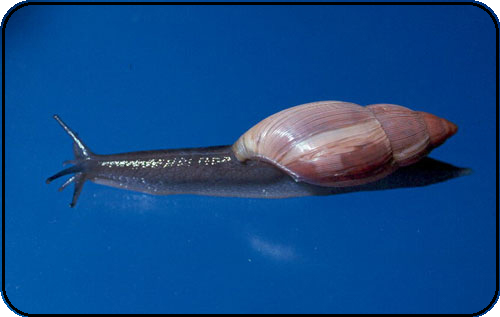
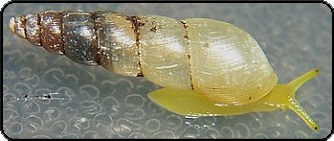
Graceful Awlsnail (Allopeas gracile)
Rosy Wolf Snail (Euglandina rosea)
Tropical Leatherleaf Slug (Laevicaulis alte) Cuban Leatherleaf Slug (Veronicella cubensi)
Black Slug (Veronicella leydigi) ?
Two-stripe Slug (Meghimatium bilineatum) ?
Rams Horn Snail (Planorbidae sp.) (Planorbarius corneus) ?
Pond Snail (Physa fontinalis) ?
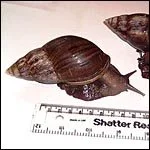
Introduced from Japan in 1936.
Giant African Snail
The predatory Rosy Wolf Snail (also known as “Cannibal Snail”) is native to the south-eastern United States. It has been introduced into the Pacific and Indian Oceans Islands as a biological control agent against the giant African Snail (Achatina fulica). However, it is neither host specific nor an effective control for A. fulica and may consume a large number of rare native snails, including the numerous endemic partulid tree snails in French Polynesia (many of which it caused to become extinct in the wild). It has also been implicated in the decline of snails species in Hawaii and Mauritius.
Rosy Wolf Snail
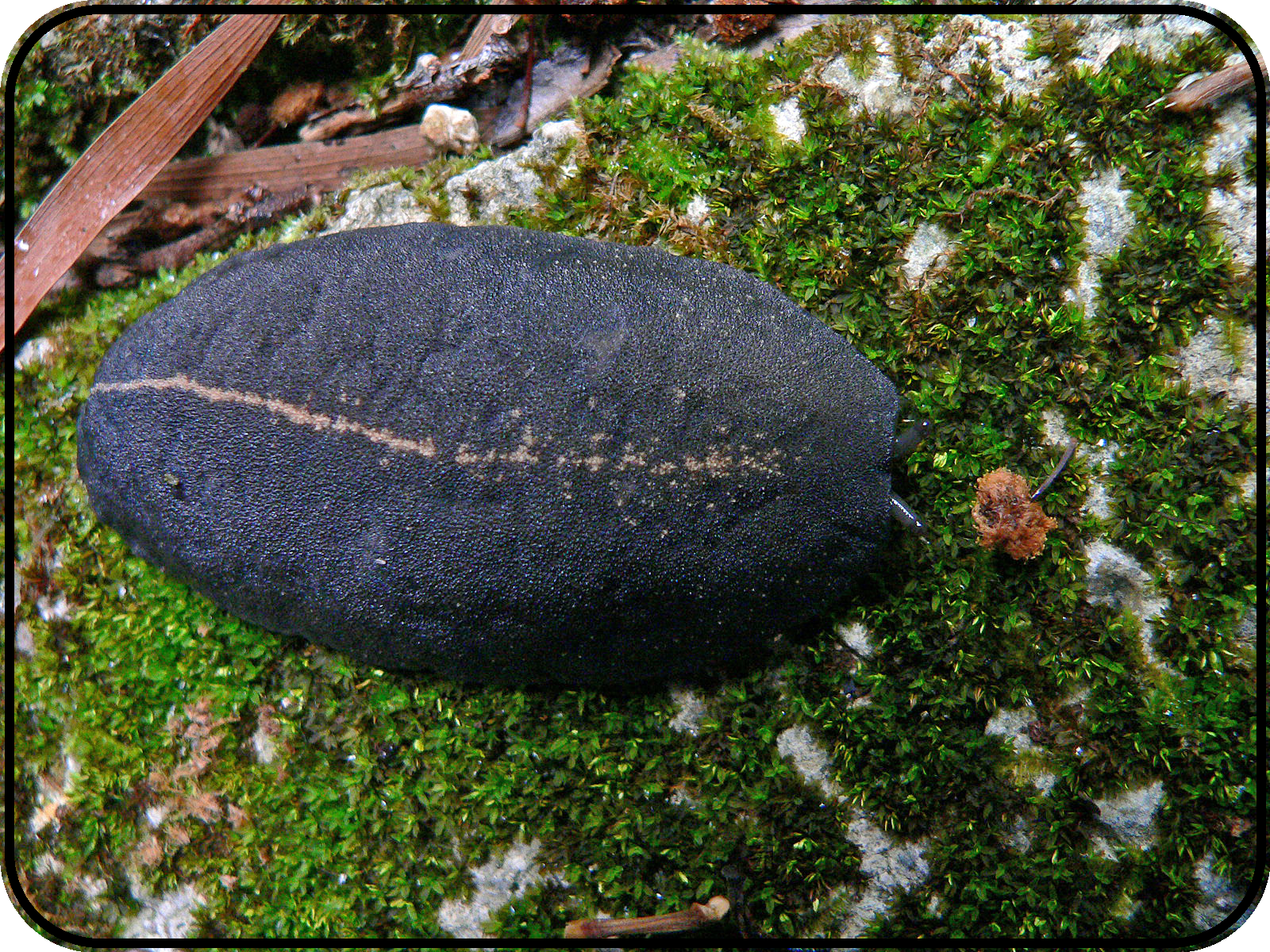
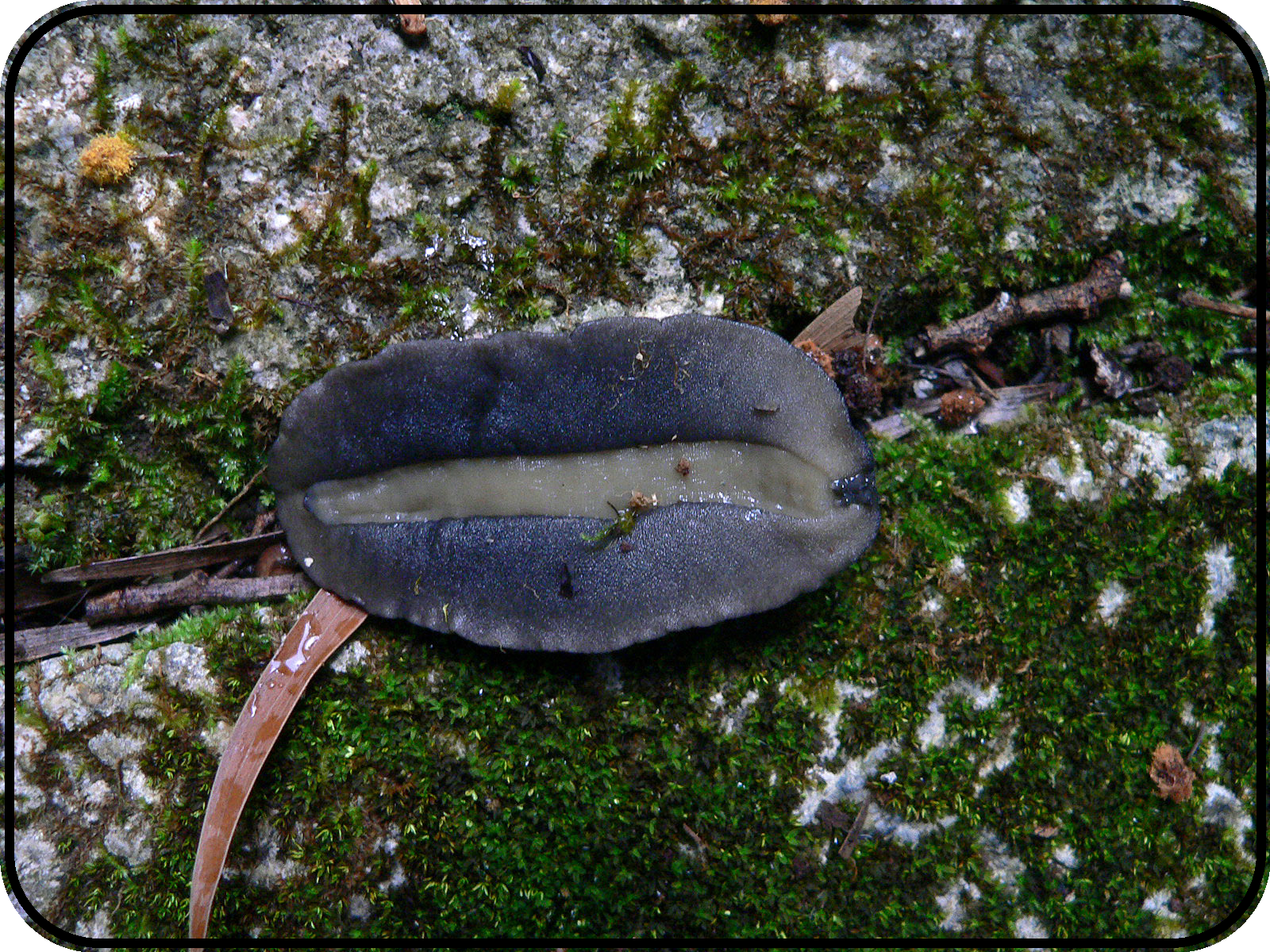
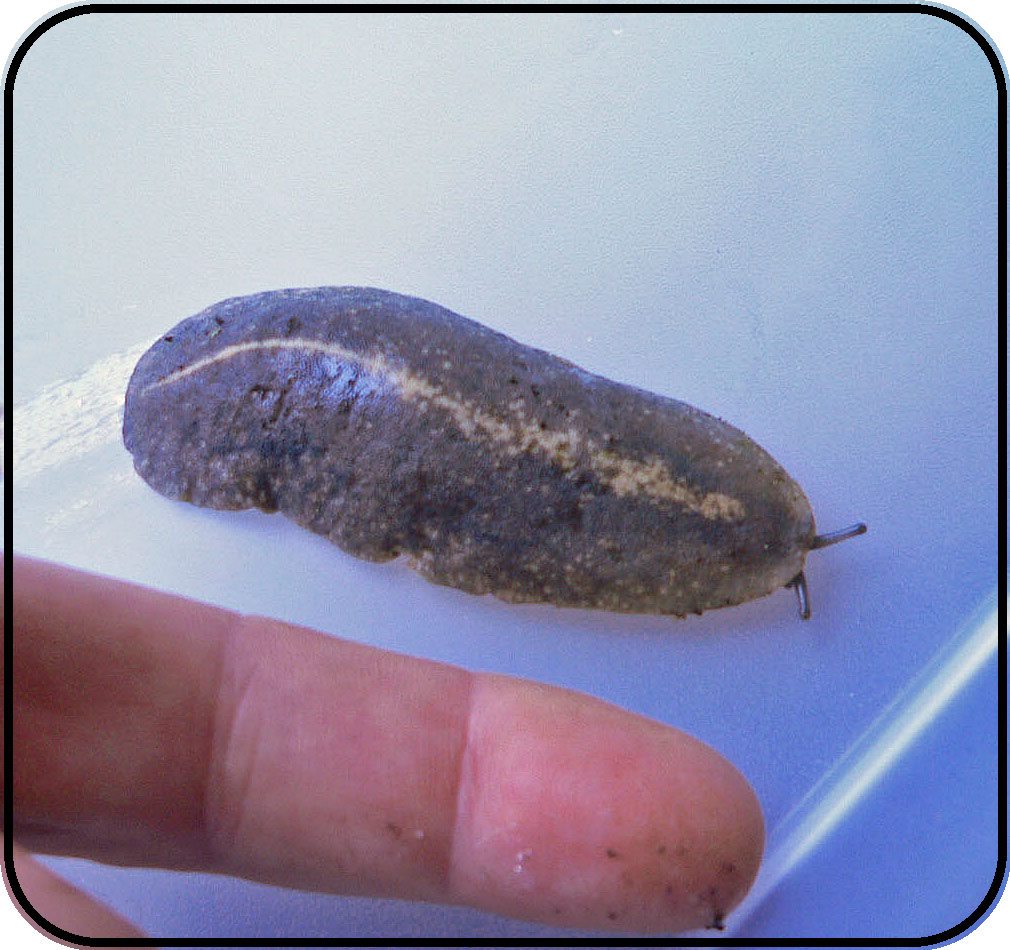
Ventral view. This slug is 5 cm long. Due to being a vector for rat lung worm it poses severe health risks and must be handled using gloves.
Black Slug
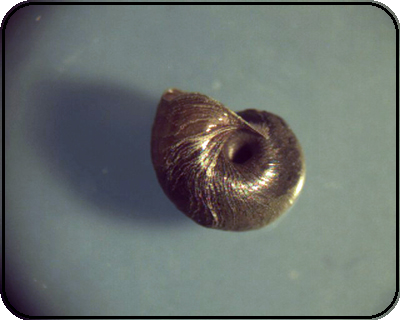
This snail lives in the water in the fish pot and came along with the water lilies. Does not naturally occur here. Diameter = 6mm.
Rams Horn Snail
Not native to Hawaii. Date of introduction unknown.
Graceful Awlsnail
Native to South America and the Caribbean. Accidentally introduced sometime before 1978 (probably in the early 1970s). Due to being a vector for rat lung worm it poses severe health risks and must be handled using gloves.
Tropical Leatherleaf Slug
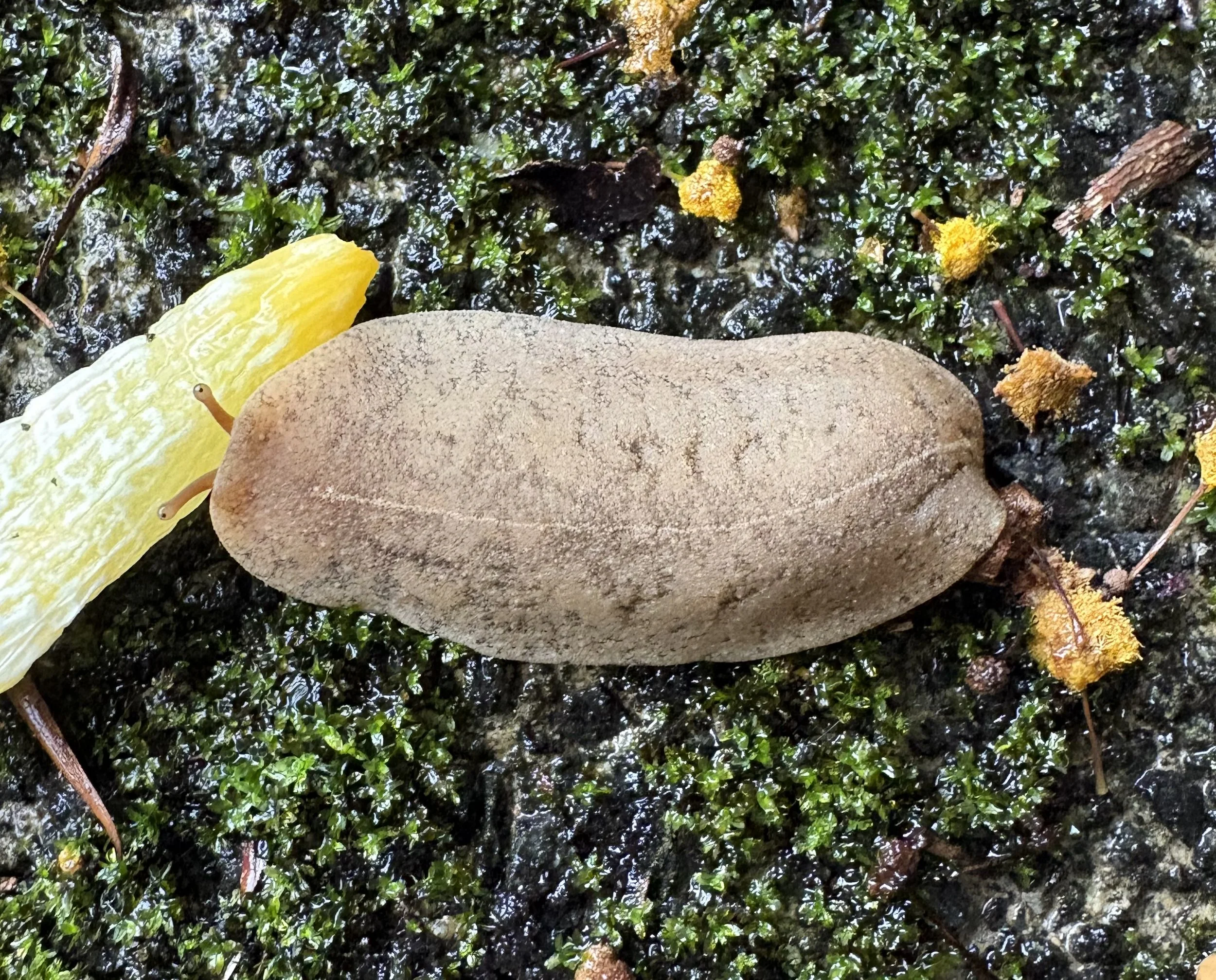
Cuban Leatherleaf Slug
Appearance is highly variable and ranges from light cream to mottled dark brown, sometimes featuring a faint pale longitudinal line down the back. Due to being a vector for rat lung worm it poses severe health risks and must be handled using gloves.
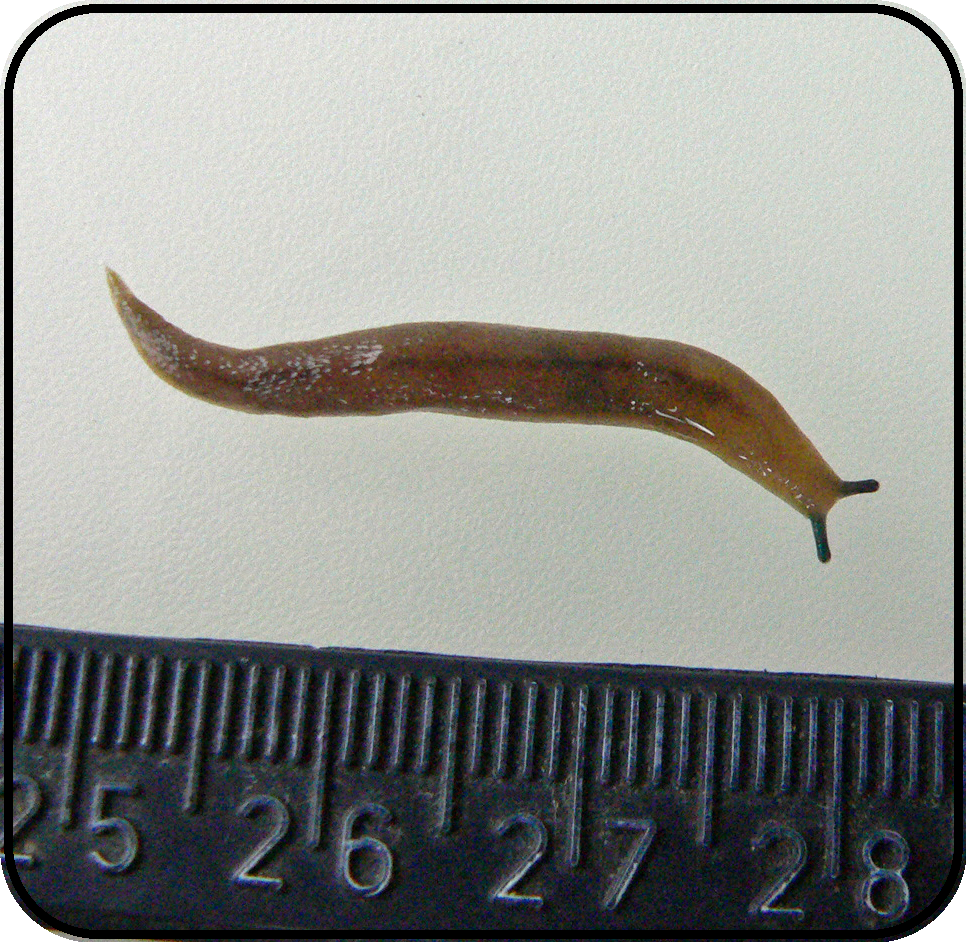
The two-striped slug, with two longitudinal stripes on its back, was first reported on Oahu in 1985. Its color may also vary from beige to light brown, and its stripes may be solid or broken.
Two-striped Slug
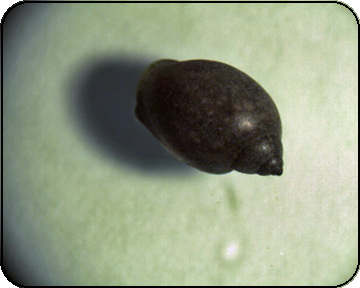
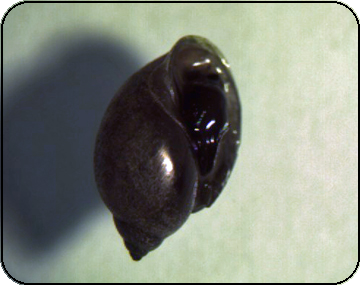
This snail lives in the water in the fish pot and came along with the water lilies. Does not naturally occur here. Diameter = 9mm.
Pond Snail