
American Cockroach (Periplaneta americana)
German Cockroach (Blattella germanica)
Unknown Cockroach (Periplaneta sp)?
Burrowing Cockroach (Pycnoscelus indicus)
Brown Banded Cockroach (Supella longipalpa)
Pacific Beetle Roach Mimic (Diploptera punctata)
Unidentified Tenebrionidae Beetle ( )
Blister Beetle (Thelyphassa apicata)
False Blister Beetle (Ananca kanack) ?
Eucalyptus Long-horned Beetle (Phoracantha semipunctata)
*Small Beetle (Psammoechus insularis)
Powder-post Beetle [Bostrichidae]
Elaterid Click Beetle (Anchastus swezeyi)
Bark Beetle (Xylossandrus sp)
Bark Beetle type 2 (Xylossandrus sp.)
Gonocephalum Darkling Beetle (Gonocephalum adpressiforme) ?
*7mm Beetle ( ) ?
Rove Beetle (Thyreocephalus albertisi)
Tenebrionid Beetle (Uloma bonzica)
Chinese Rose Beetle (Adoretus sinicus)
Lyctid Beetle (Minthea sp.)
*Rhipidius Beetle (Rhipidius pectinicornis)
Giant Click Beetle (Chalcolepidius erythroloma)
*Burrowing Beetle (Geotomus pygmaeus)
*Black Beetle (Dactylosternum hydrophiloides)
*Phenolia Beetle (Lasiodactylus sp.) (probably Lasiodactylus tibialis)
Ceresium Long-horned Beetle (Ceresium unicolor)
Curtomerus Long-horned Beetle (Curtomerus flavus)
Plumeria Borer (Lagocheirus undatus)
Monkeypod Roundheaded Borer (Xystrocera globosa)
Cuban Laurel Thrip (Gynaikothrips ficorum)
Notiobia Ground Beetle (Stenolophus sp.)
Burrowing Bug (Rhytidoporus indentatus)
Cigarette Beetle (Lasioderma serricorne)
Mango Flower Beetle (Protaetia fusca)
Kiawe Bruchid (Algarobius bottimeri) ?
Unknown Seed Beetle (unknown bruchidae) ?
Steel-blue Ladybird Beetle (Halmus chalybeus)
Squash Lady Beetle (Epilachna borealis)
Flour Weevil ( ) ?
Names preceded by an asterisk indicate common names that I have made up.
Insects: roaches and beetles
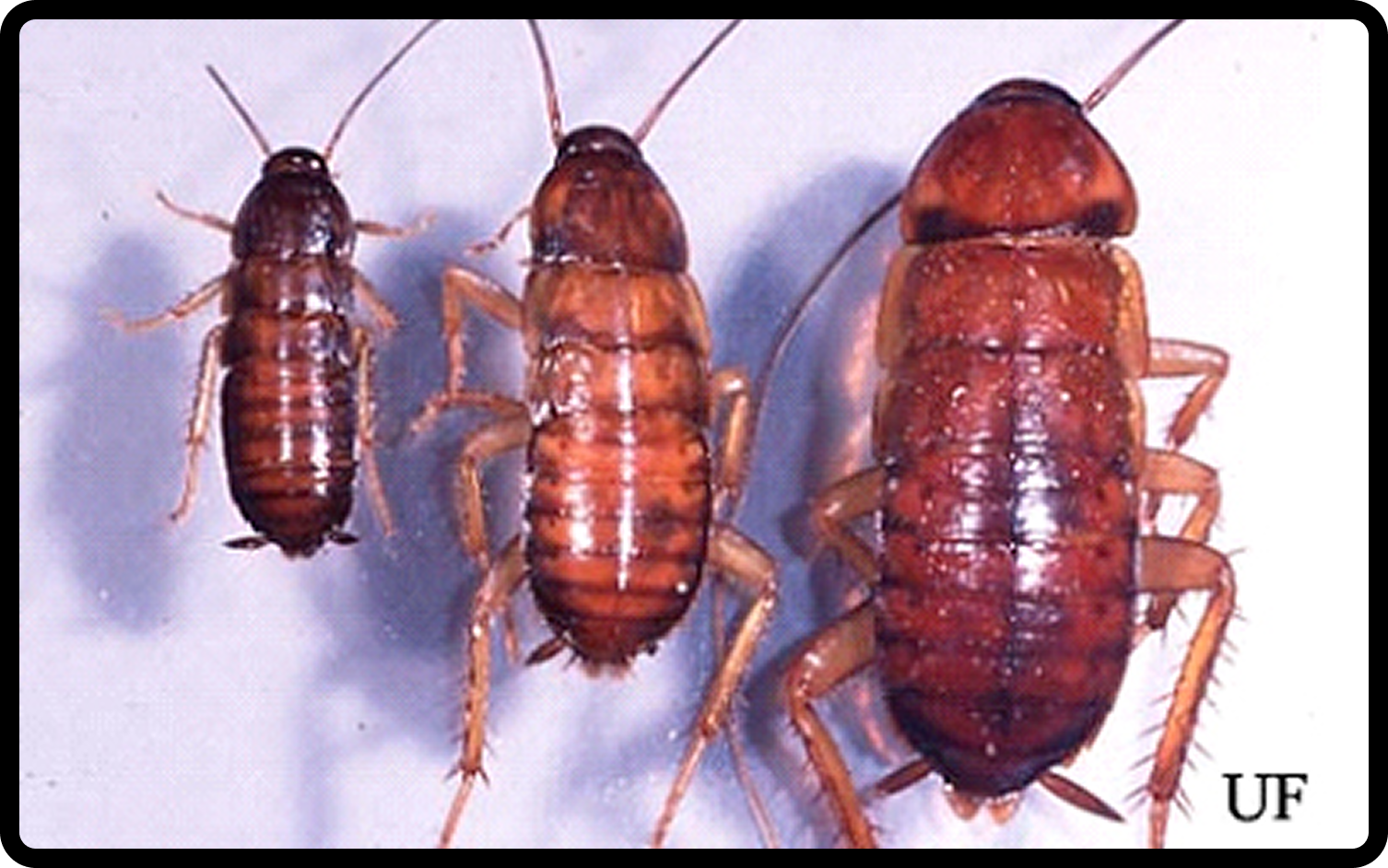
American Cockroach
Accidentally introduced before 1882, probably from North America.
This butterfly naturally occurs in Asia and was first recorded in Hawaii in 1971. It is commonly seen on or near citrus trees which are its host plant.
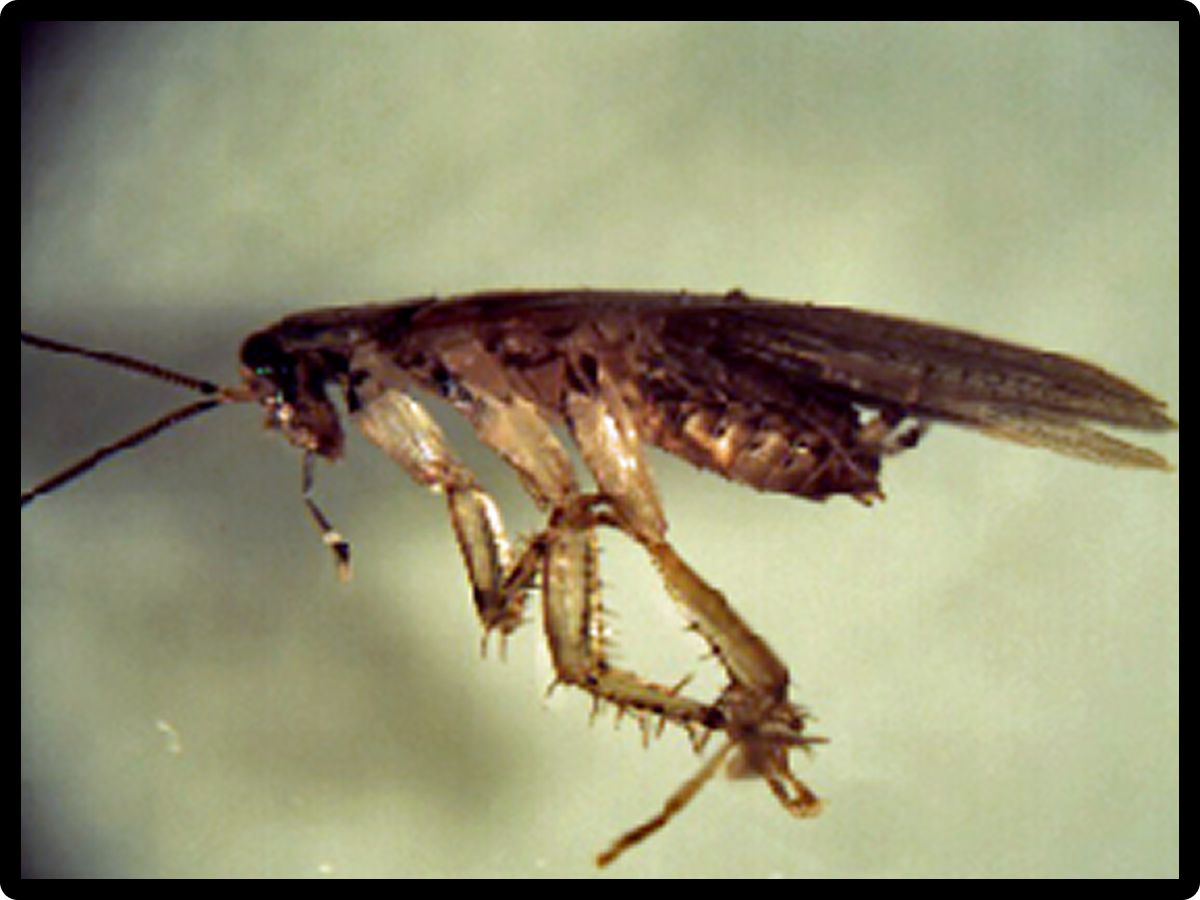
German Cockroach
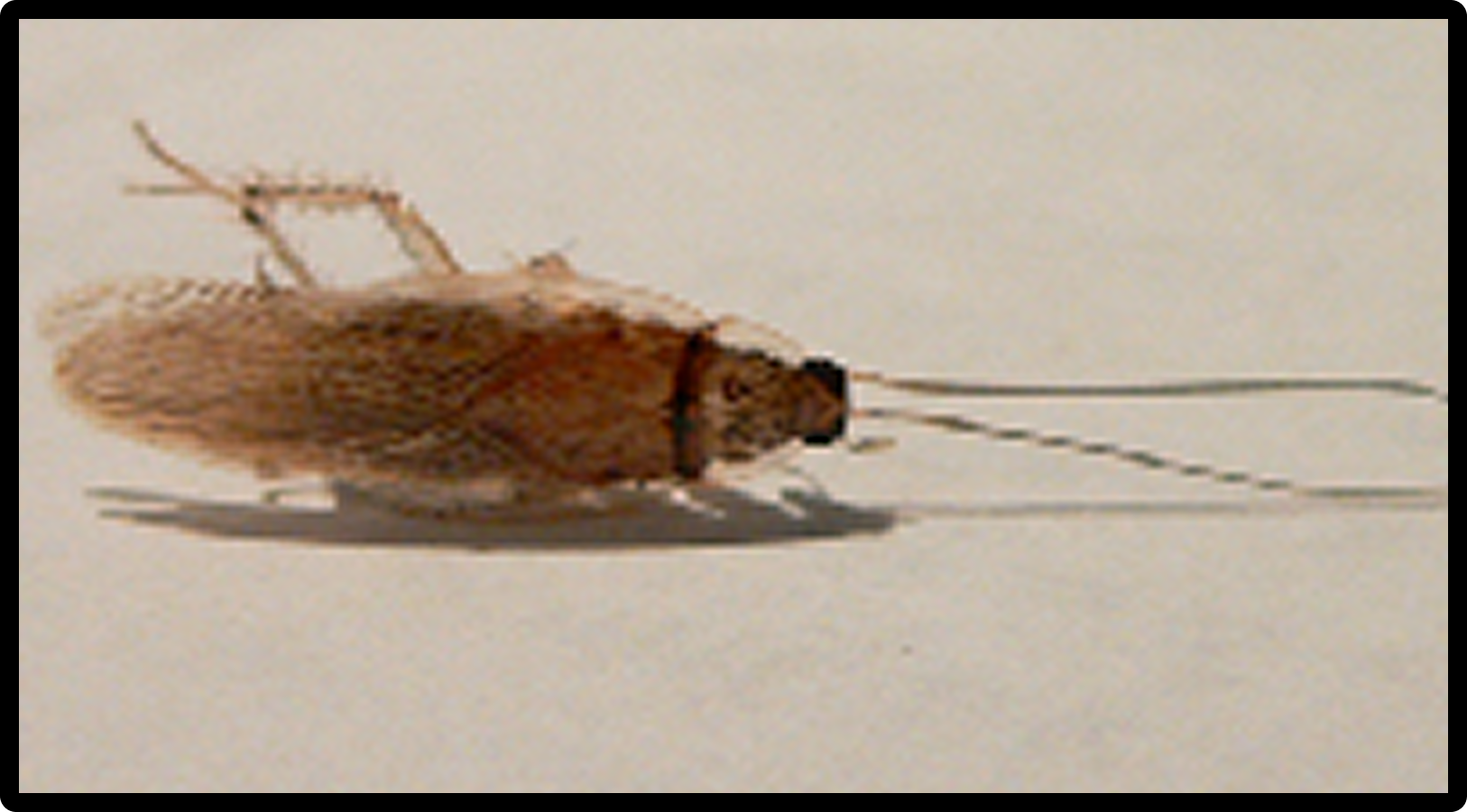
Unknown Cockroach
Accidentally introduced before 1882, probably from North America.
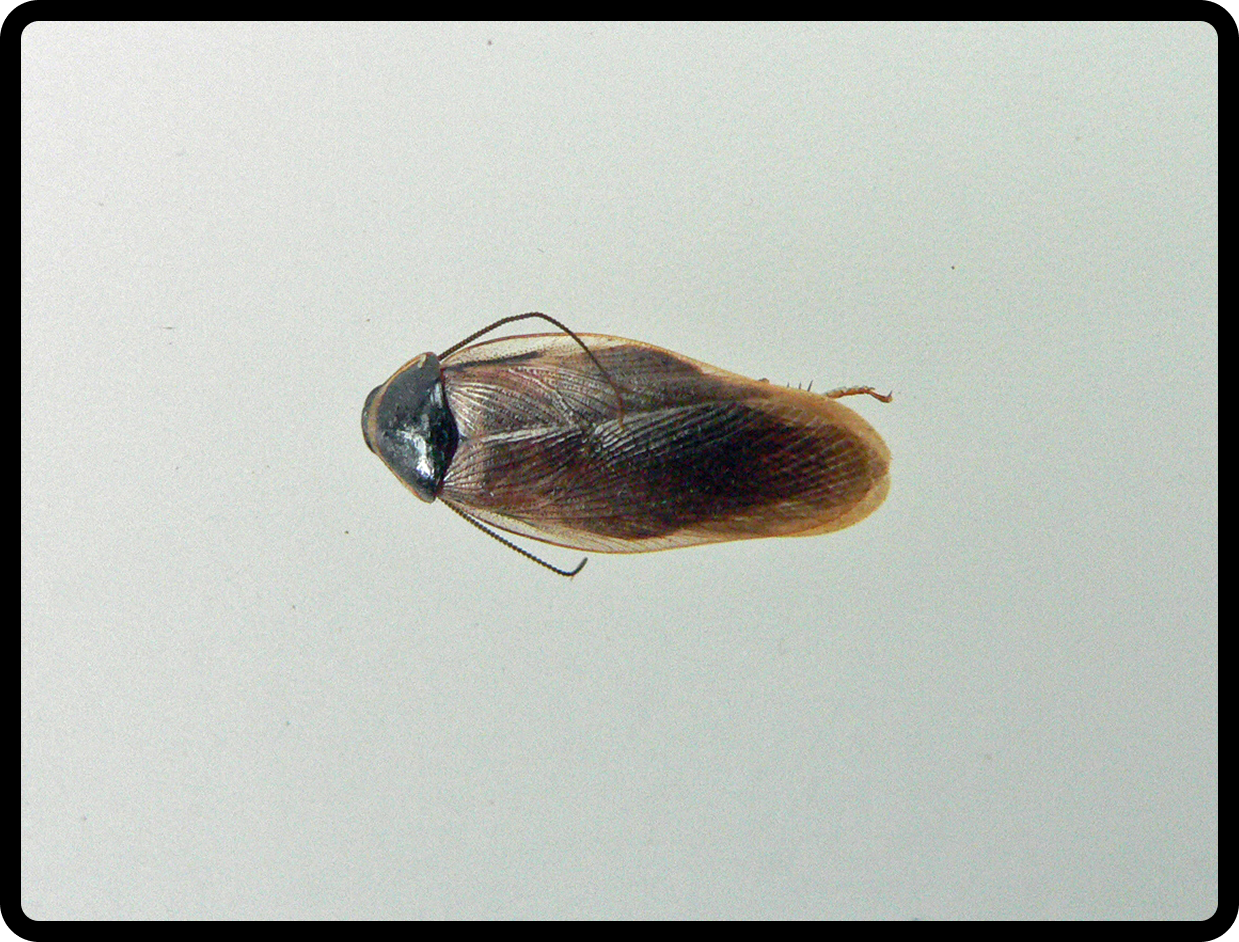
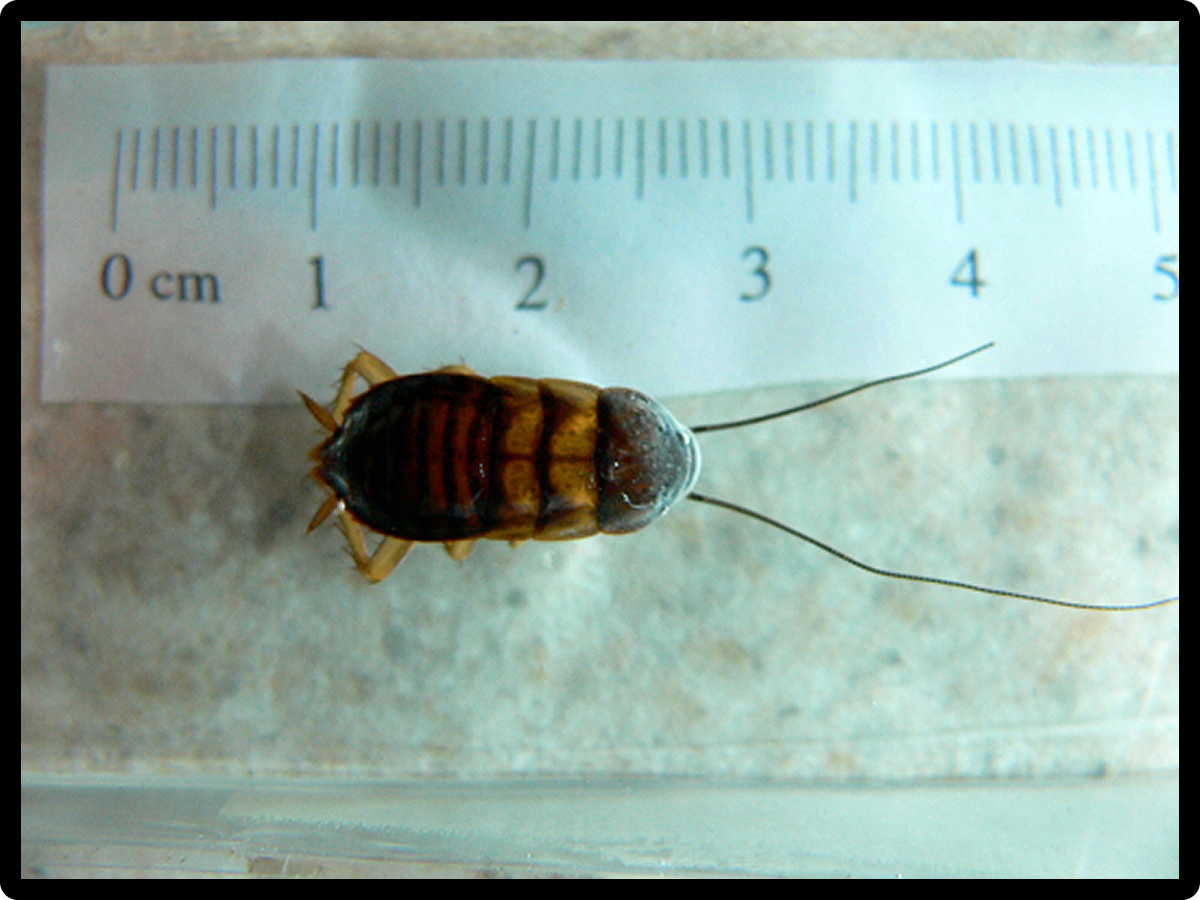
Burrowing Cockroach
Dorsal view. Cockroach is 2 cm long.
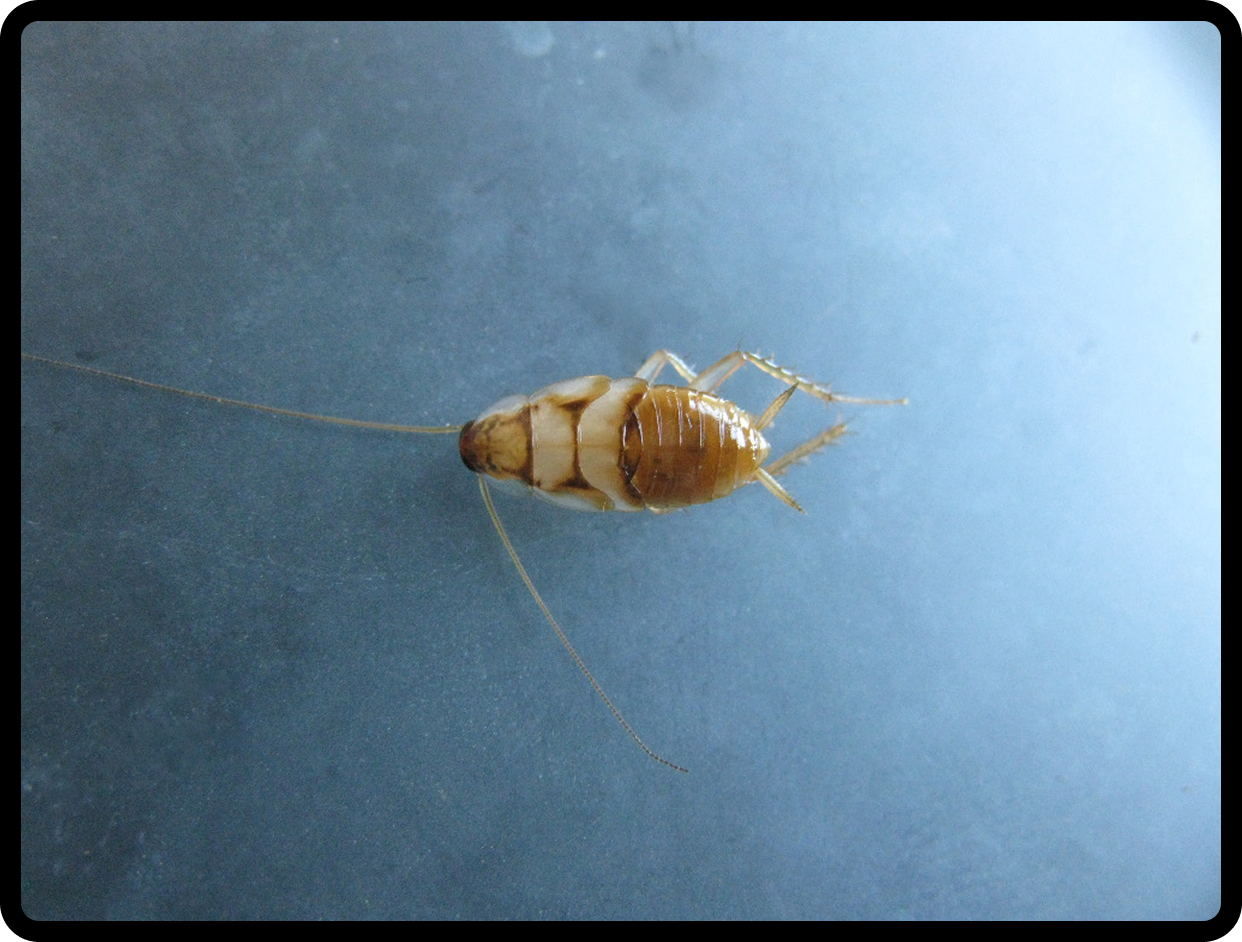
Brown Banded Cockroach
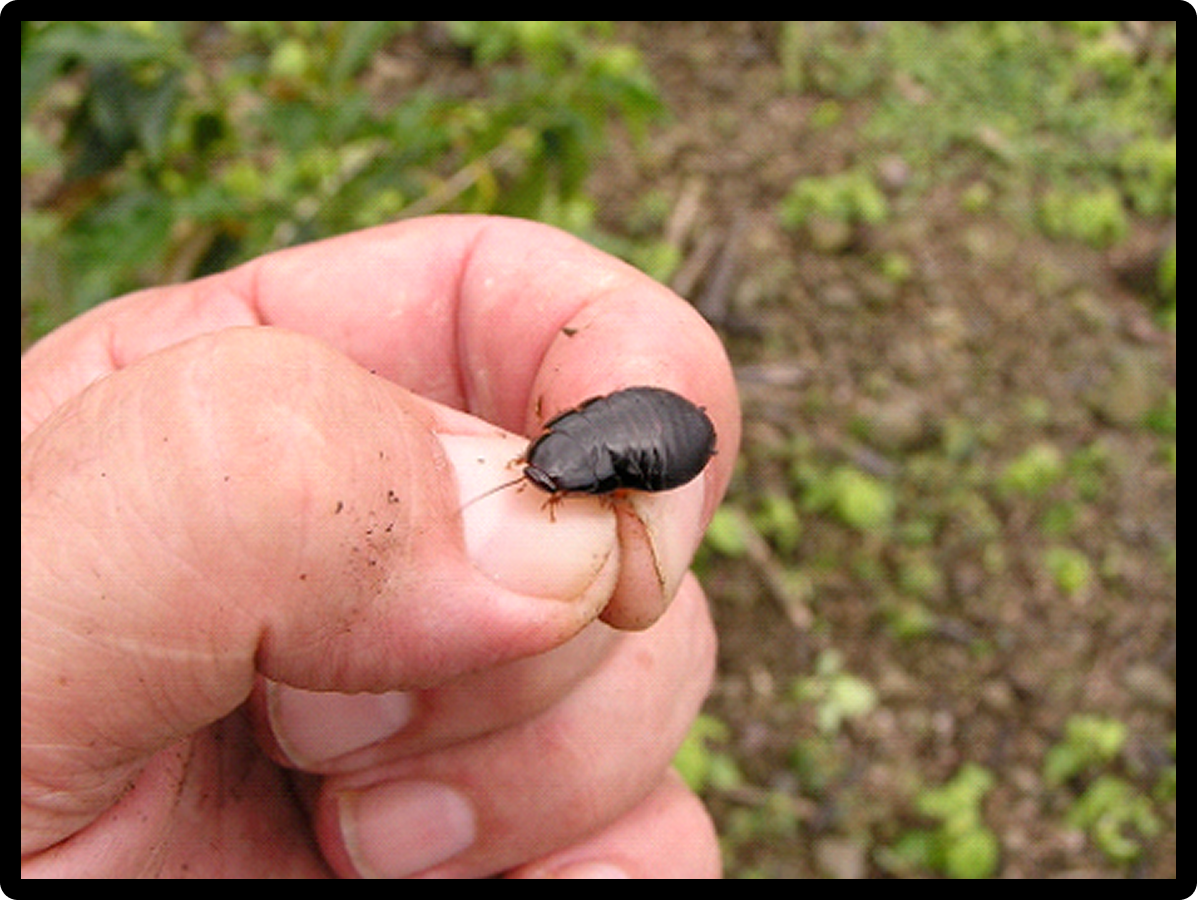
Pacific Beetle Roach Mimic
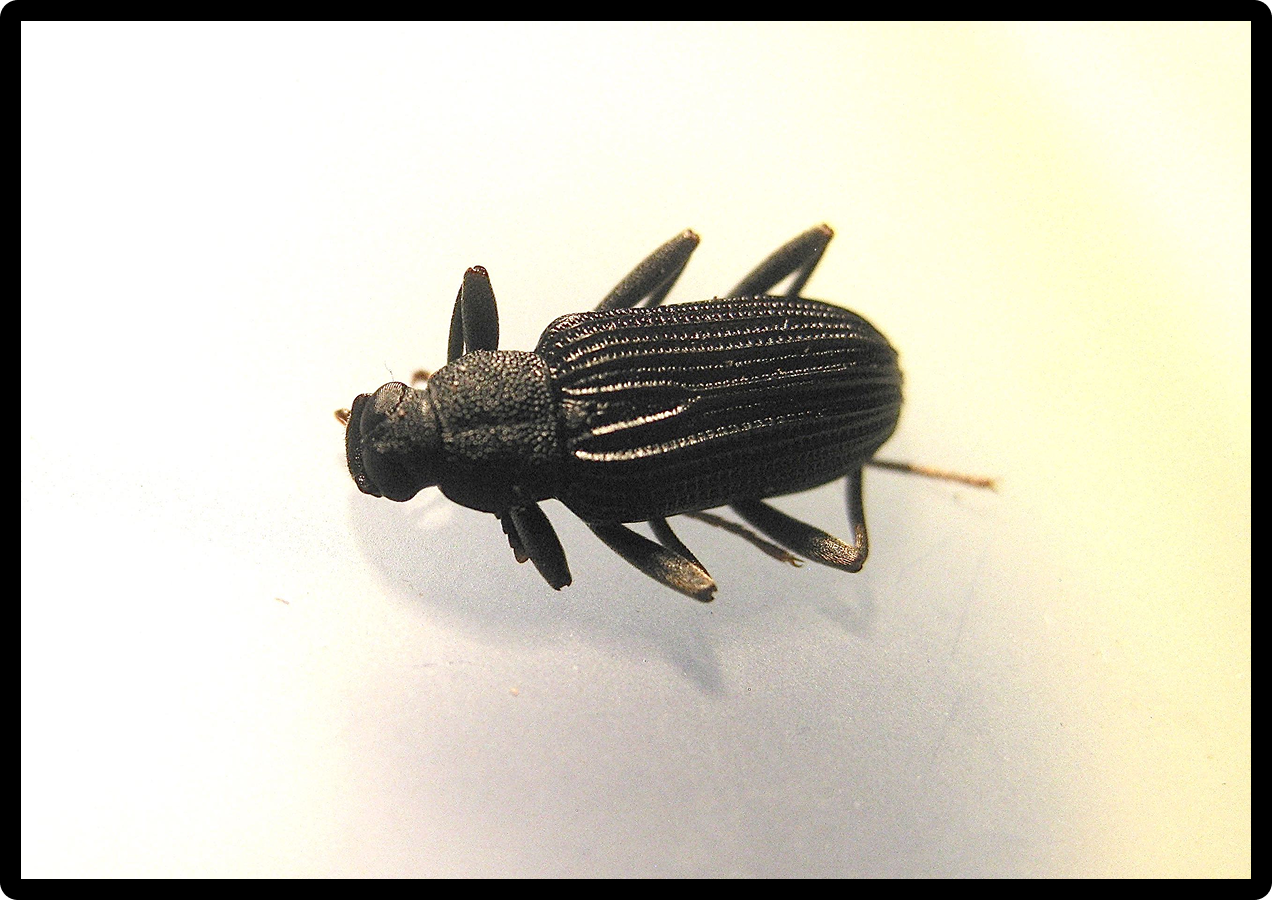
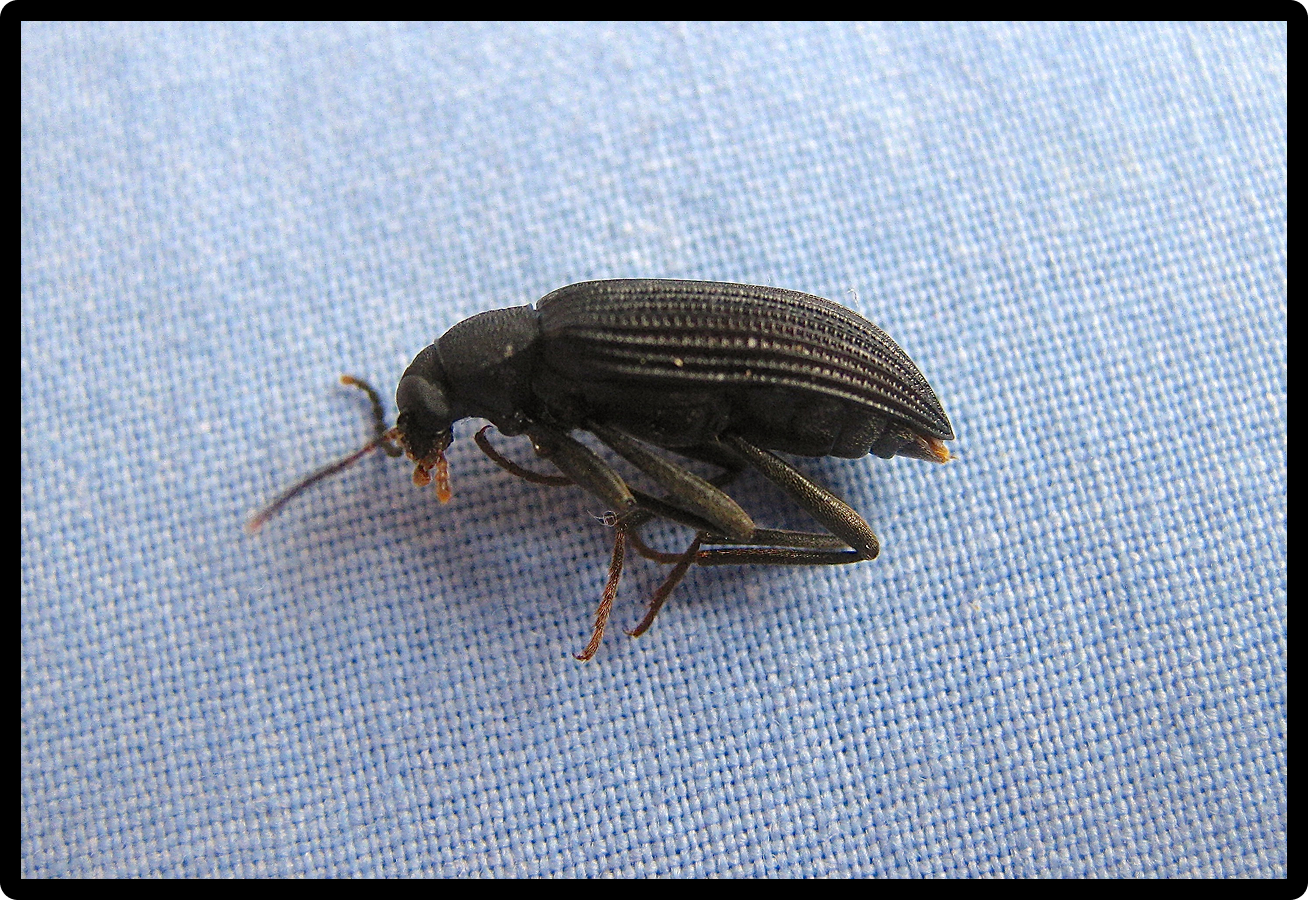
Unidentified Tenebrionidae Beetle
This beetle is 1.2 cm long.
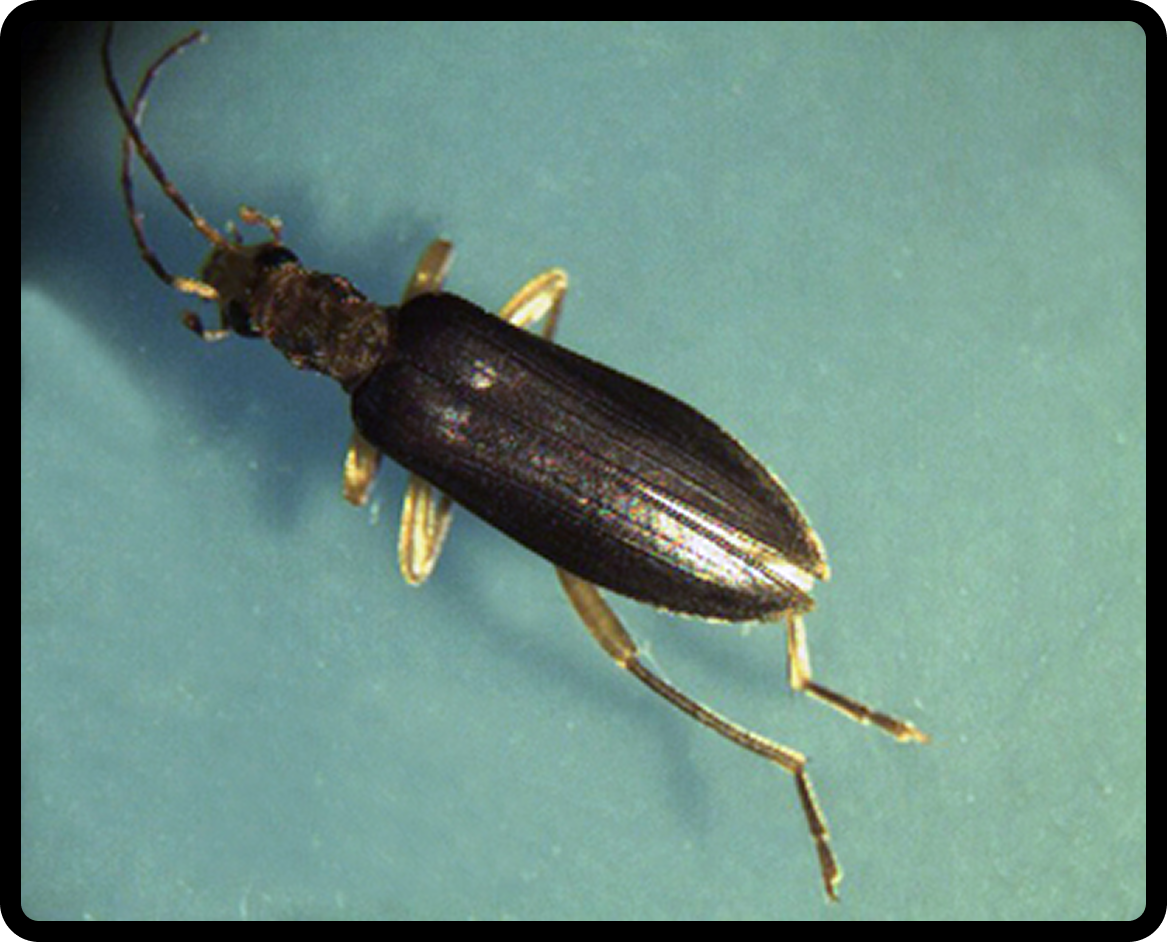
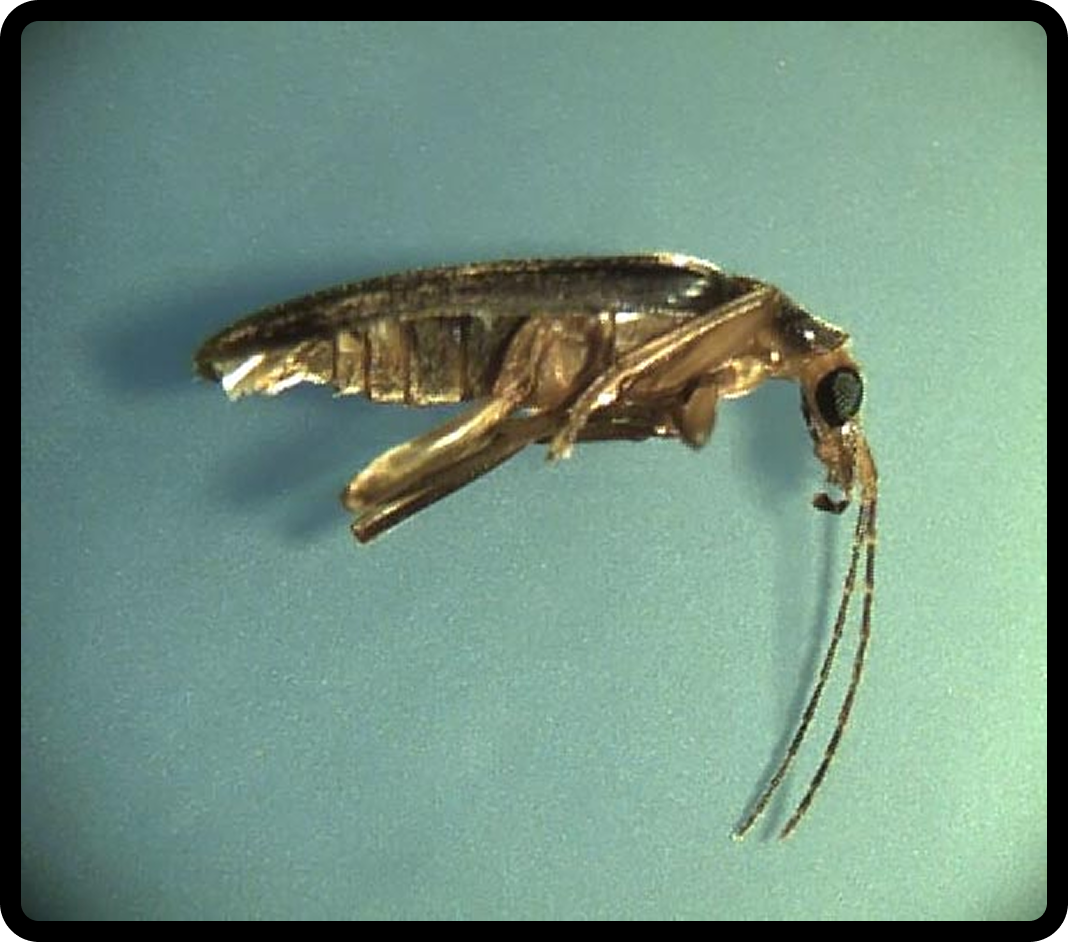
Blister Beetle
Side view. Body length is 10mm.


False Blister Beetle
Body length 10 mm.
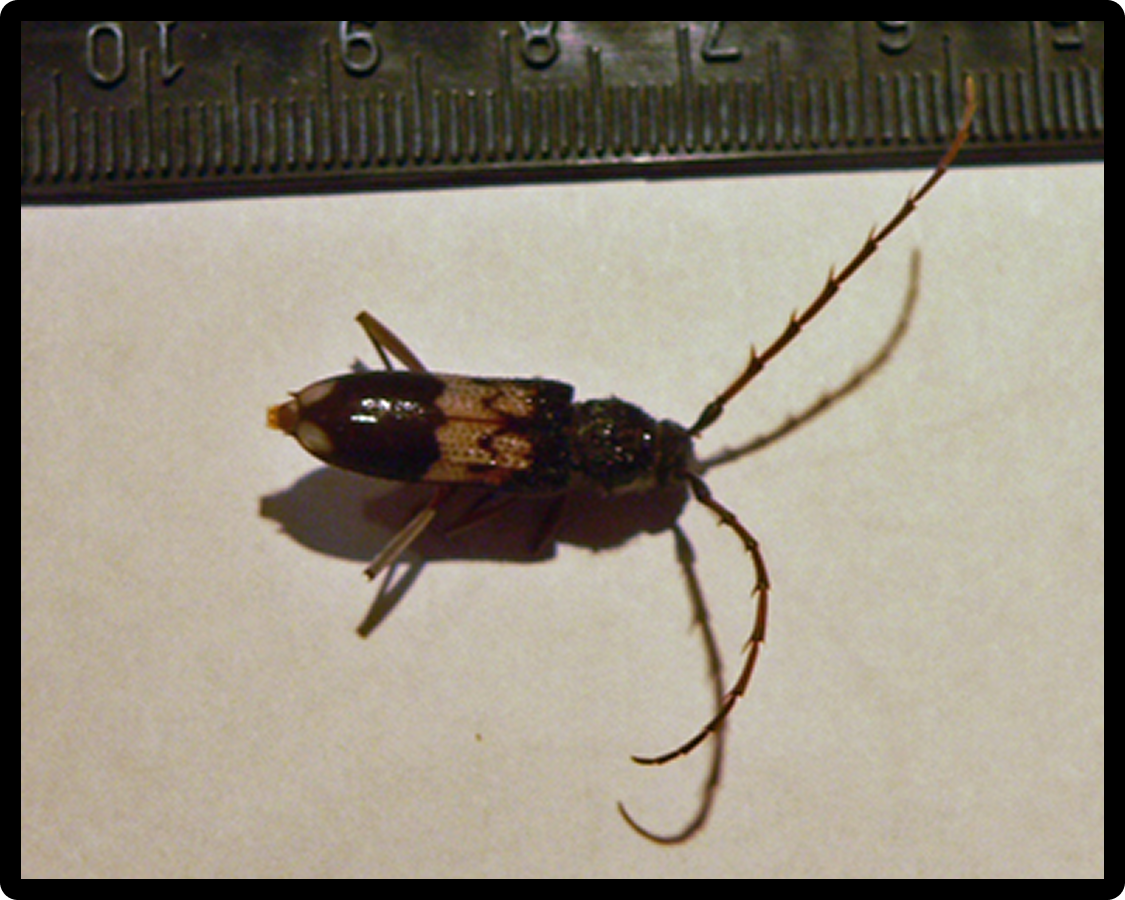
Eucalyptus Long-horned Beetle
This is a non-native species, established in Hawaii since 1965.
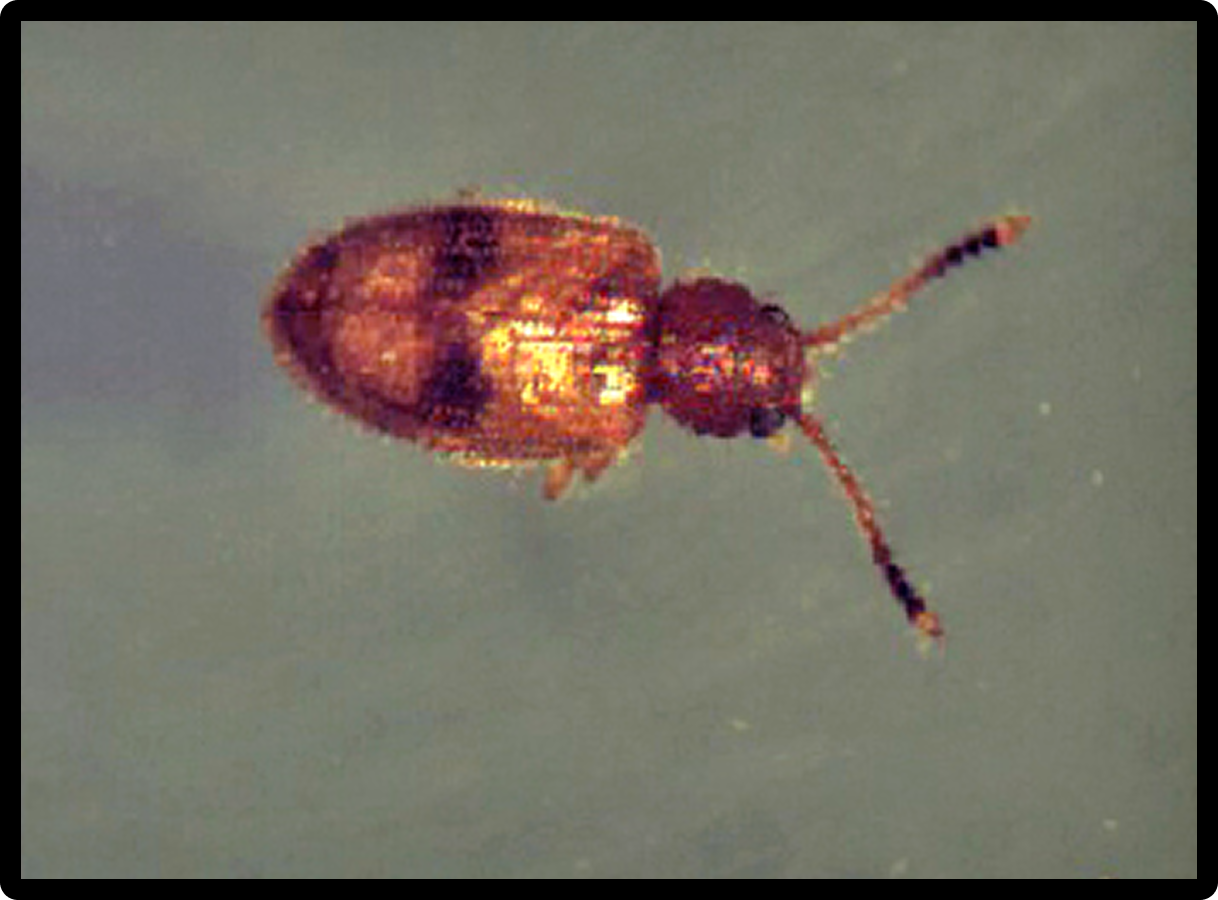
This beetle is about 3 mm long. Identification made by Bishop Museum. Introduced species.
Small Beetle
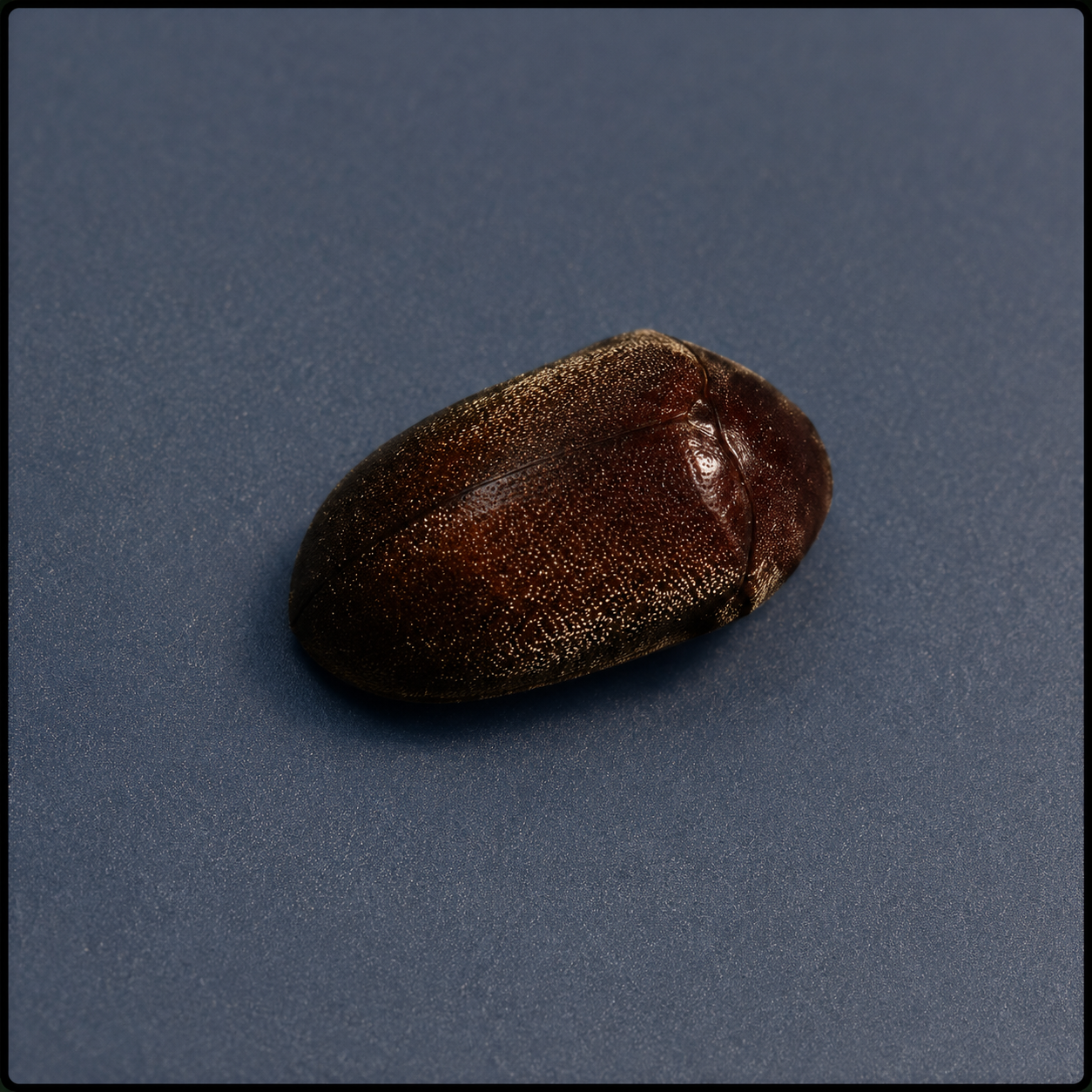
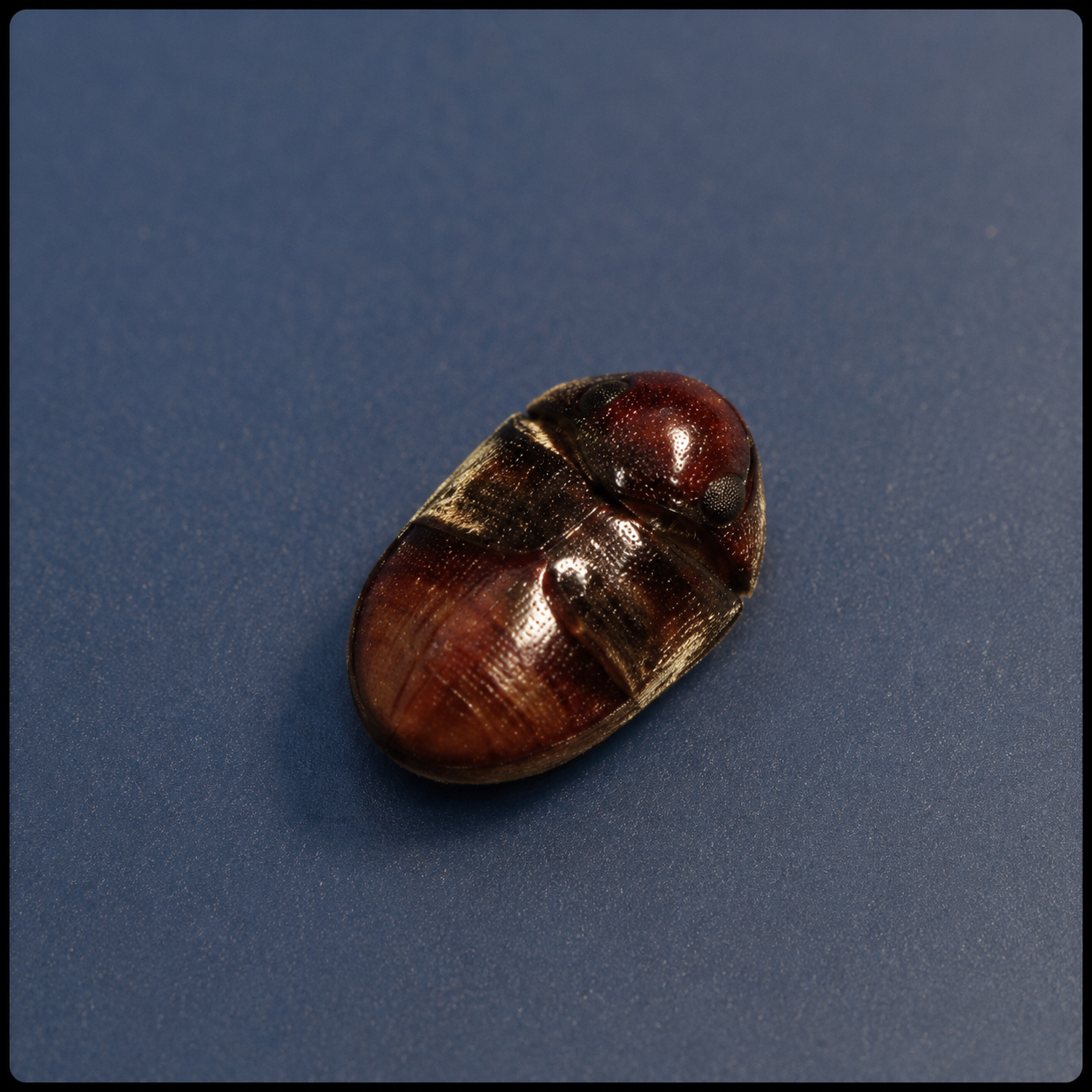
Ventral closed. Beetle is 3 mm long. Ventral fully opened. The larva of these beetles eat wood. Specimens are about 2.5 mm long.
Powder-post Beetle
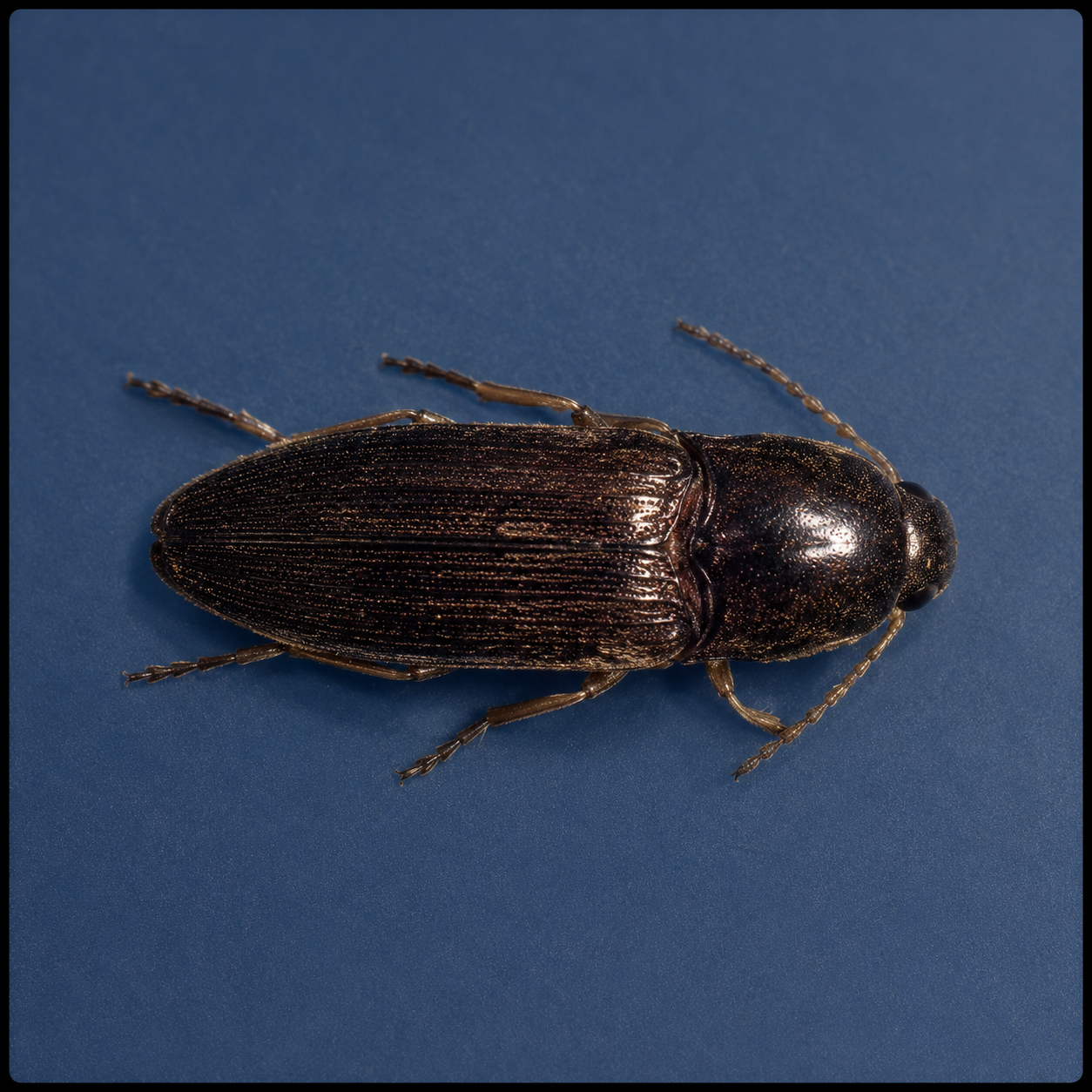
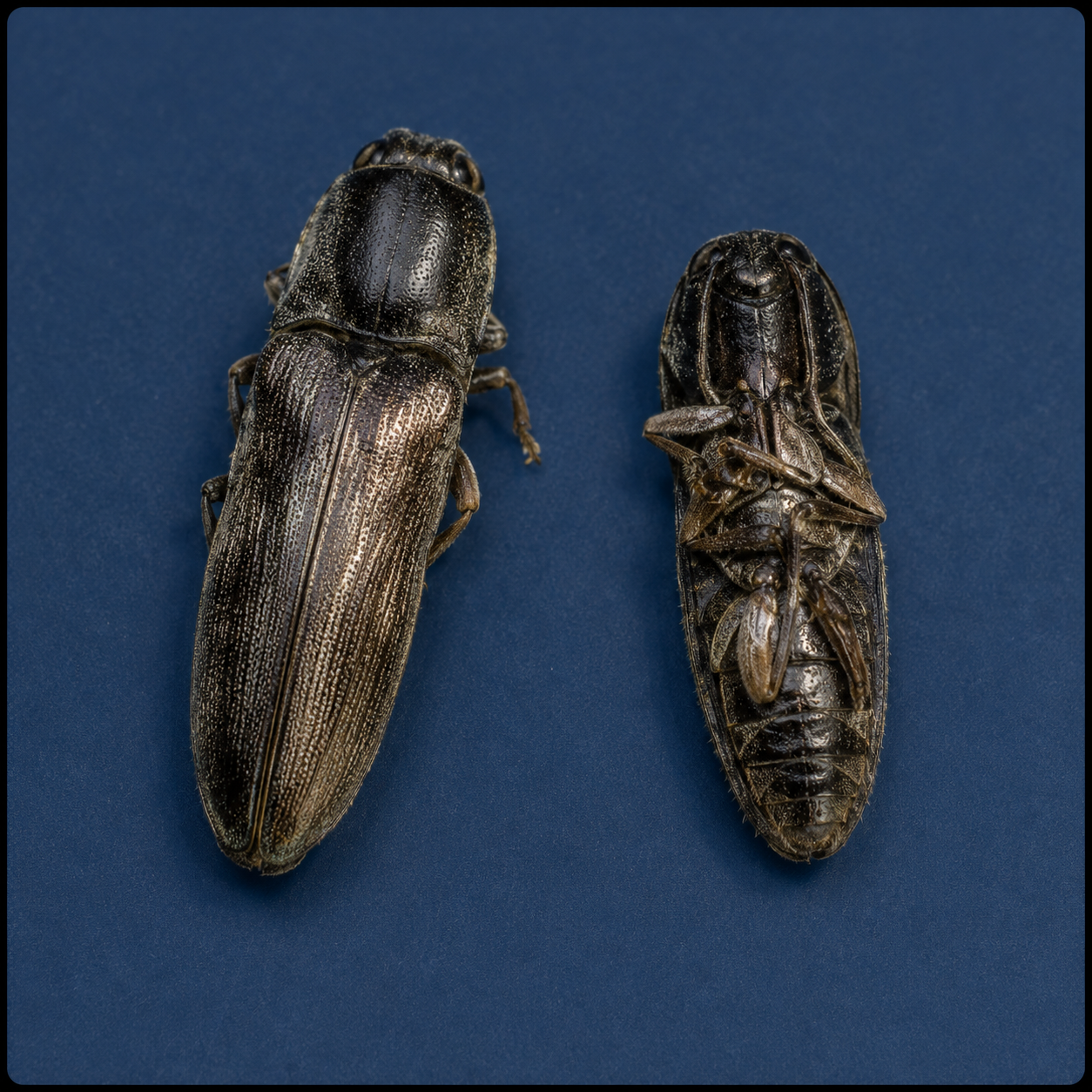
Beetle on the left (dorsal view) shows wing on the right half. Beetle is approximately 10 mm long.
Elaterid Click Beetle
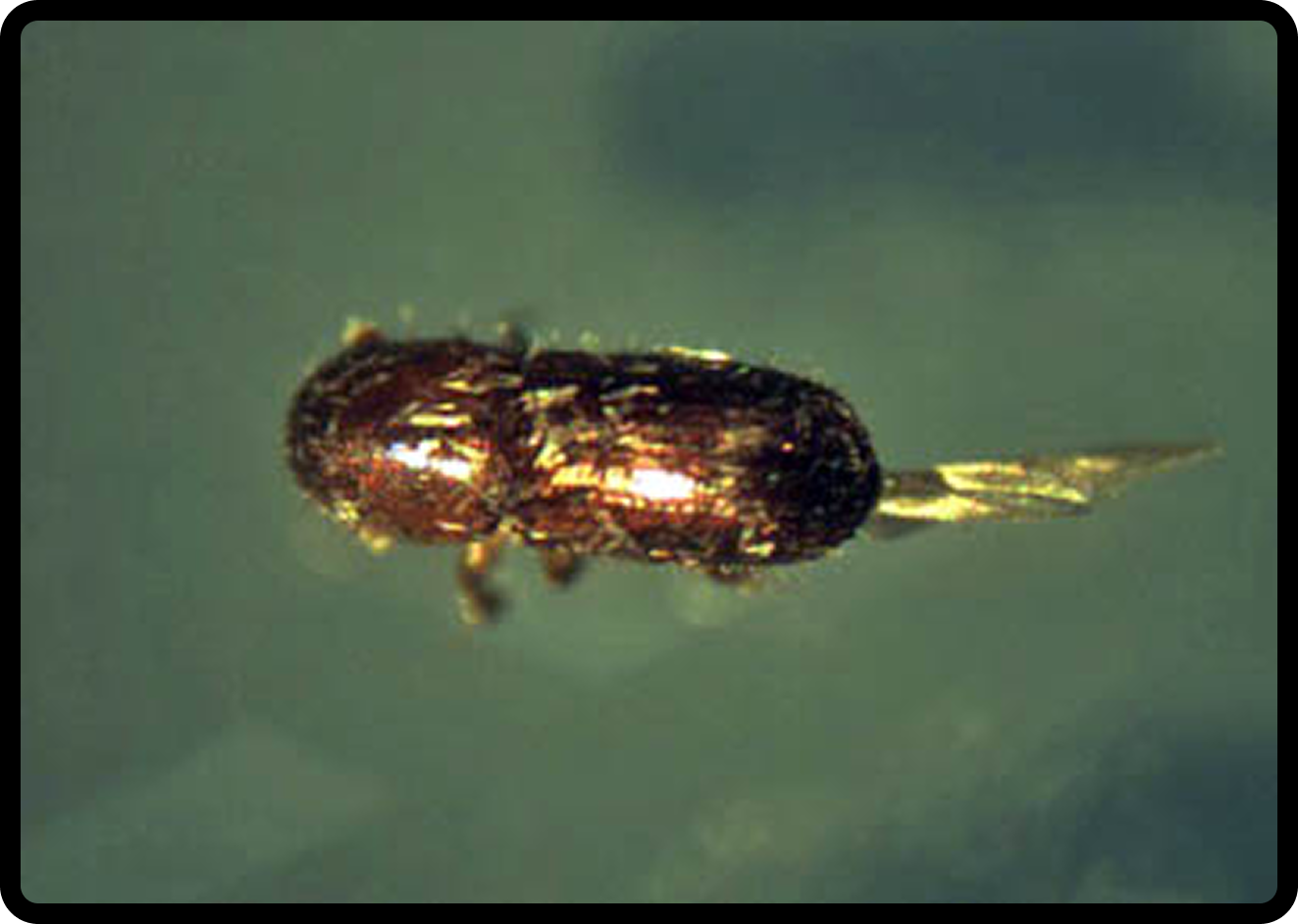
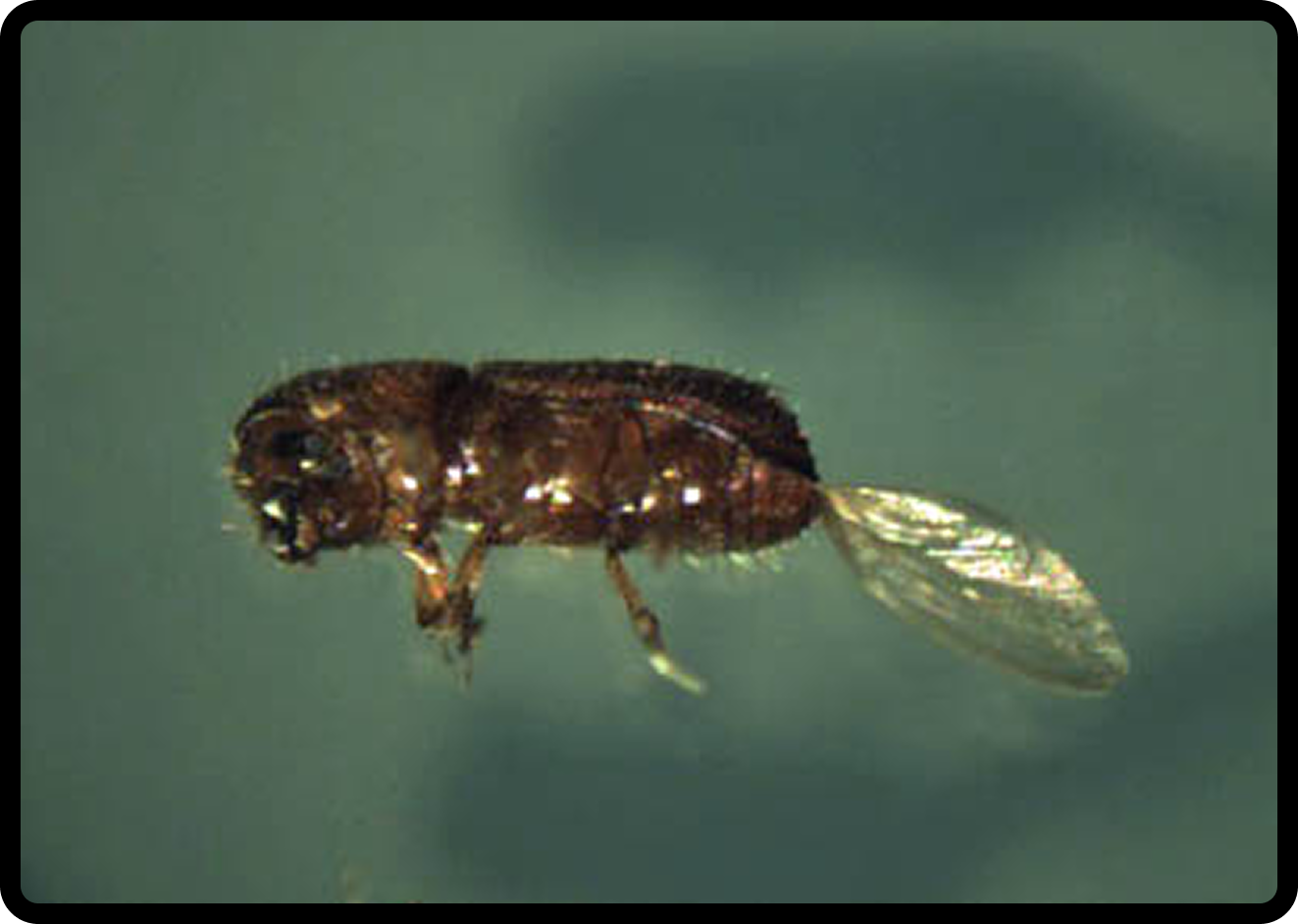
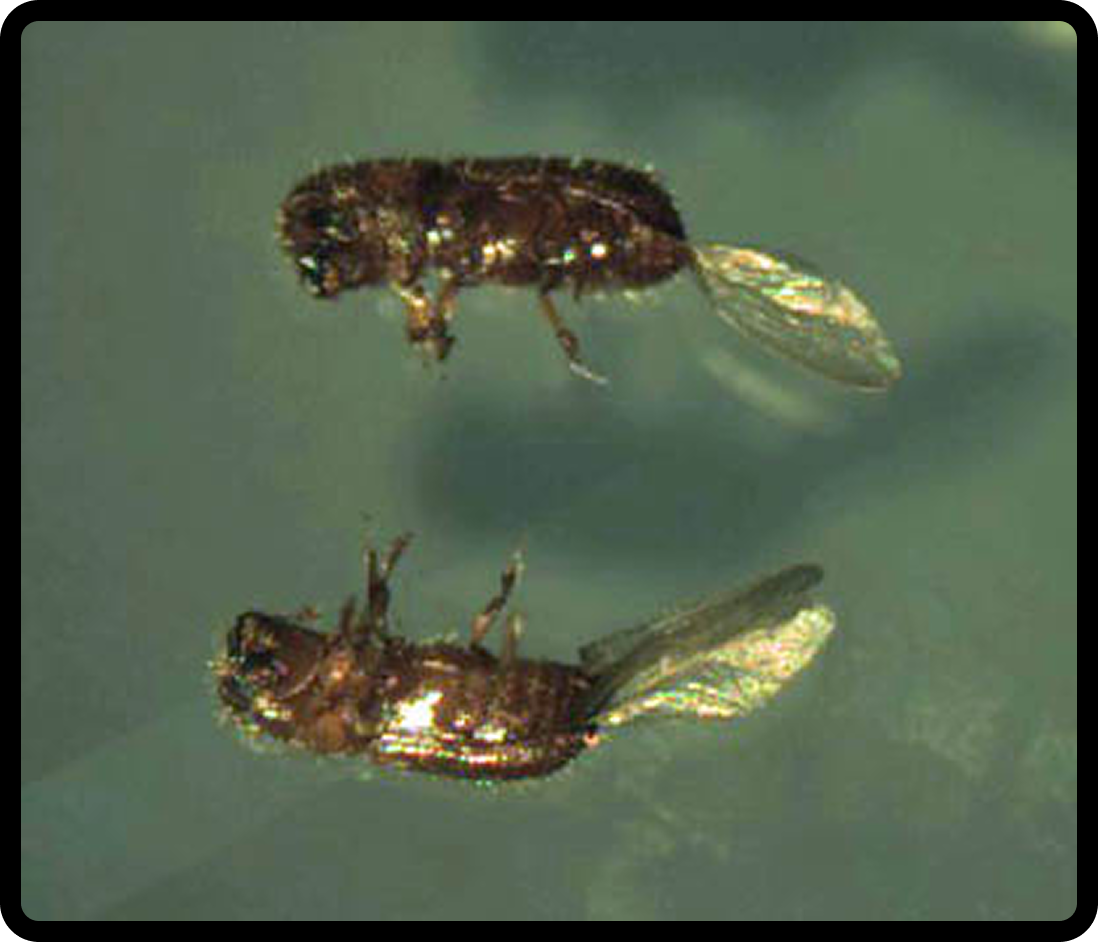
Dorsal view. Wing extending from under carapace. Two specimens, both with wings showing. The body of this small beetle is only about 2 mm in length.
Bark Beetle


Bark Beetle type 2
Ventral view. Body length = 2mm.
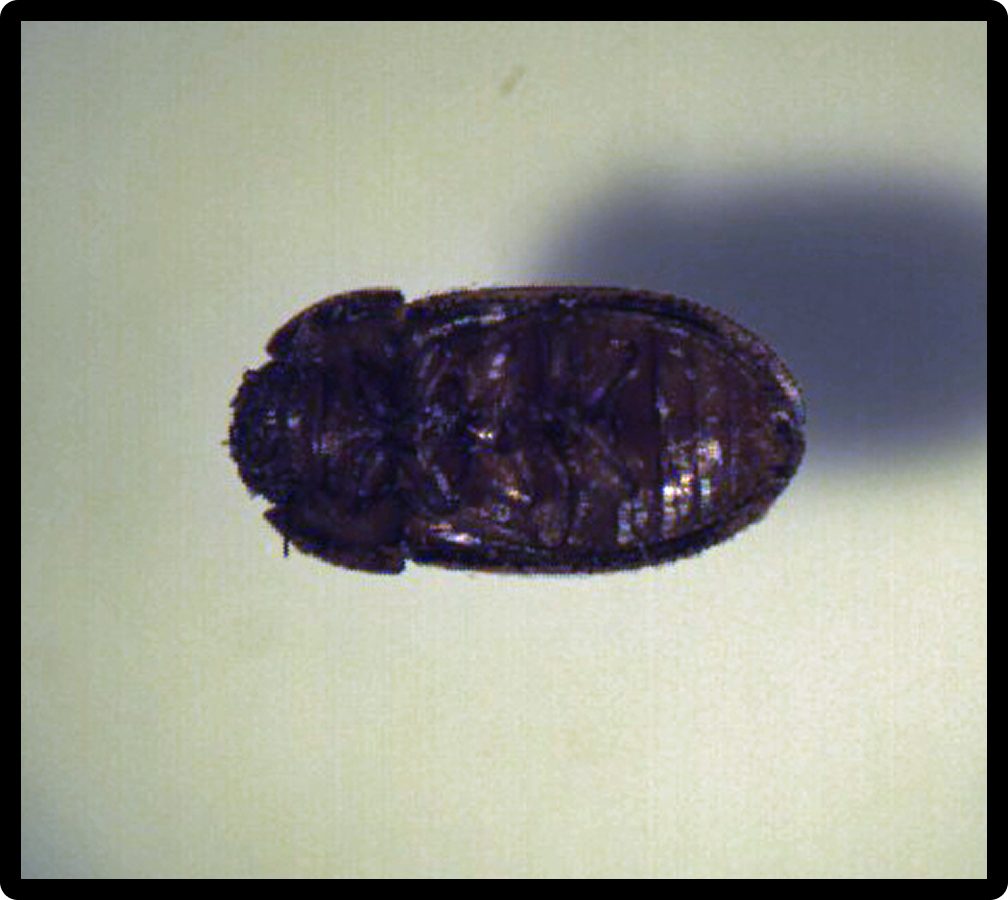
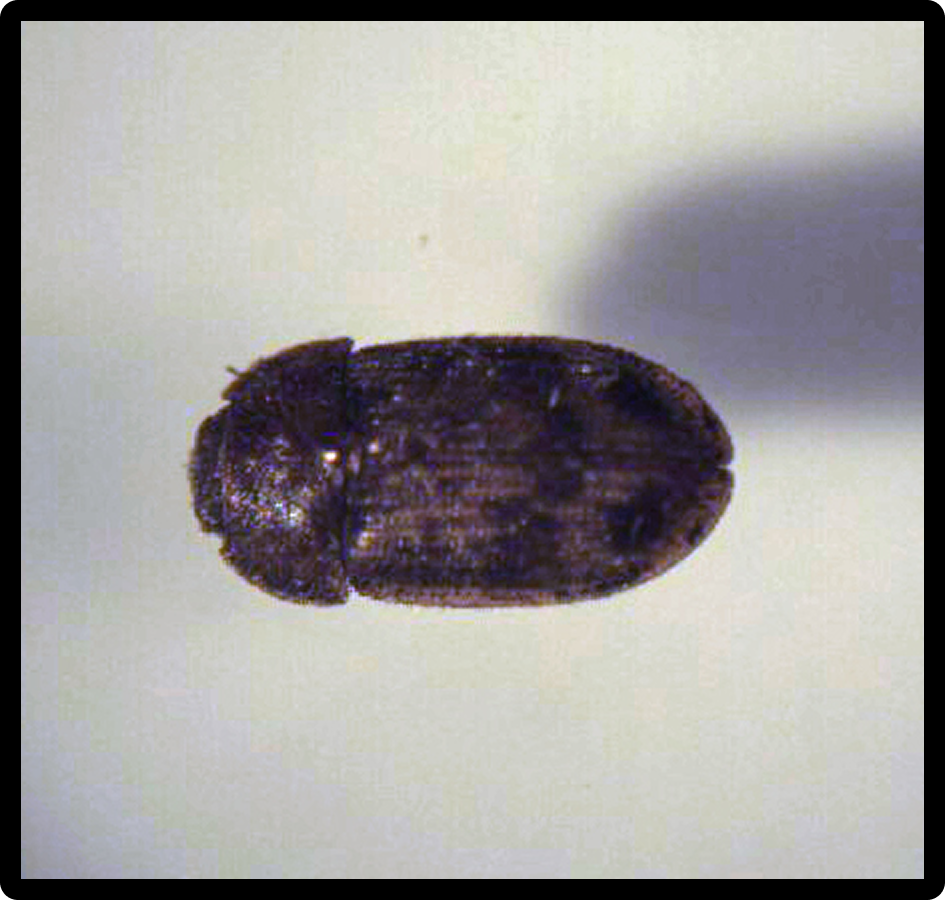
Dorsal view. Note bilateral blackish spots. Ventral view. Beetle is 4 mm long.
Gonocephalum Darkling Beetle
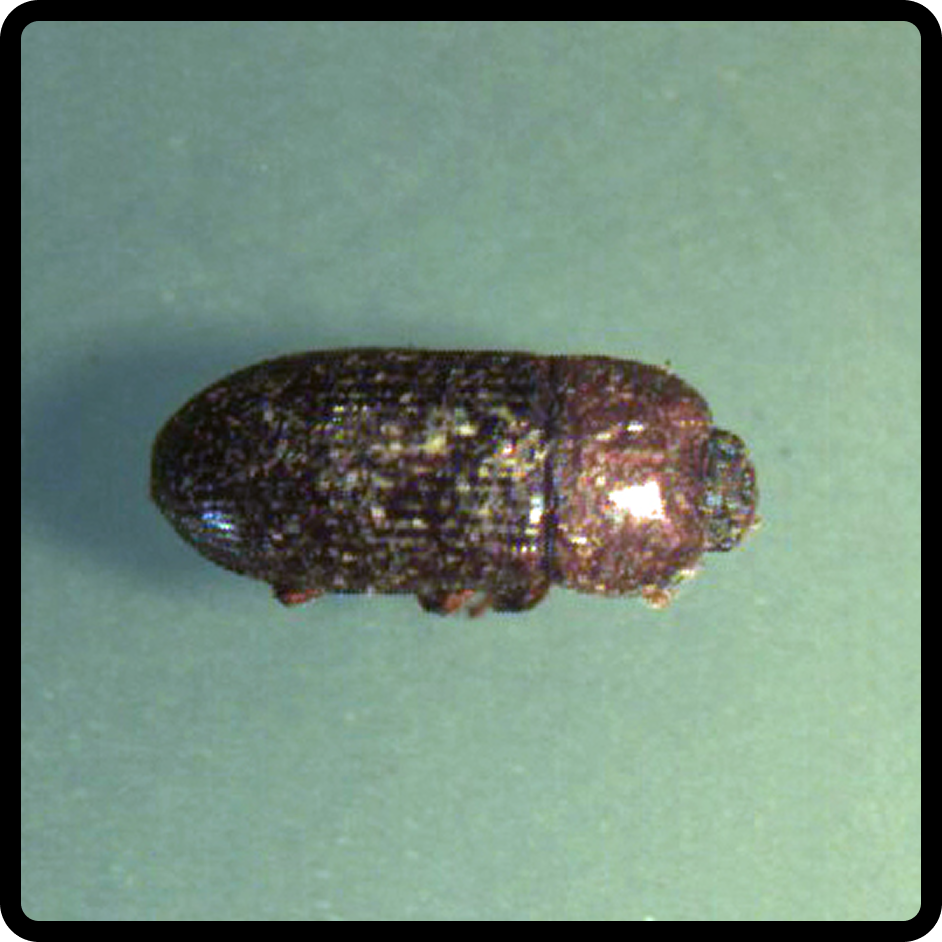
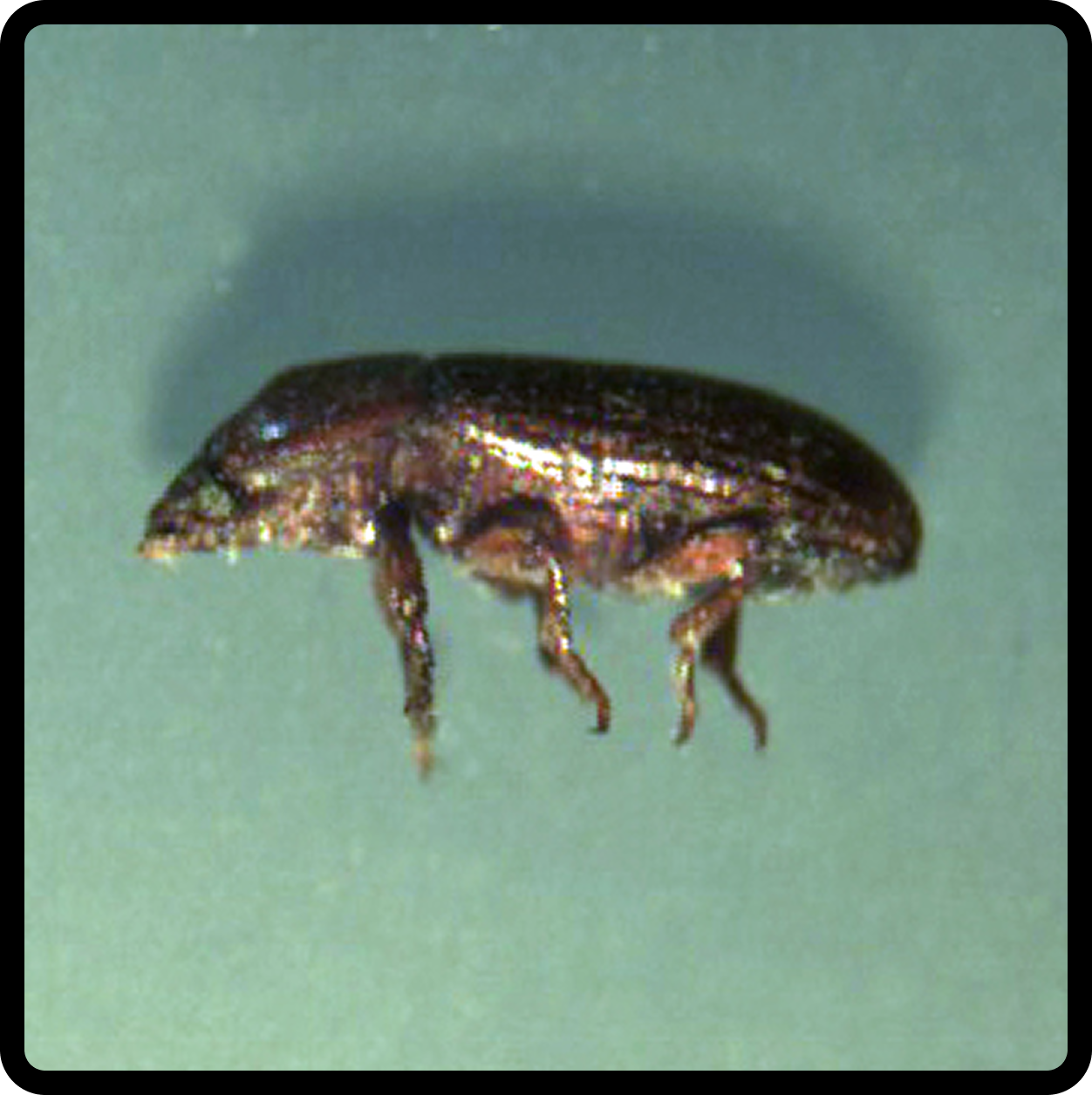
7 mm Beetle
Side view.
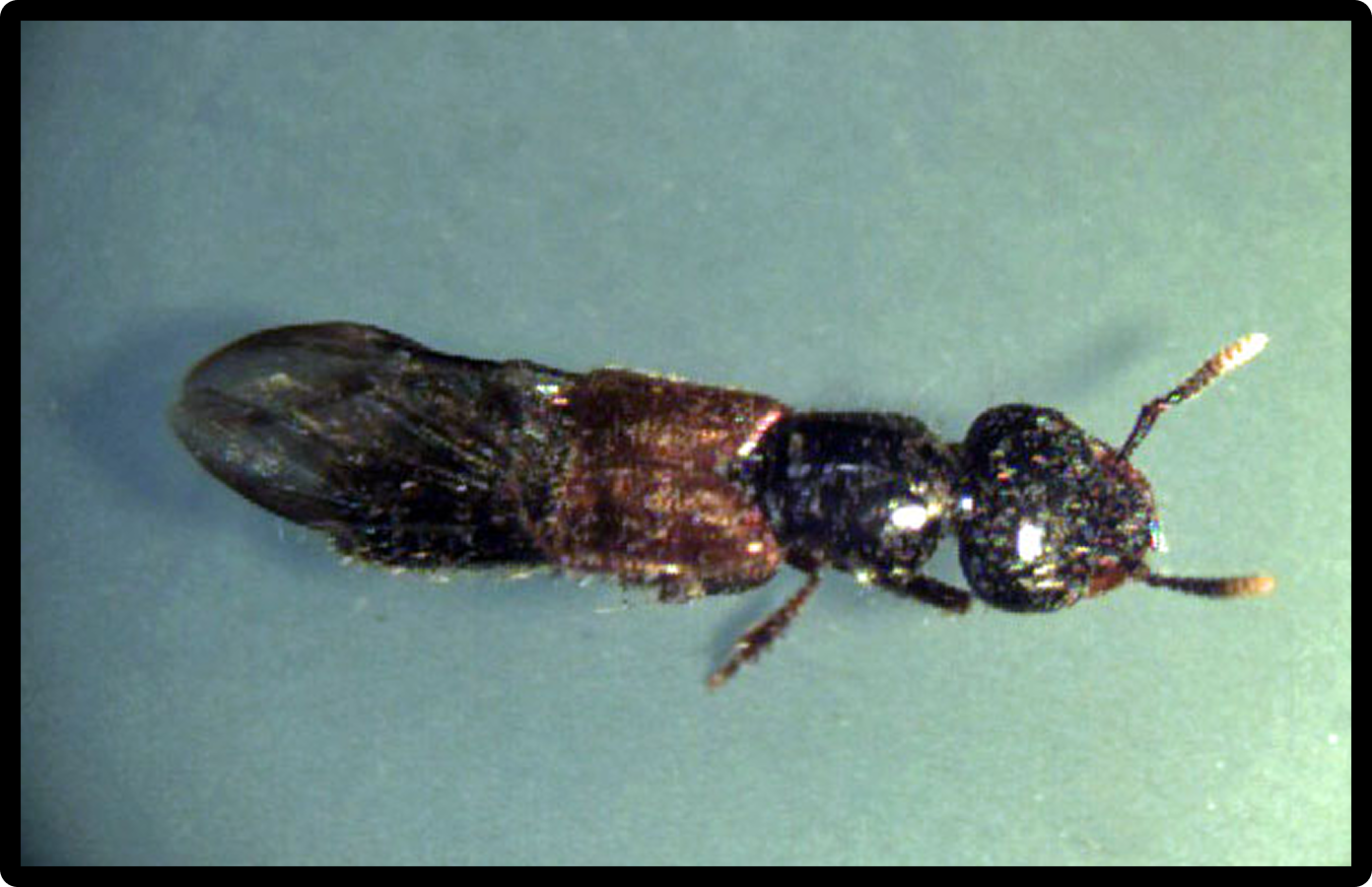
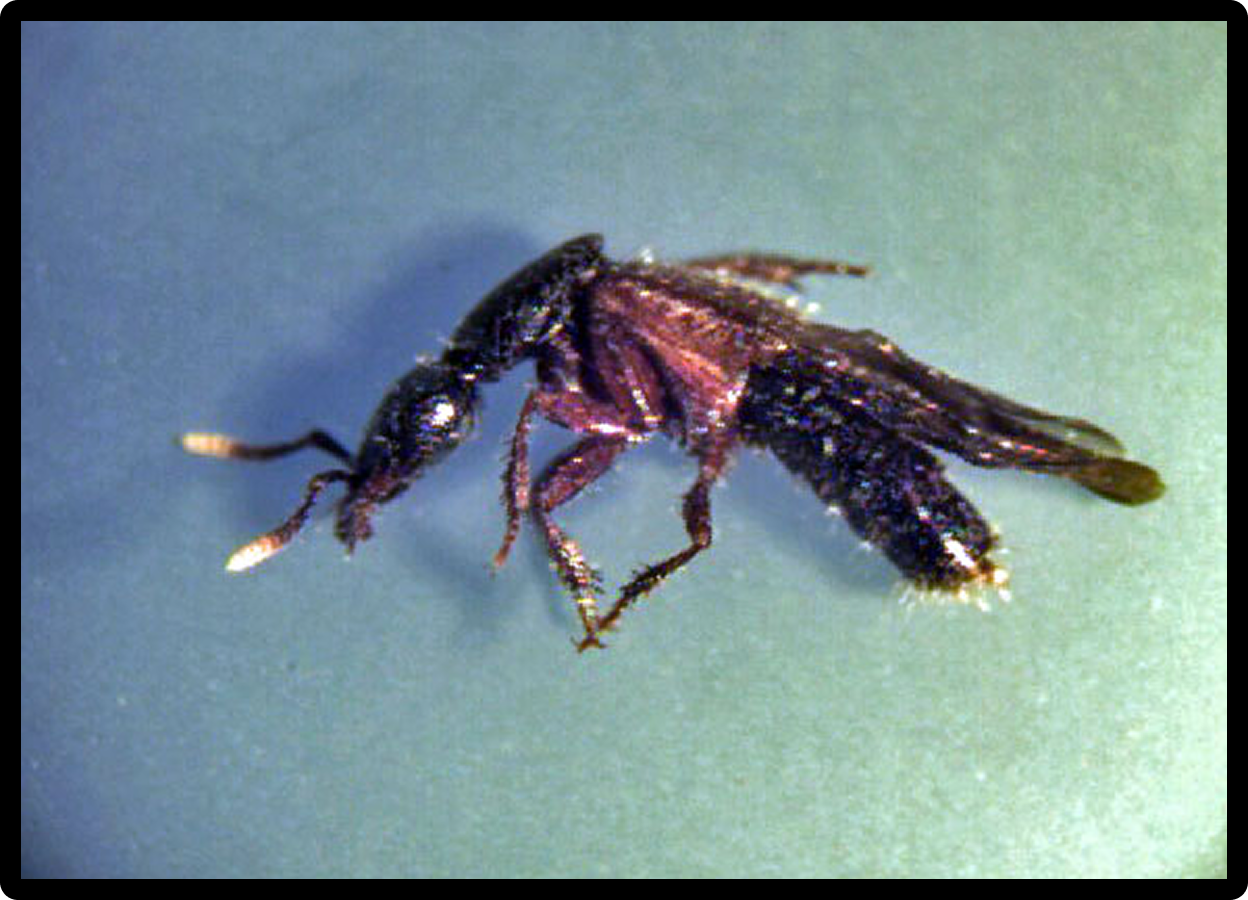
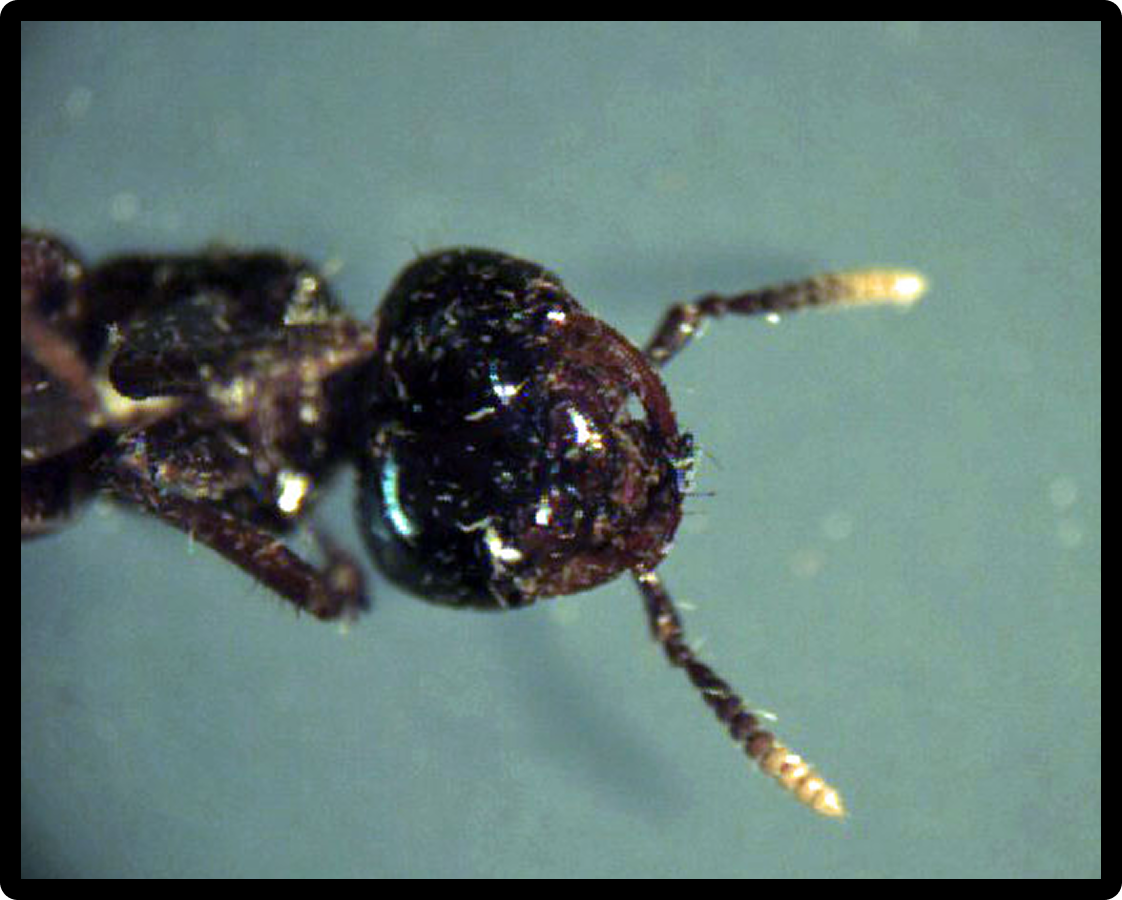
Beetle length = 1.3 cm. Per Frank Howarth of the Bishop Museum this “is a rove beetle, family Staphylinidae. From the color pattern, size, and what I can see of its form, it is probably Thyreocephalus albertisi (Fauvel, 1877) which was purposefully introduced as a generalist predator of agricultural pests. Rove beetles are mostly predators but also scavenge on rotting animal remains.”
Rove Beetle
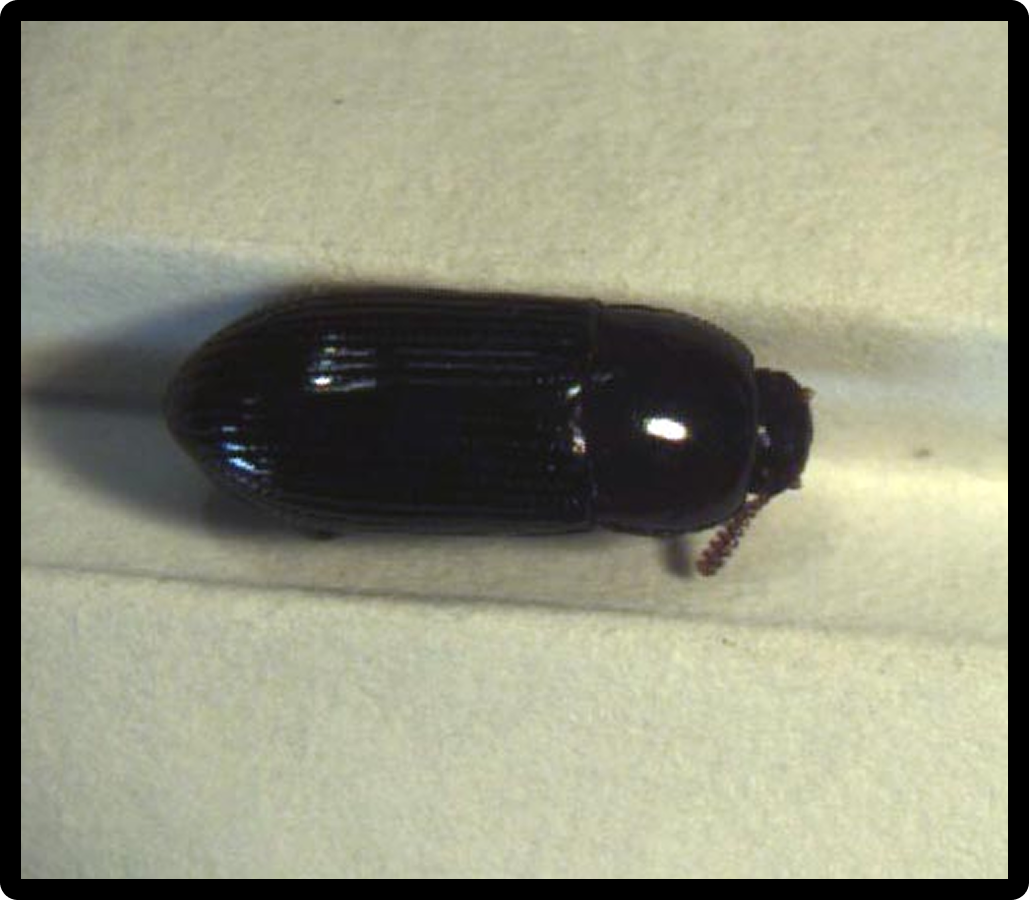
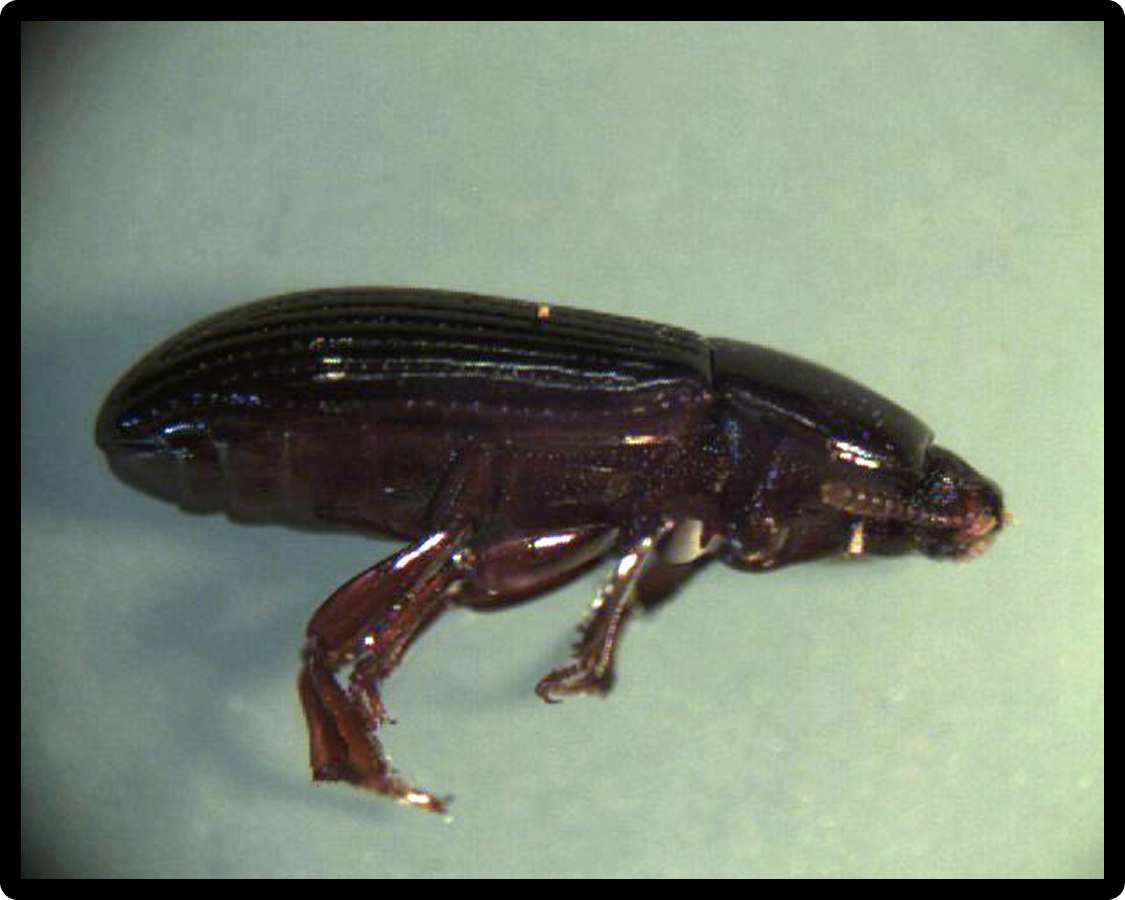
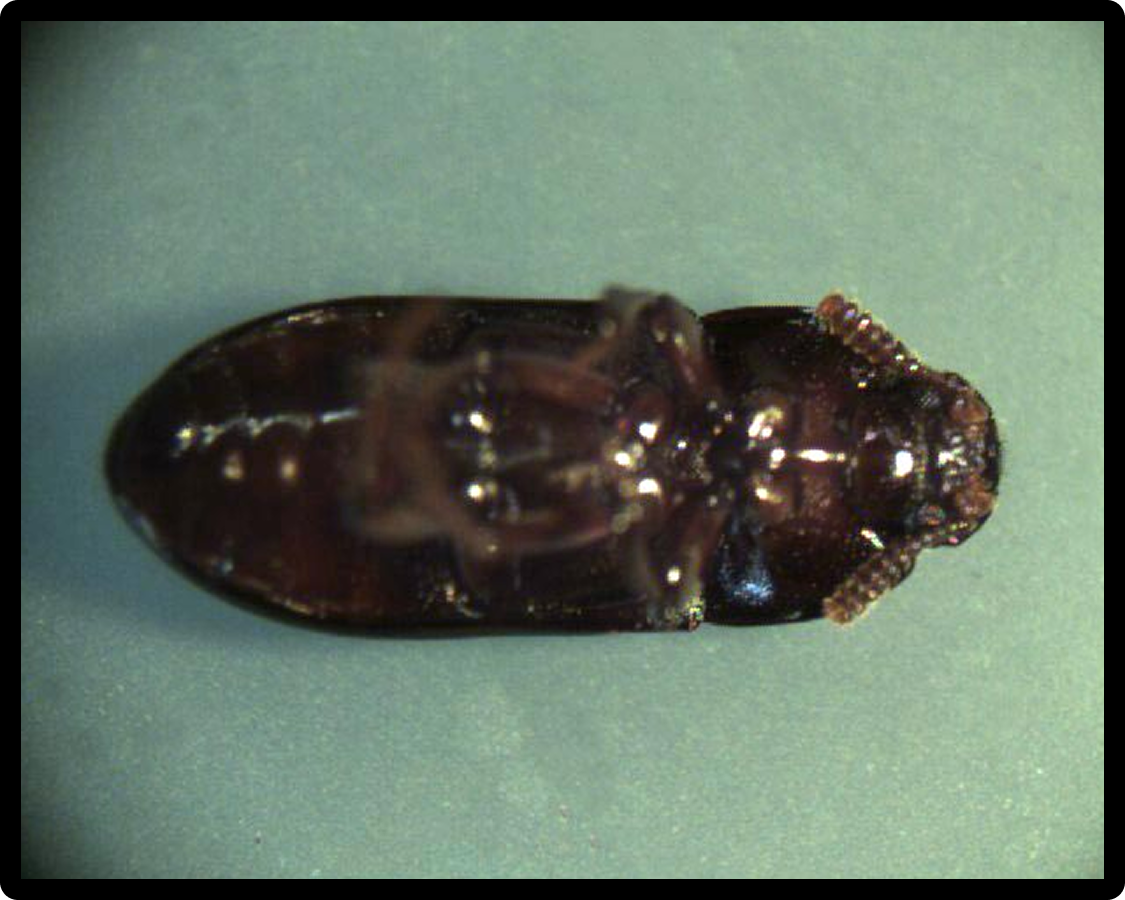
This beetle is 9 mm long. Found in rotting log. Per David Preston of the Bishop Museum “This appears to be the Tenebrionid beetle Uloma bonzica Marseul 1876. They are associated with decaying plant material and the species was first collected by Al Getmann in the mid-eighties from rotting banana stumps.”
Tenebrionid Beetle
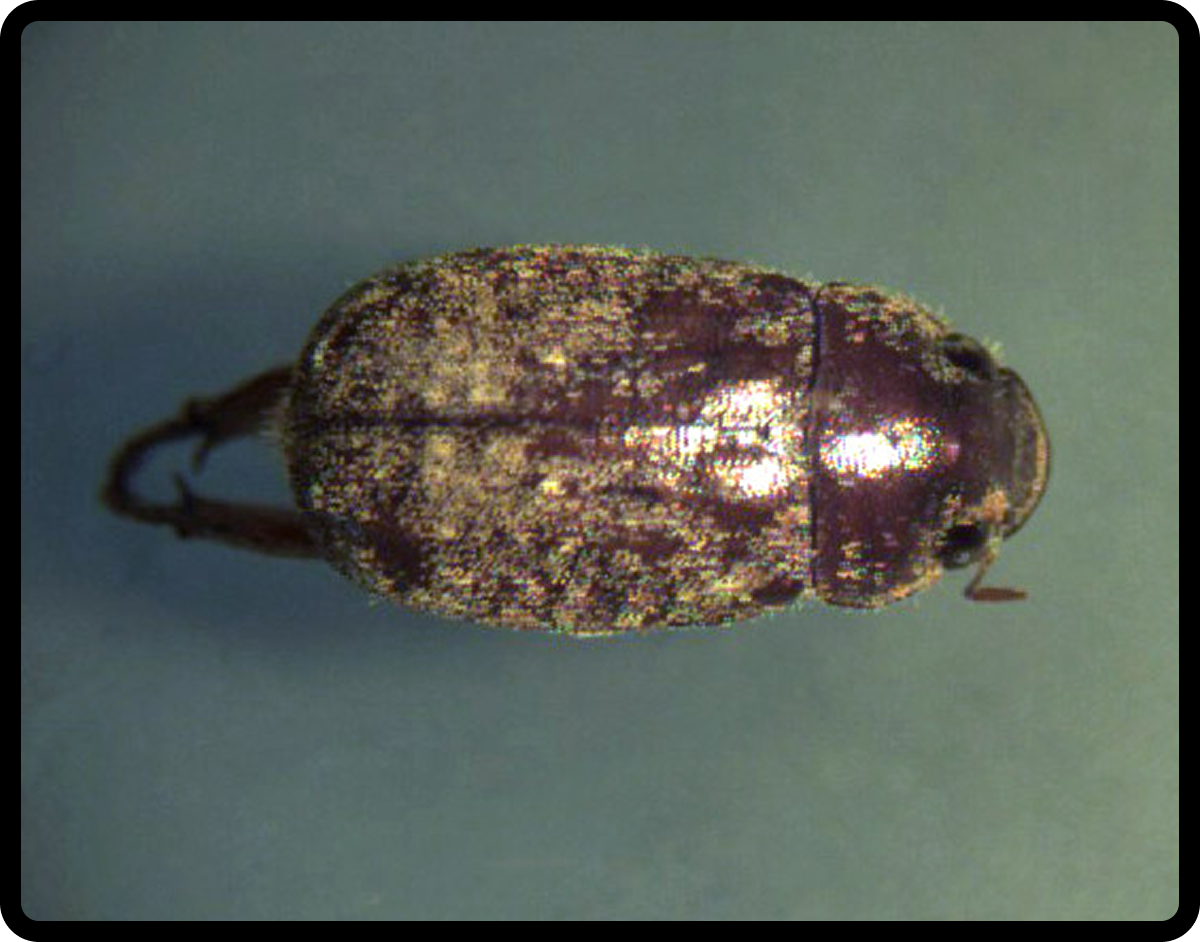
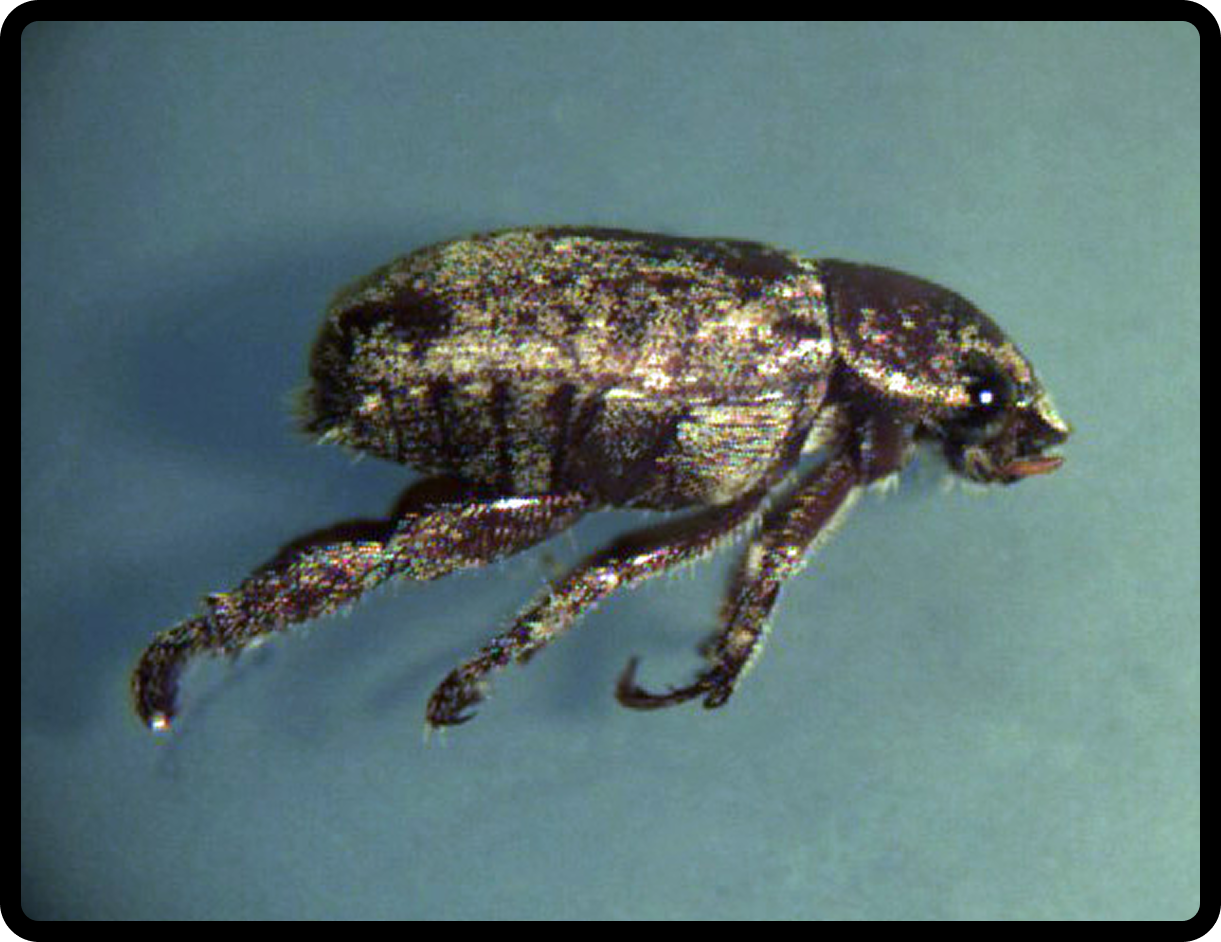
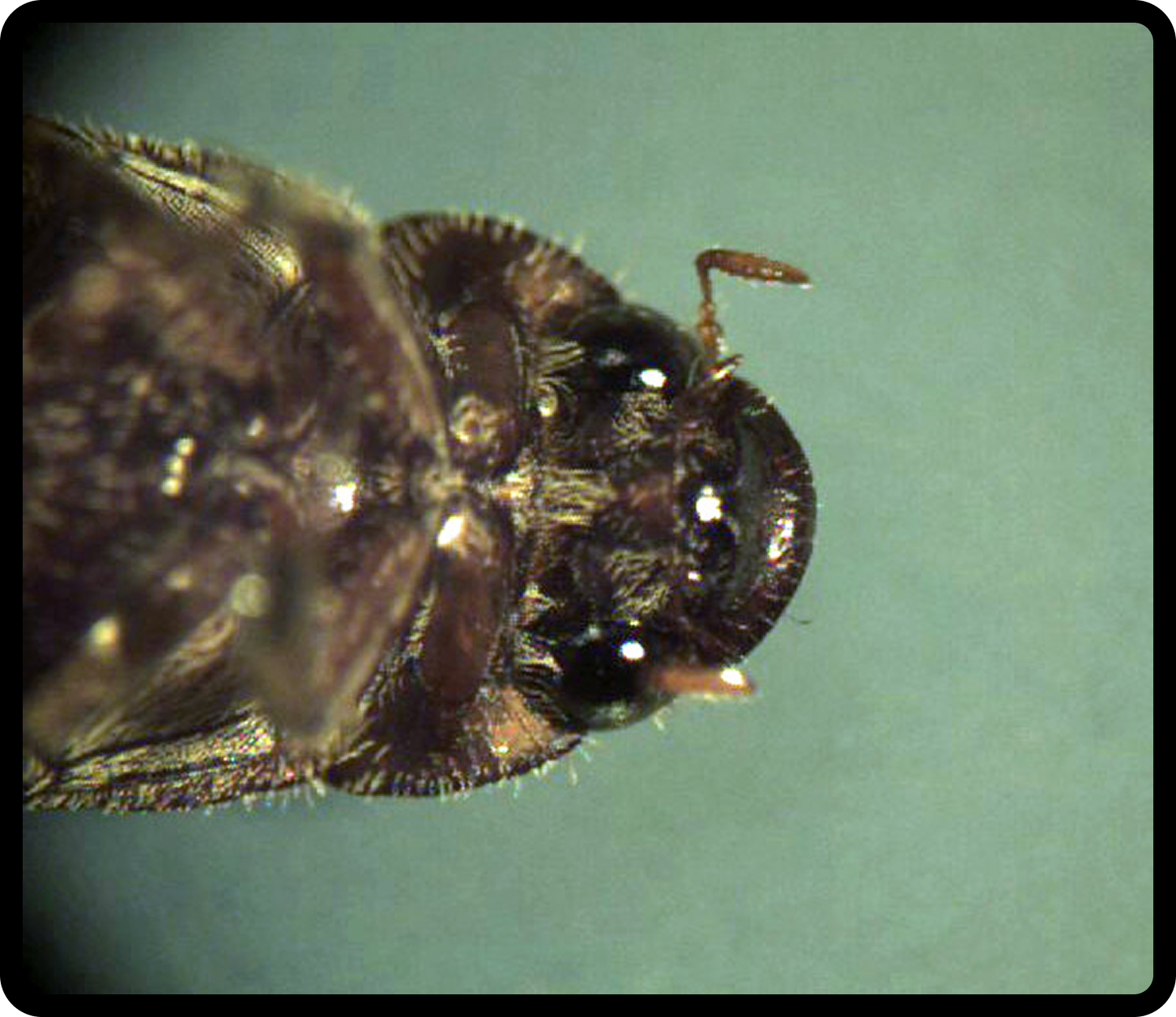
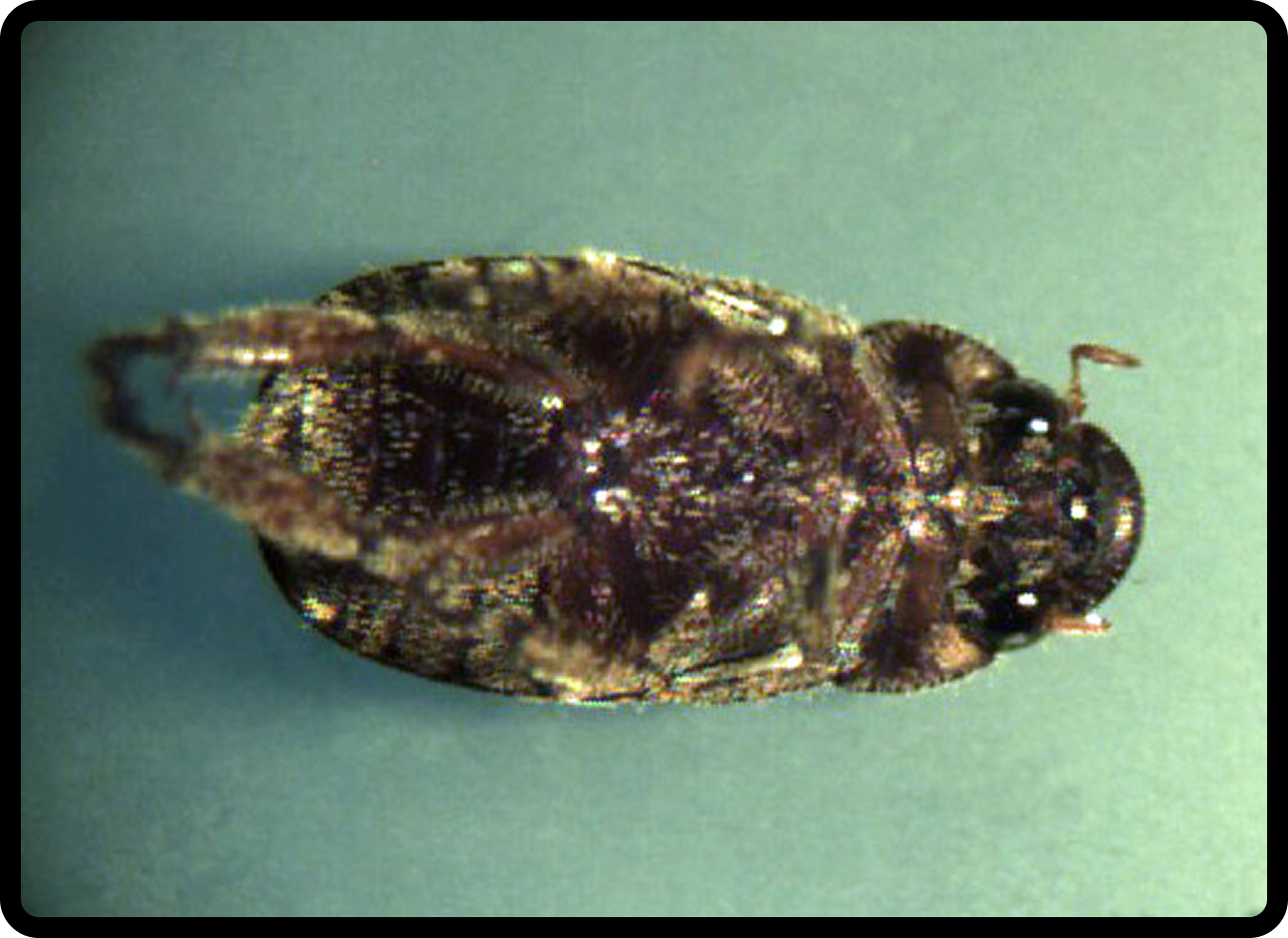
Close-up of ventral side of head. This beetle is 1 cm long.
This species was accidentally introduced sometime before 1896. It is native to Japan and Taiwan.
Chinese Rose Beetle
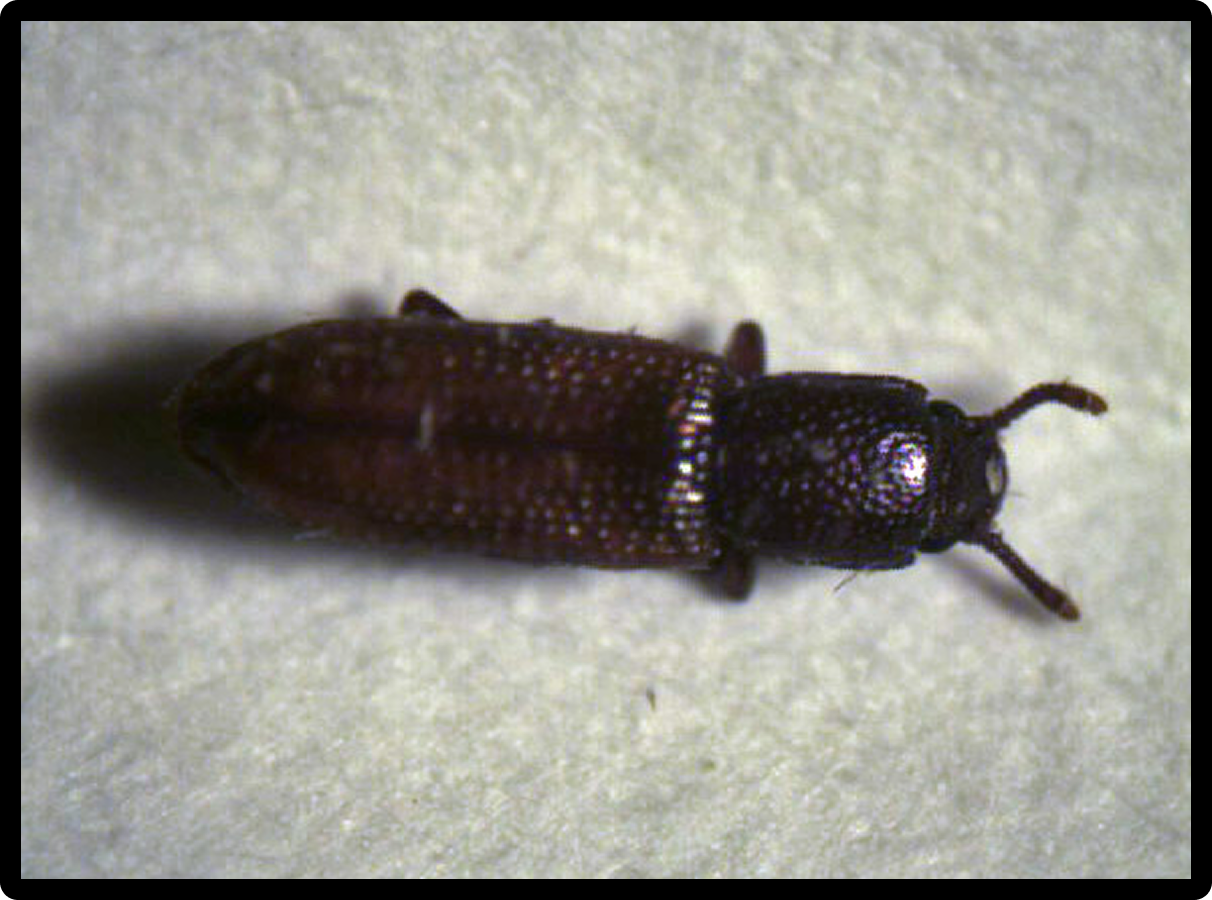
Lyctid Beetle
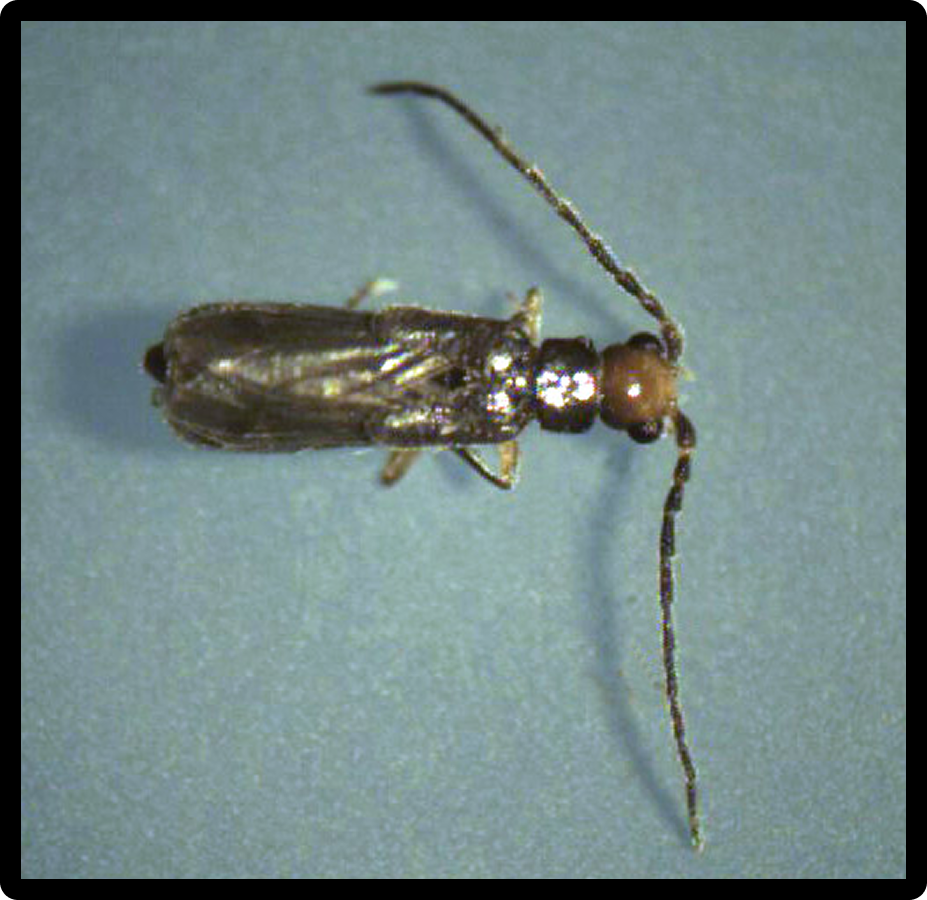
Rhipidius Beetle
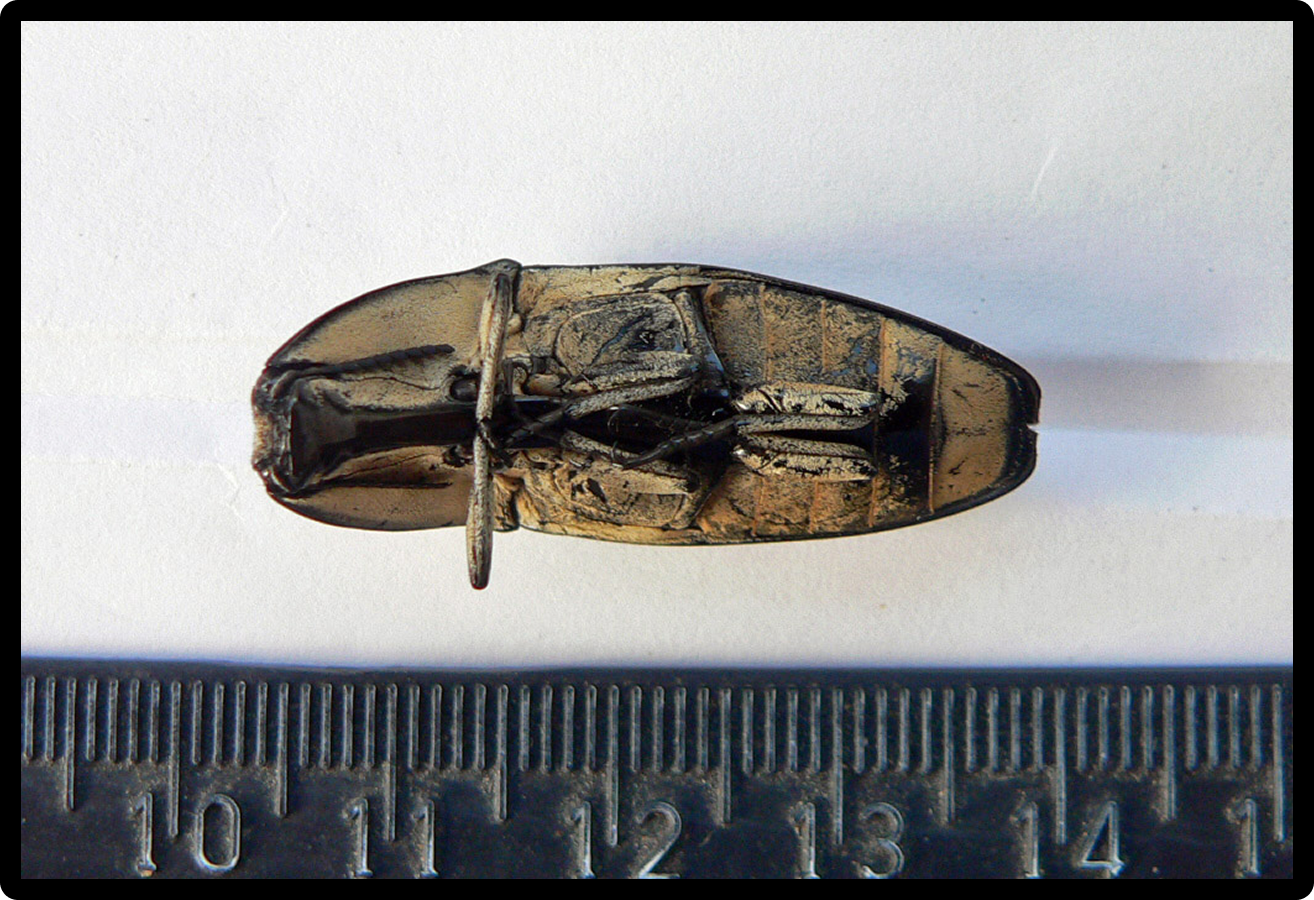
This beetle is about 2.8 mm long.
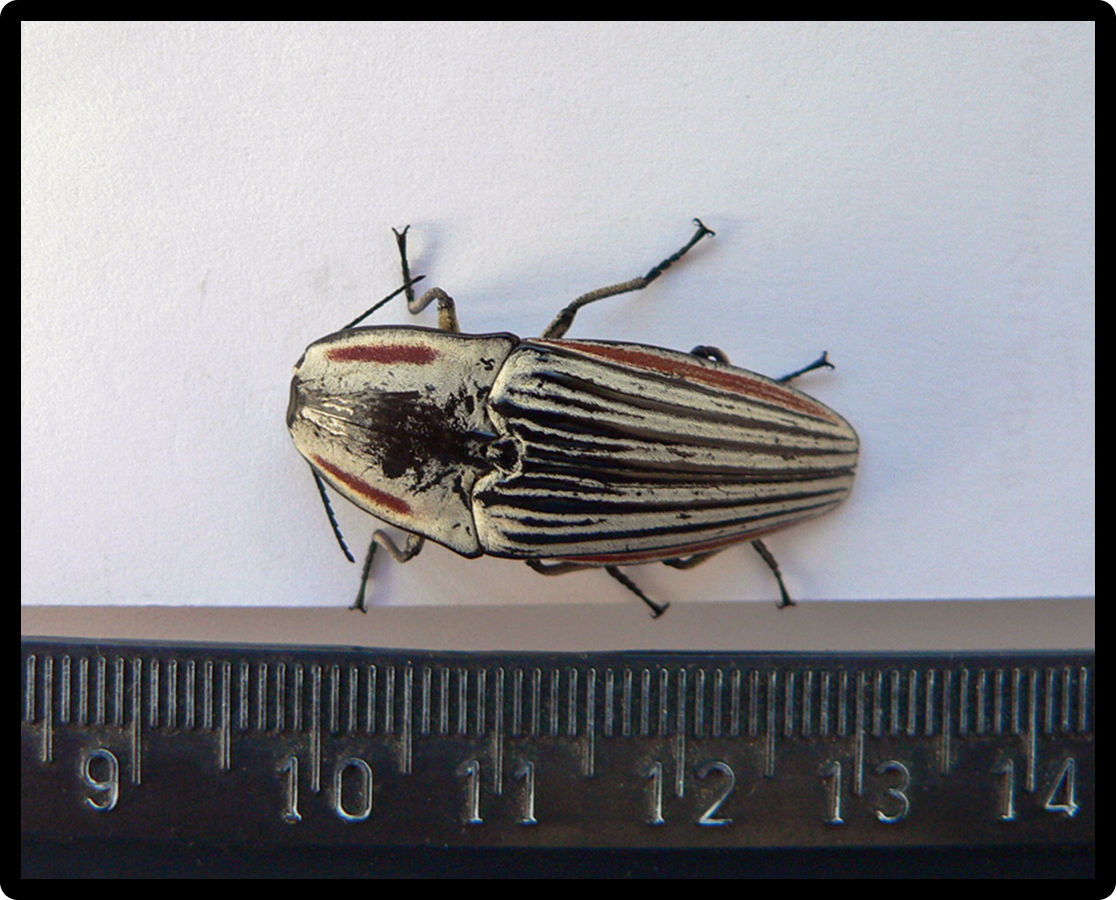
Giant Click Beetle
Per Frank Howarth of the Bishop Museum “This is a giant click beetle, accidentally introduced from Central America. The name is Chalcolepidius erythroloma Candeze, 1857, family Elateridae. The larvae are predators and scavengers in rotting wood, and the adults feed on fruits and considered minor pests. The adults make good pets as they are long-lived and have such a spectacular jumping ability.”This beetle is about 2.8 mm long.
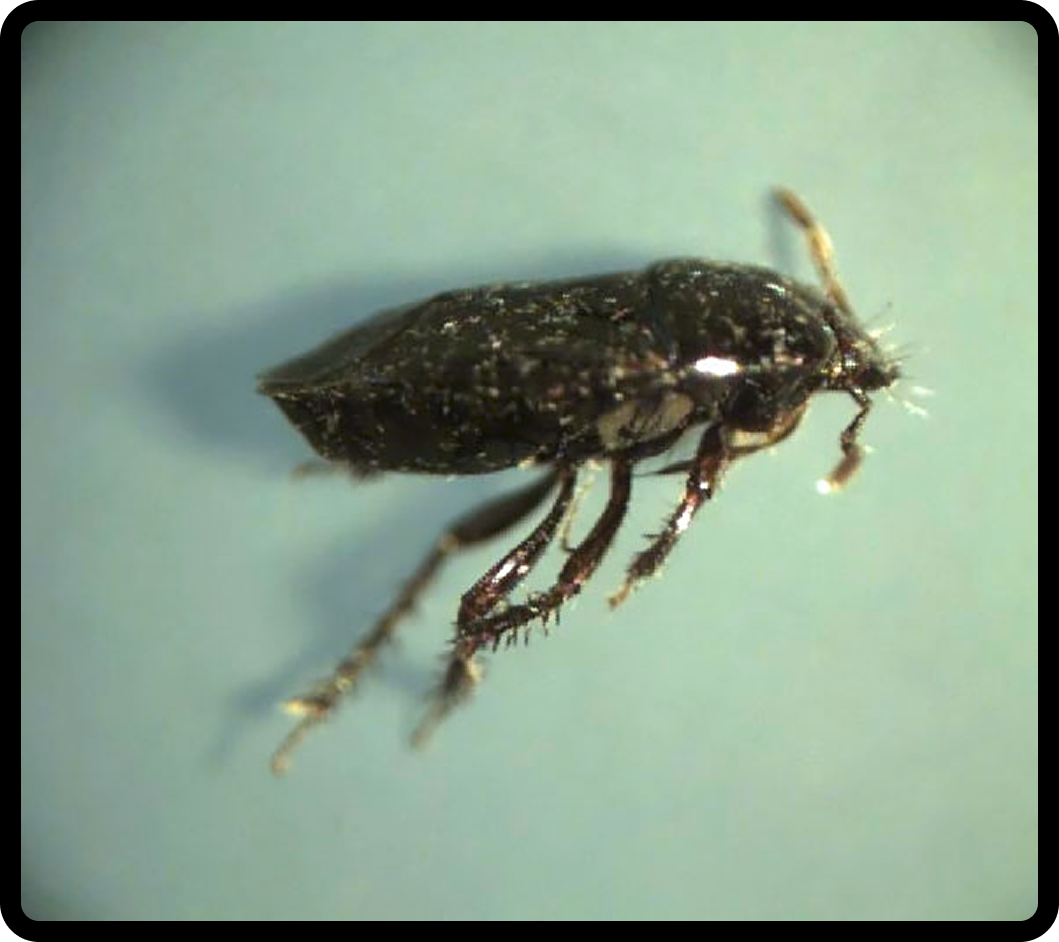
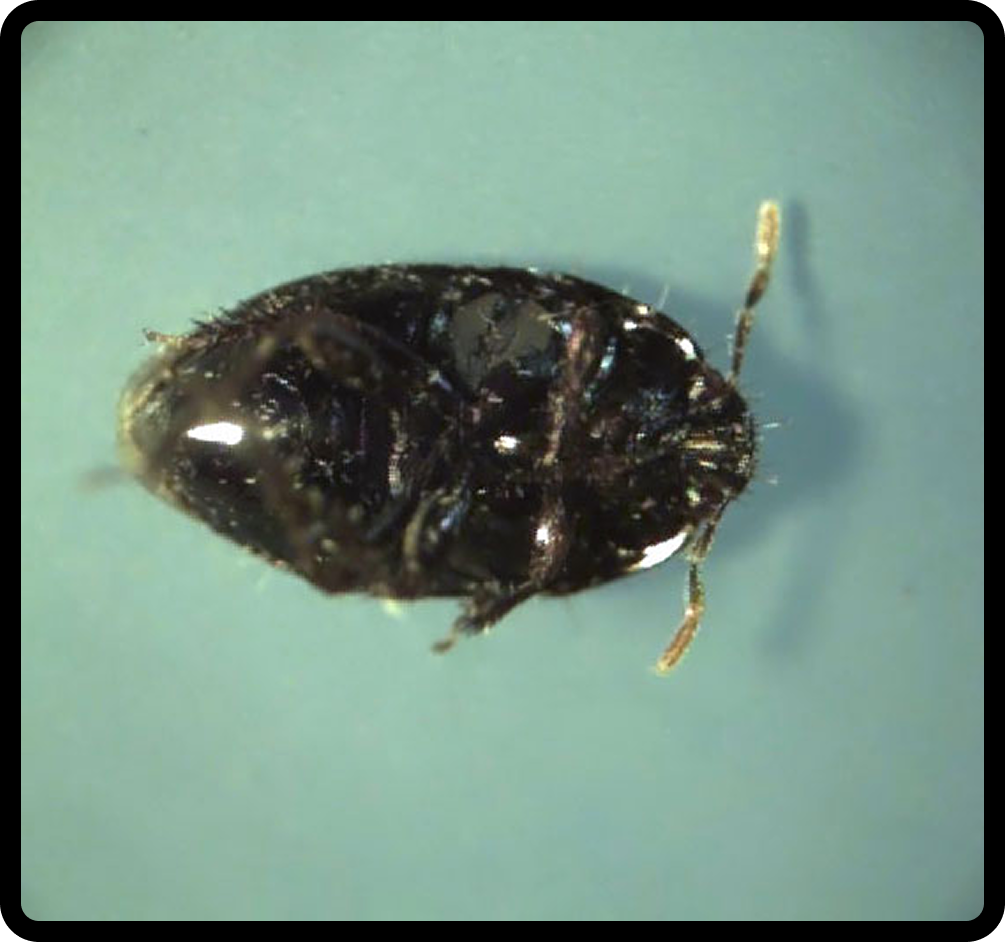
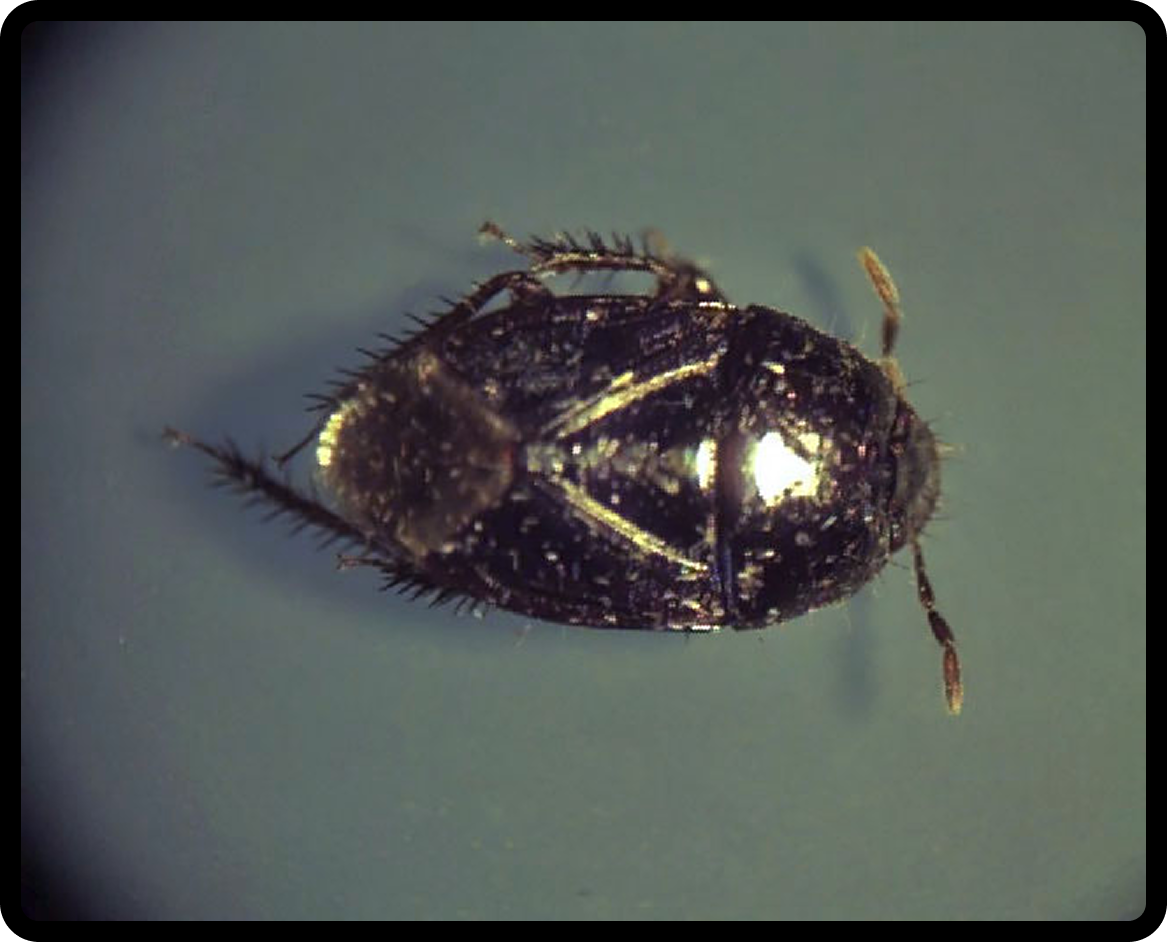
Burrowing Beetle
Dorsal view. This beetle is 5 mm long.
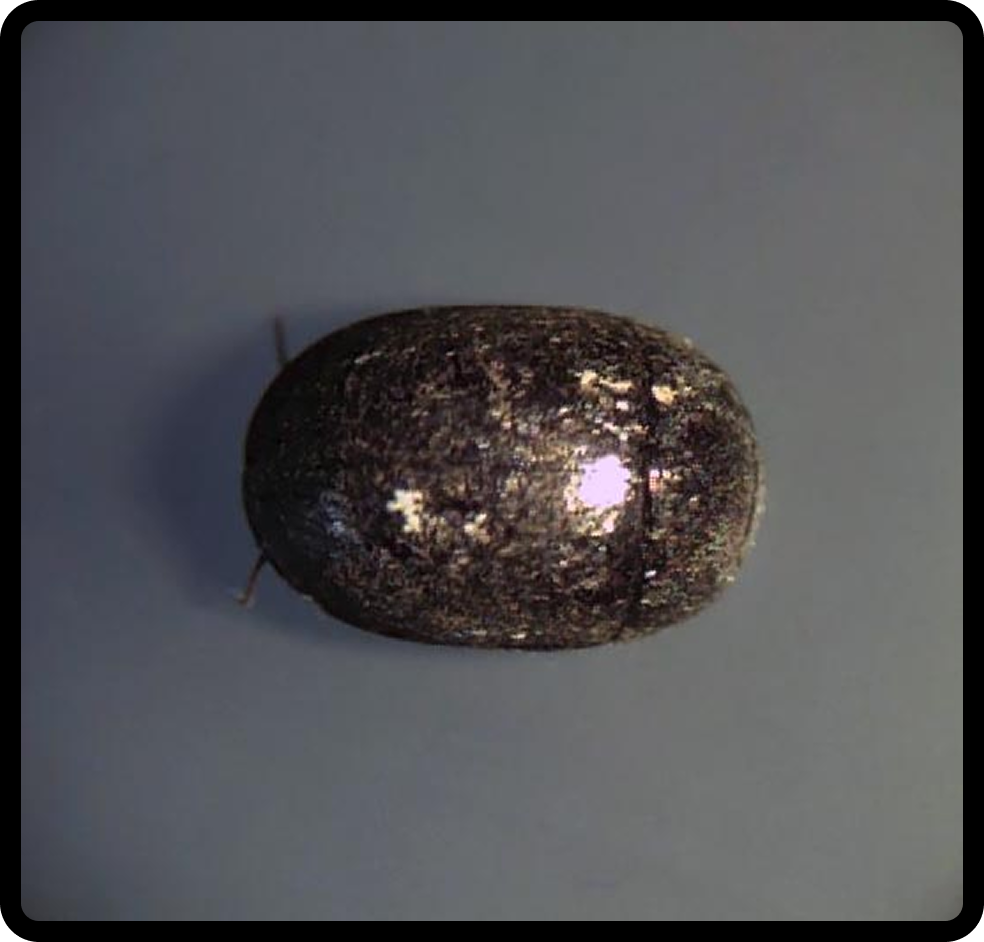
Black Beetle
This beetle is 6 mm long. ID by David Preston of the Bishop Museum.
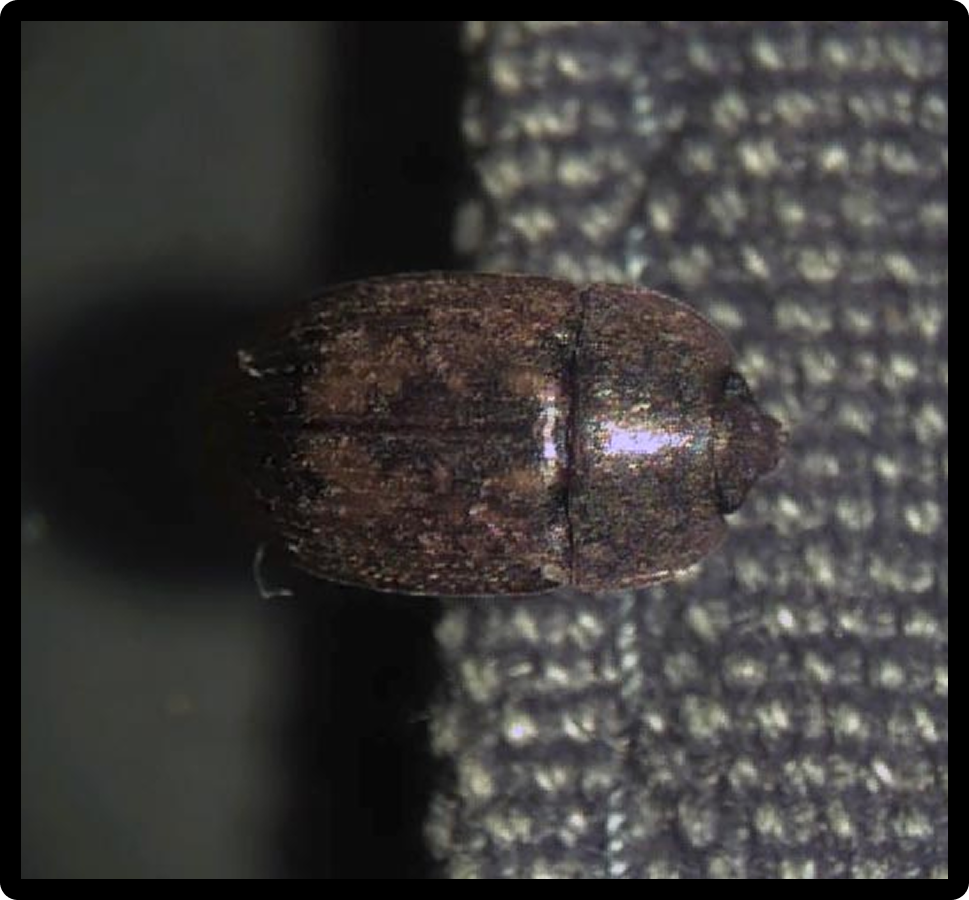
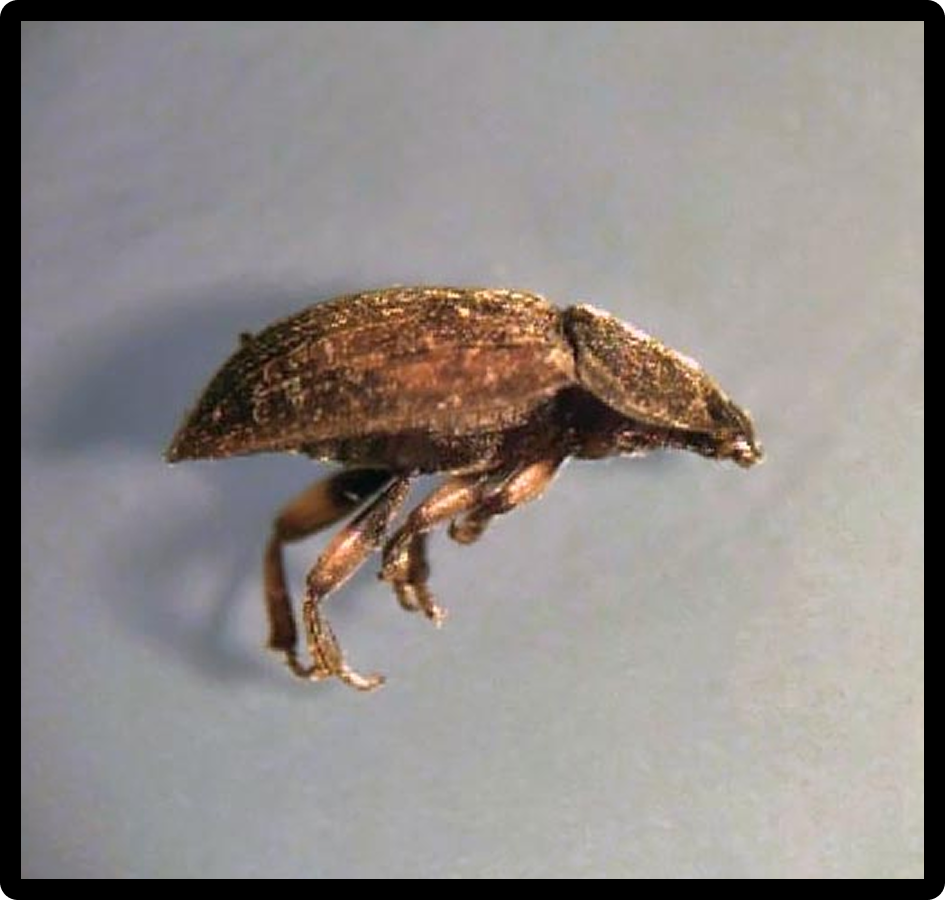
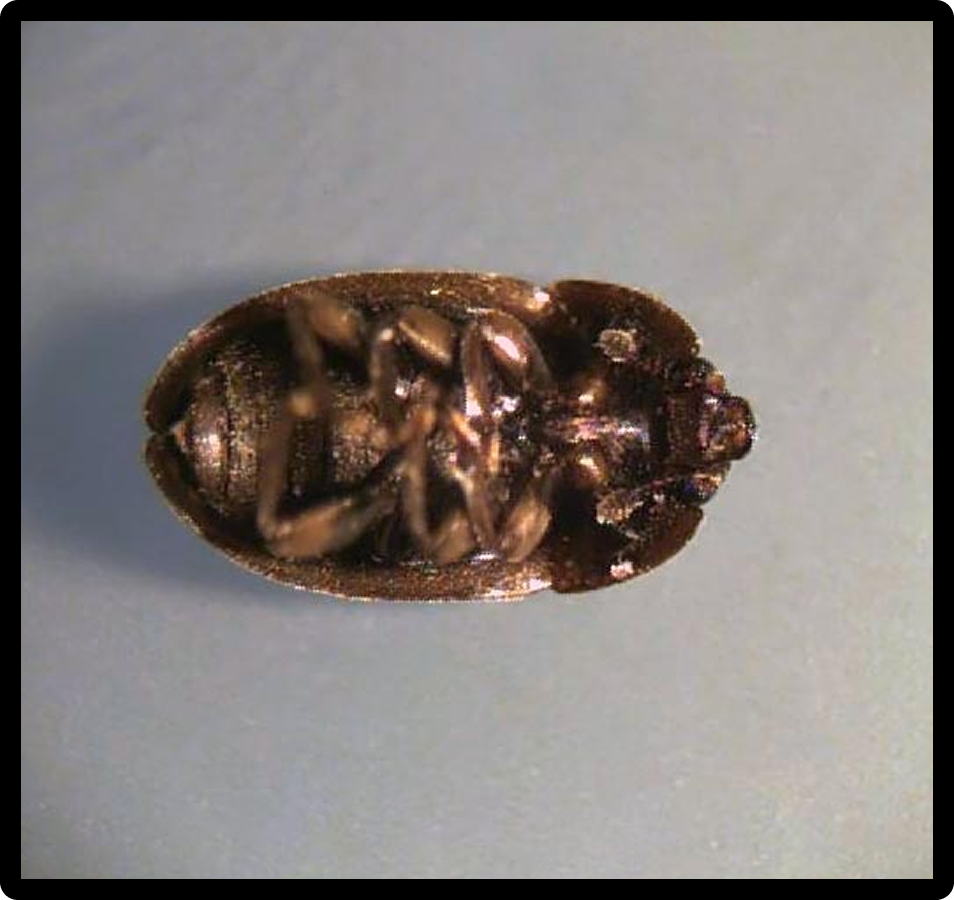
Phenolia Beetle
This beetle is 7 mm long. ID by David Preston of the Bishop Museum.
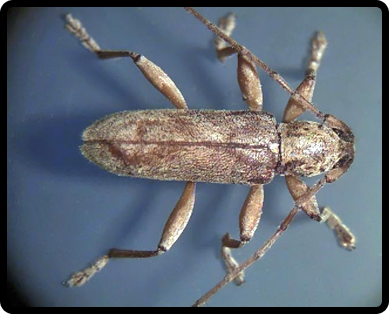
Ceresium Long-horned Beetle
Body length is 13 mm.
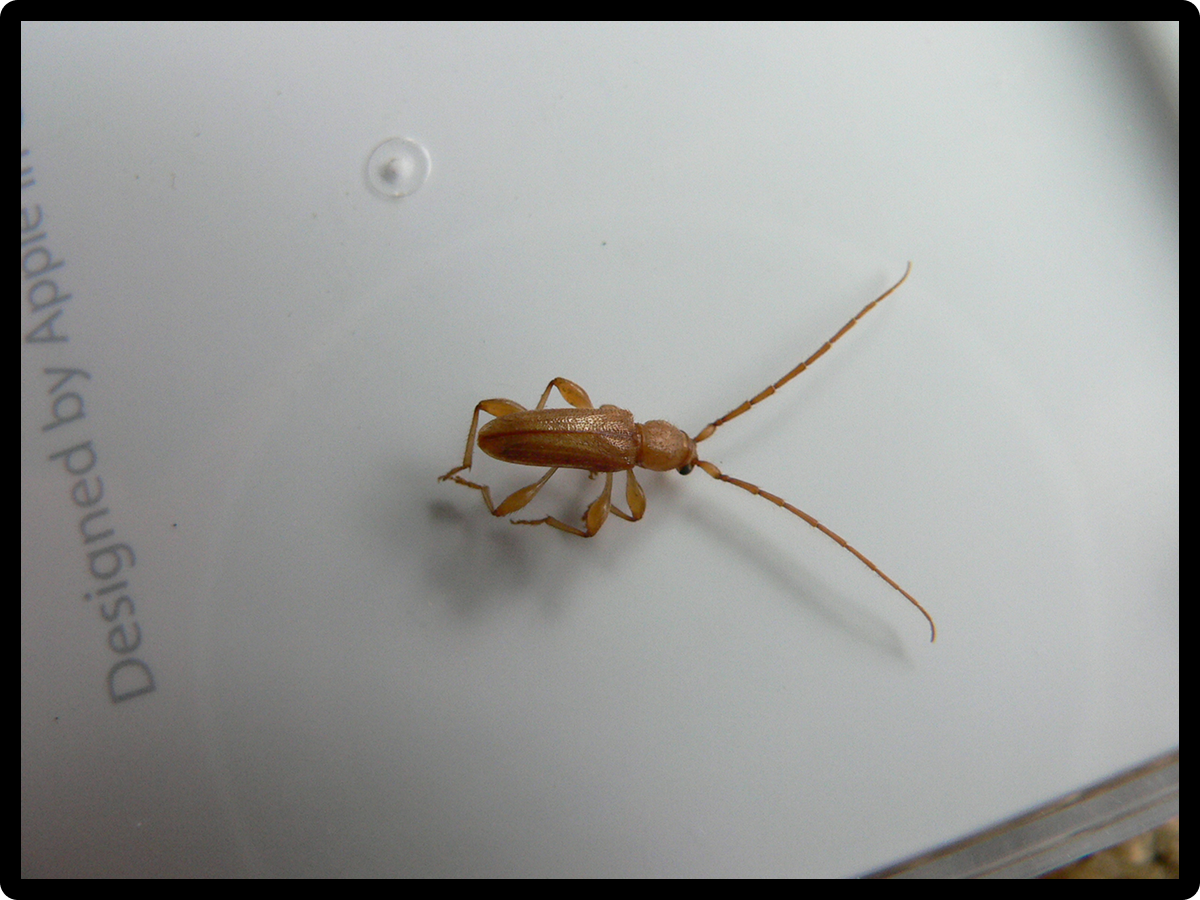
Curtomerus Long-horned Beetle
This introduced species is common in Hawaii and attacks a wide range of woody tree and shrub species. Body length is 8 mm. Species identification by Frank Howarth of the Bishop Museum.
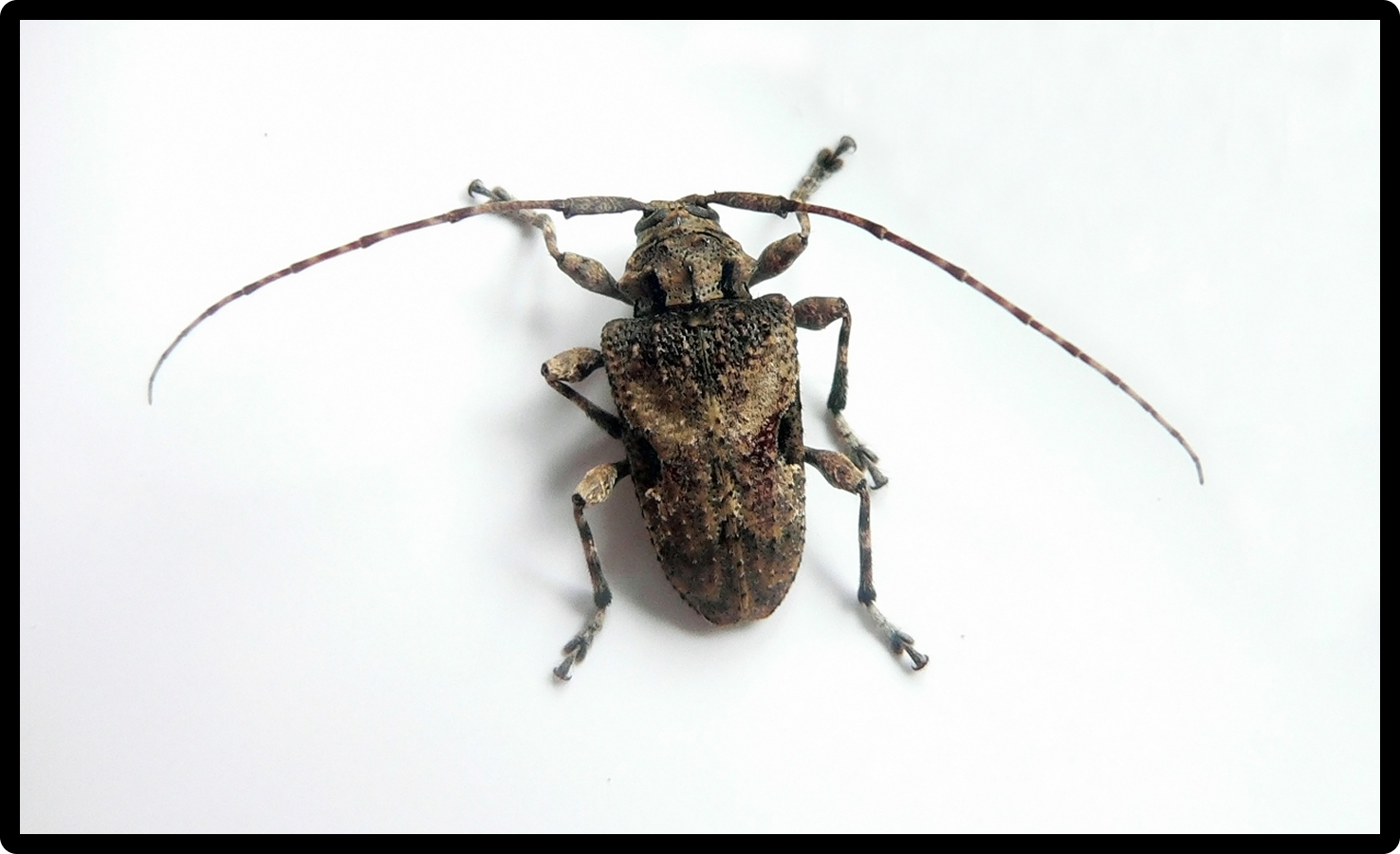
Plumeria Borer
Body length is 1.5 cm. Identification by Forest and Kim Starr of the Hawaiian Ecosystems at Risk project (HEAR).
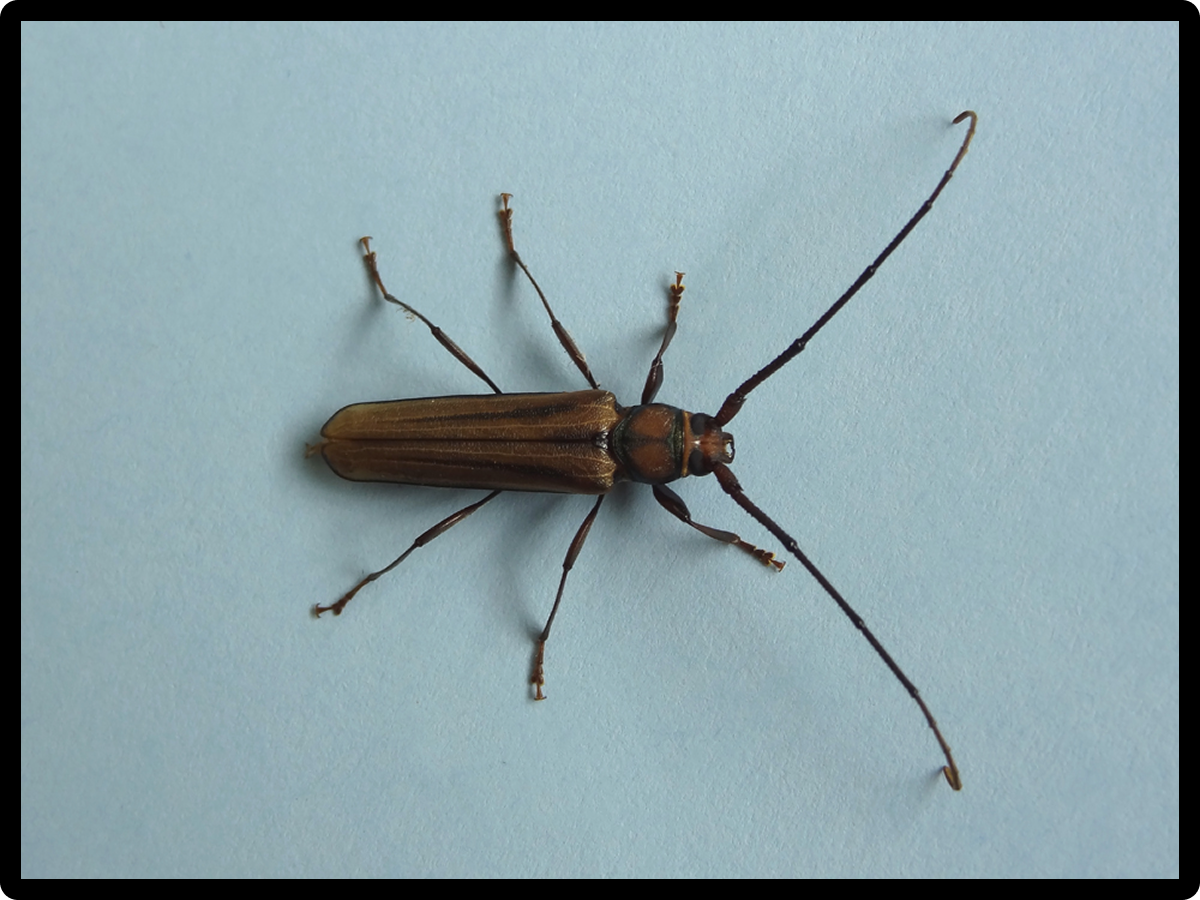
Monkeypod Roundheaded Borer
Body length is 2.5 cm.
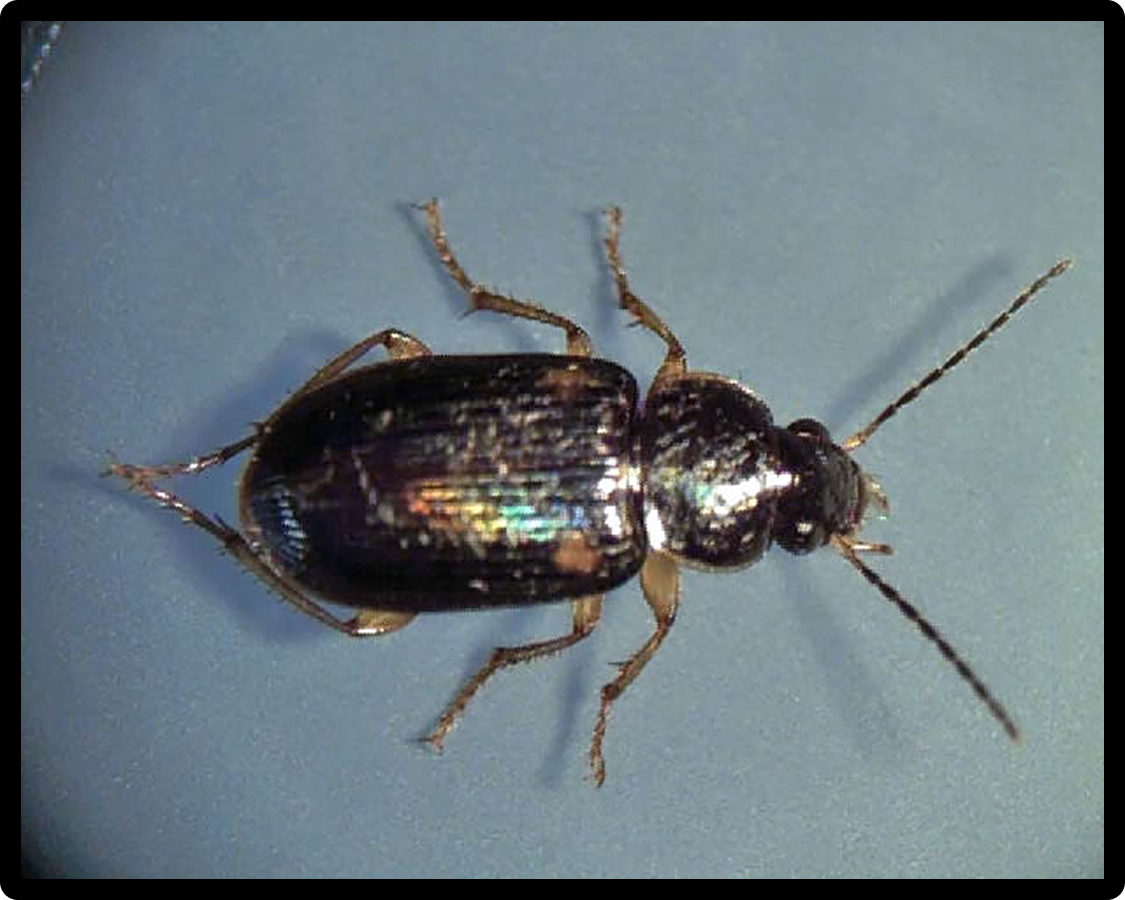
Cuban Laurel Thrip
This strange little bug is 2 mm long. ID by David Preston of the Bishop Museum.
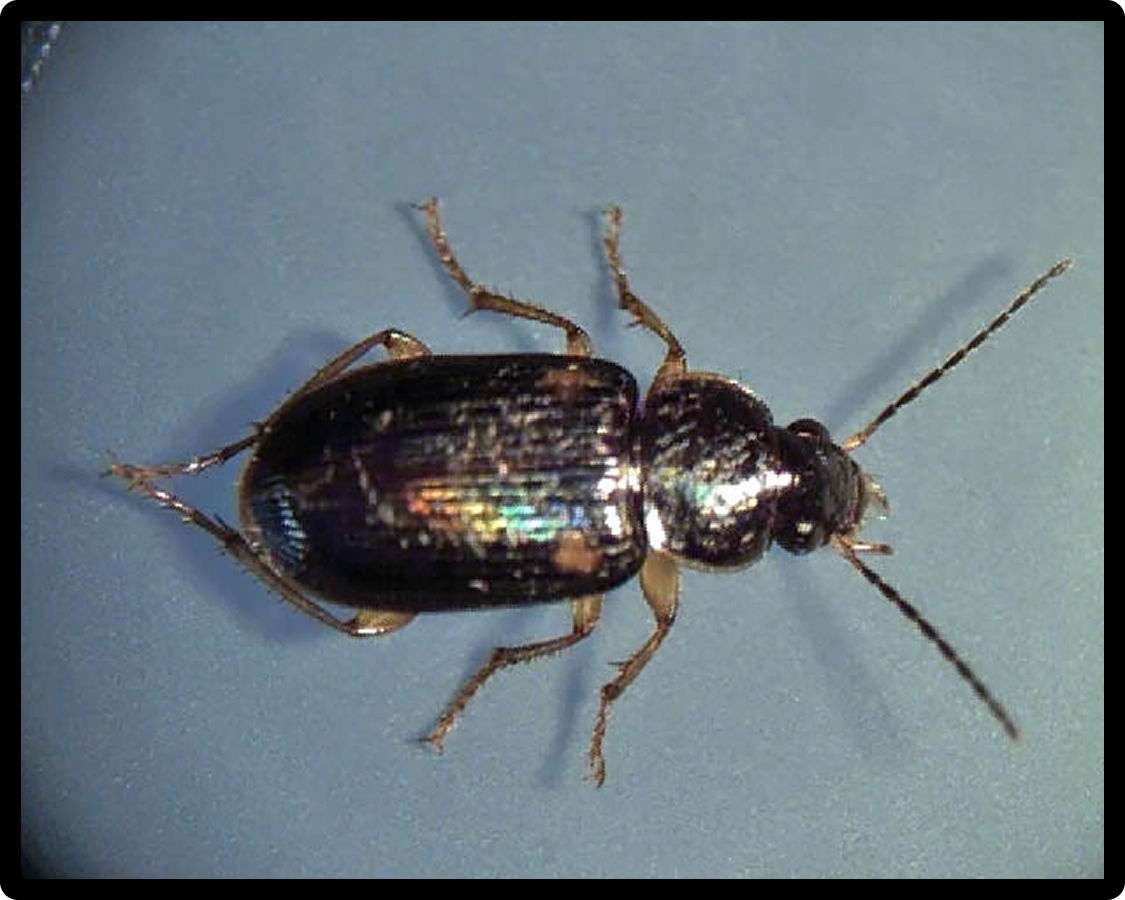
Notiobia Ground Beetle
Body length of this beetle is 6 mm. ID by David Preston of the Bishop Museum.
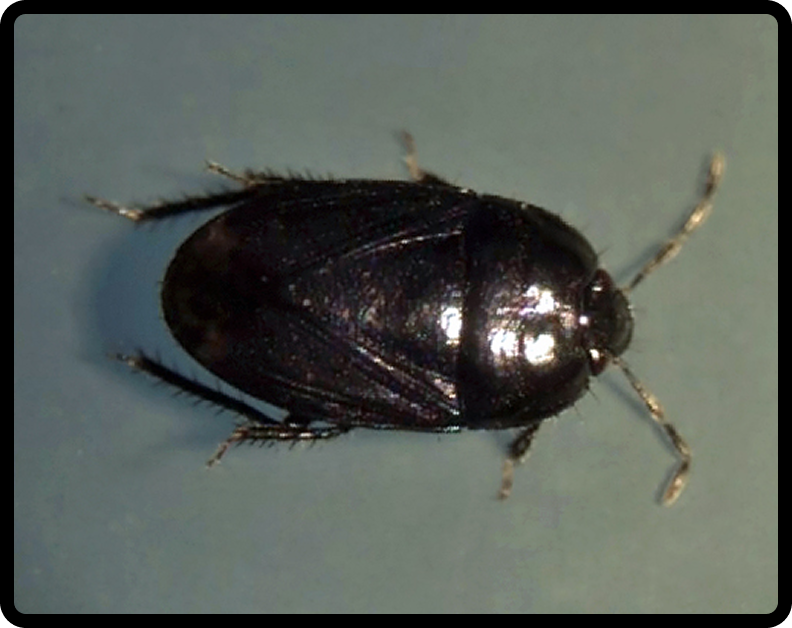
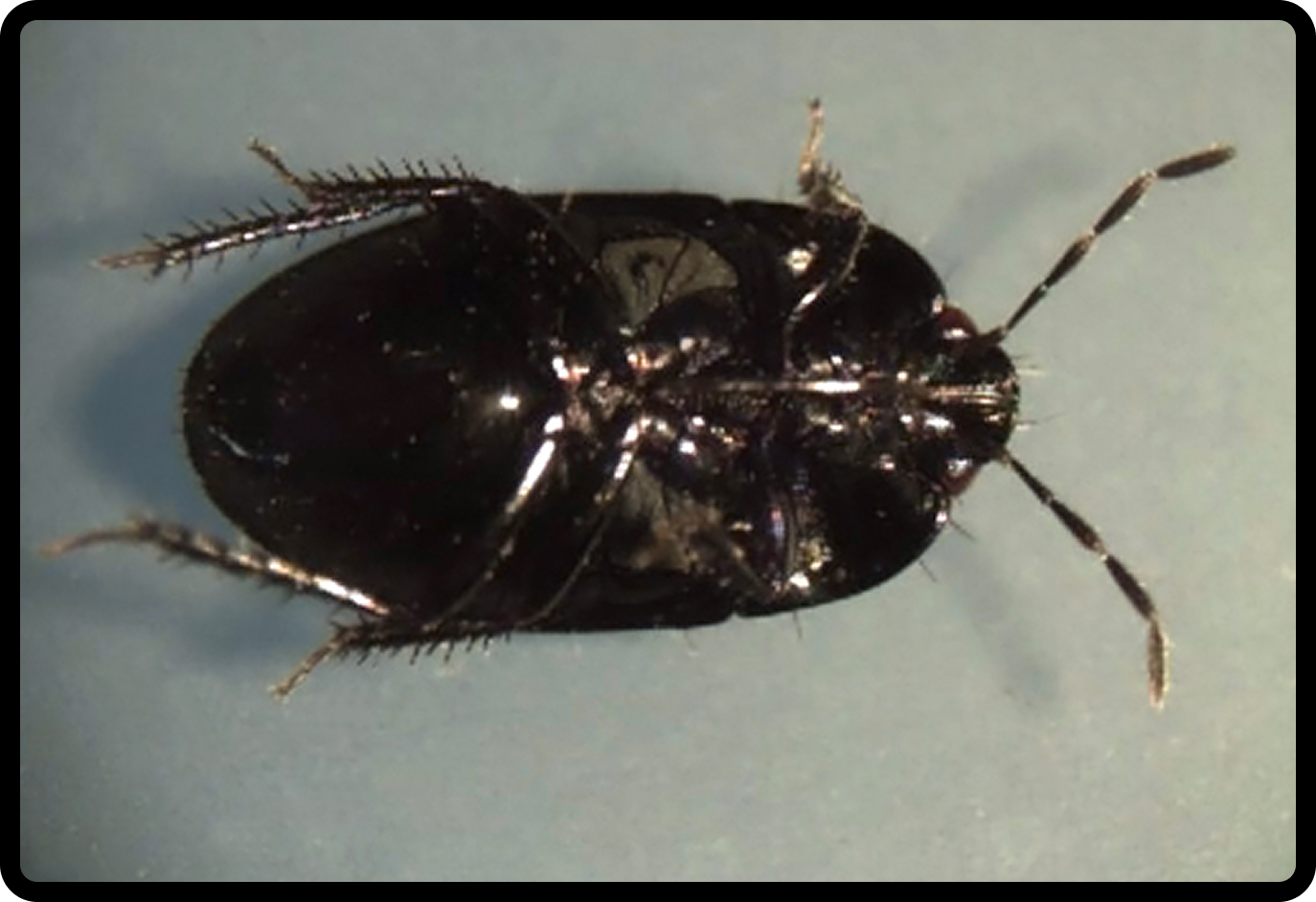
Burrowing Bug
This beetle is about 6 mm long.
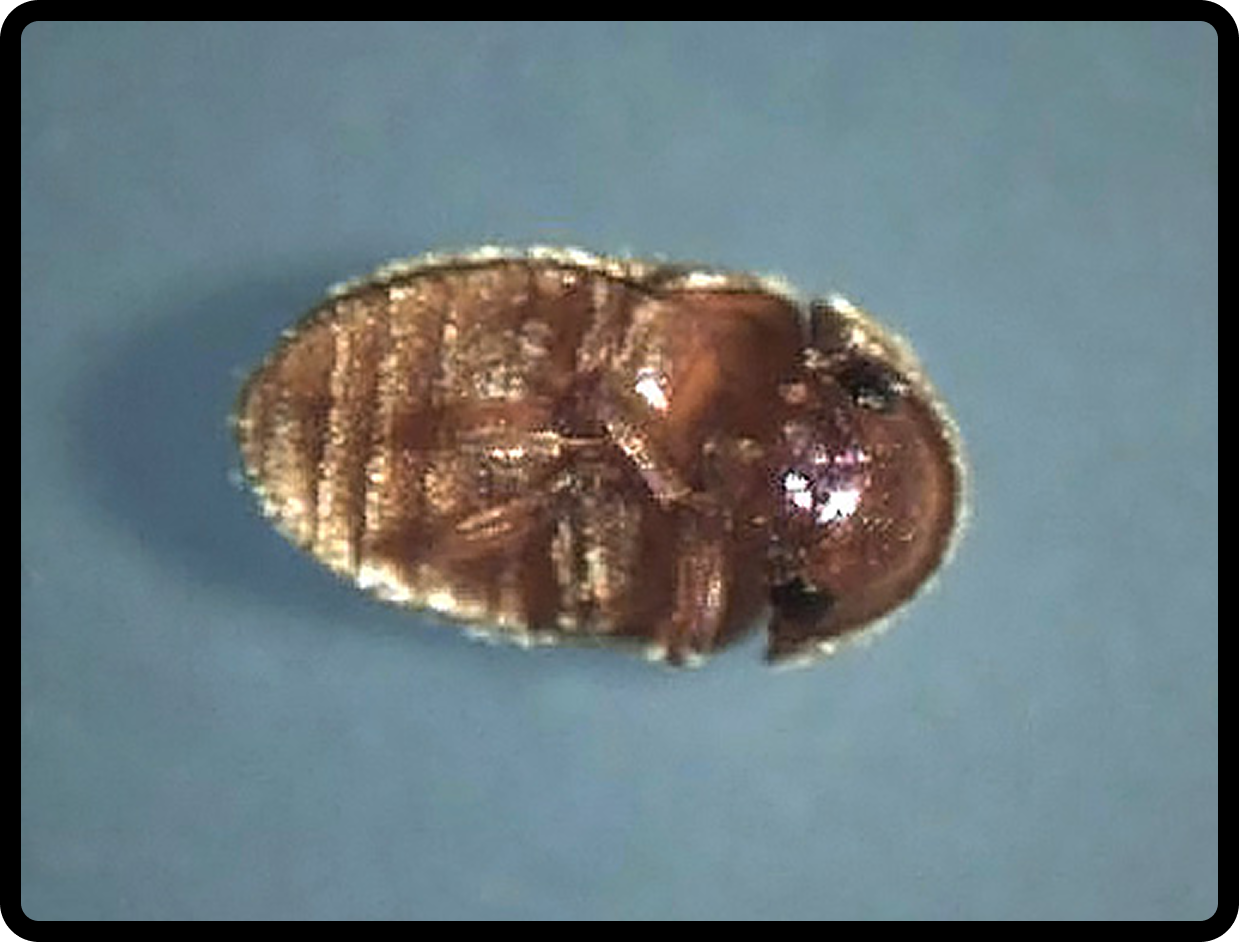
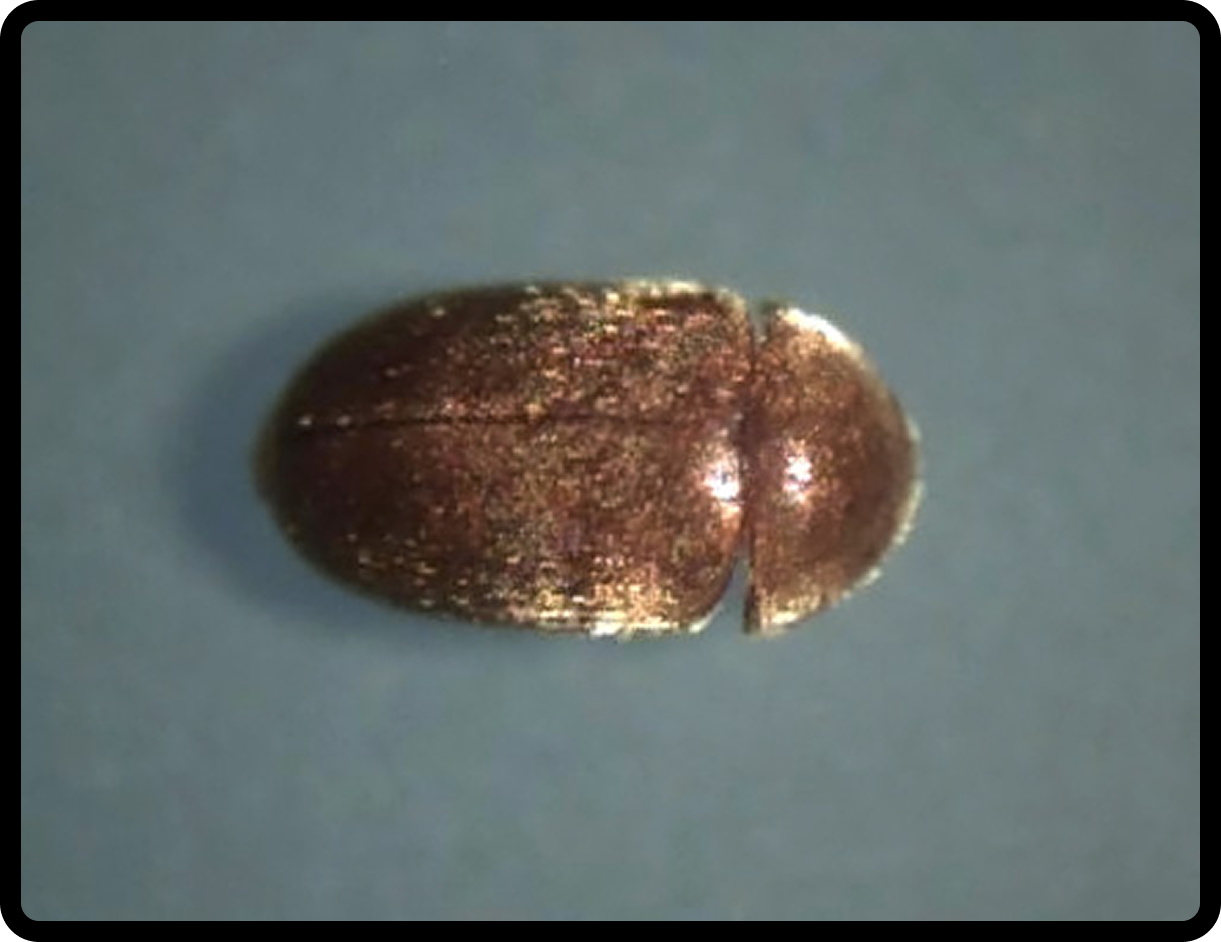
Cigarette Beetle
Per Frank Howarth of the Bishop Museum: “This tiny beetle is in the family Anobiidae, which includes many stored product pests and powder-post beetles. Hawaii has many (about 100 species) native wood borers in this group, but your specimen appears to be either the cigarette beetle (Lasioderma serricorne) or the herbaium beetle (Tricorynus herbarium), both of which feed on a variety of dried household products (yes even tobacco!).”
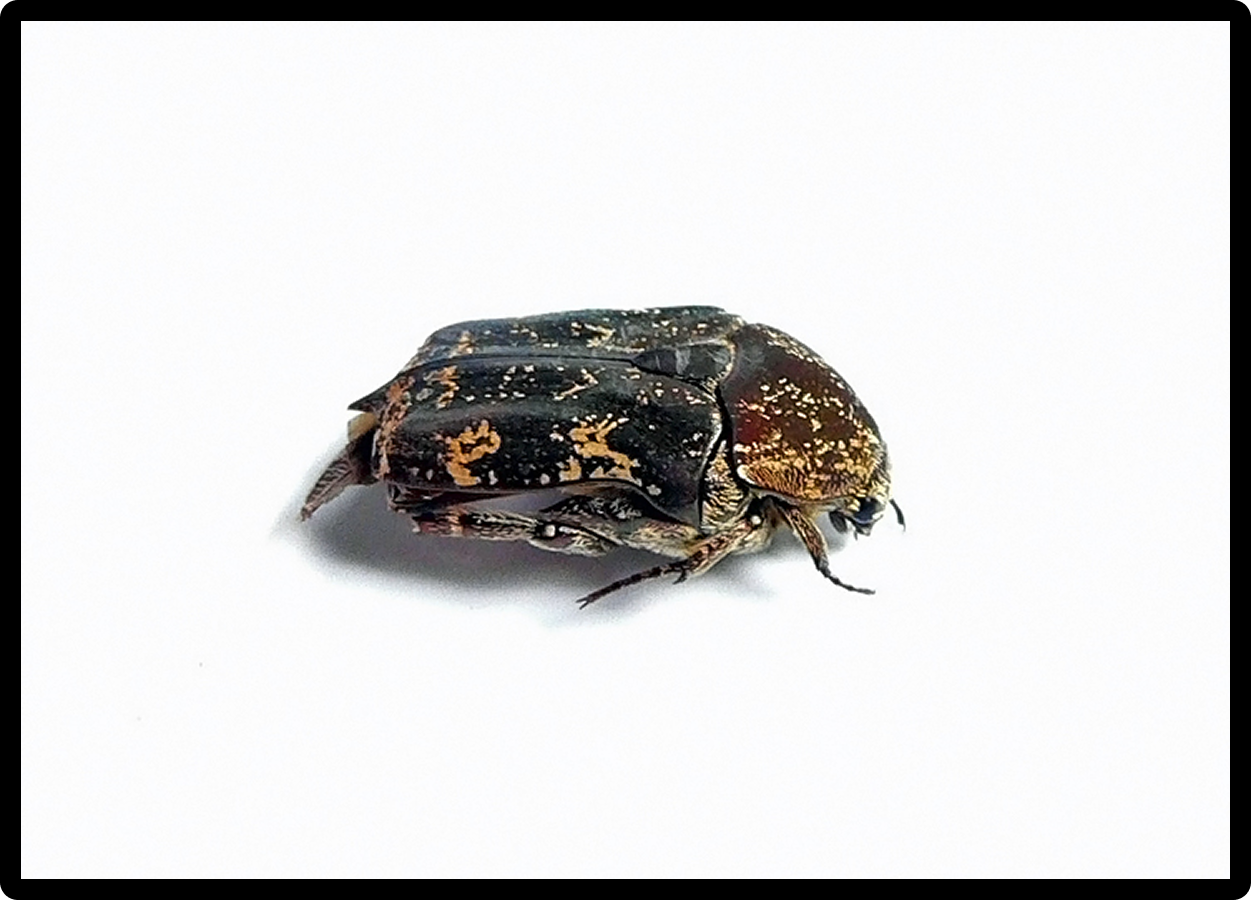
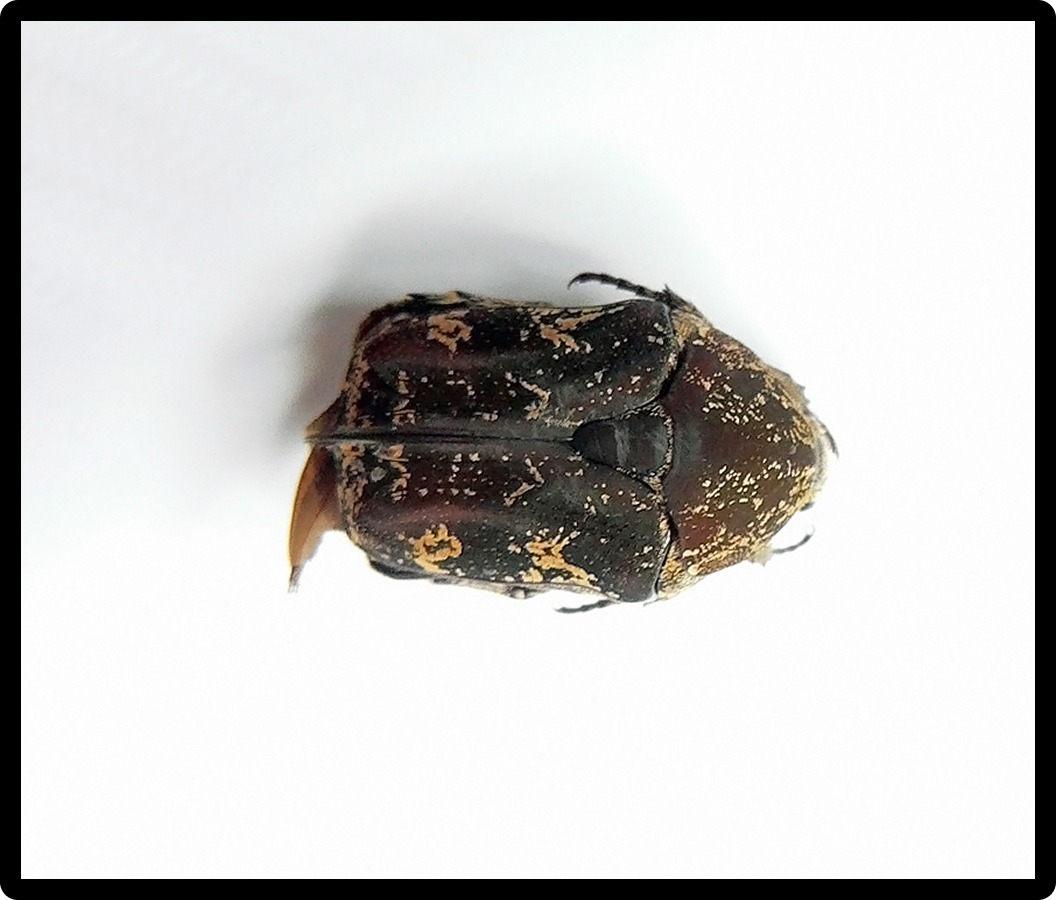
Mango Flower Beetle
This type of scarab beetle was first found in Hawaii in 1949.
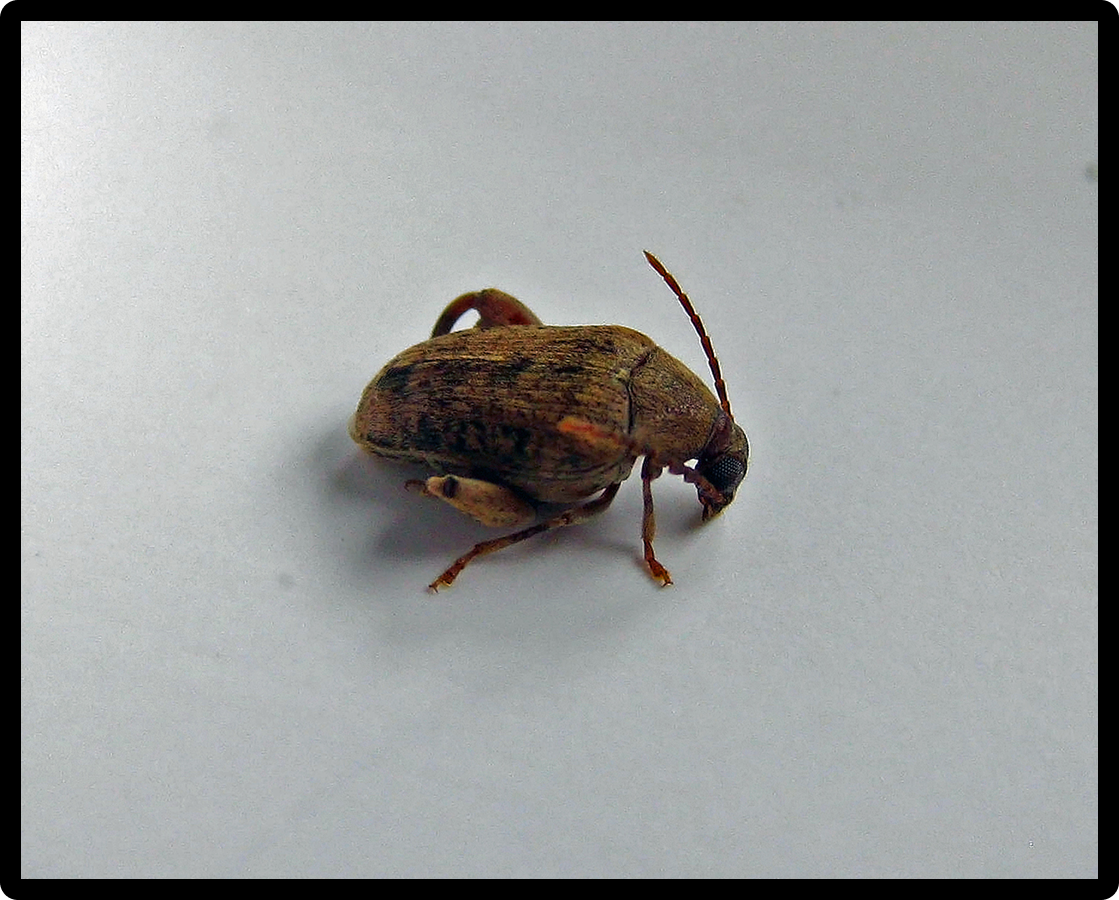
Kiawe Bruchid (Kiawe Seed Beetle)
This seed beetle (bruchidae) is about 6 mm long and is not native to Hawaii.
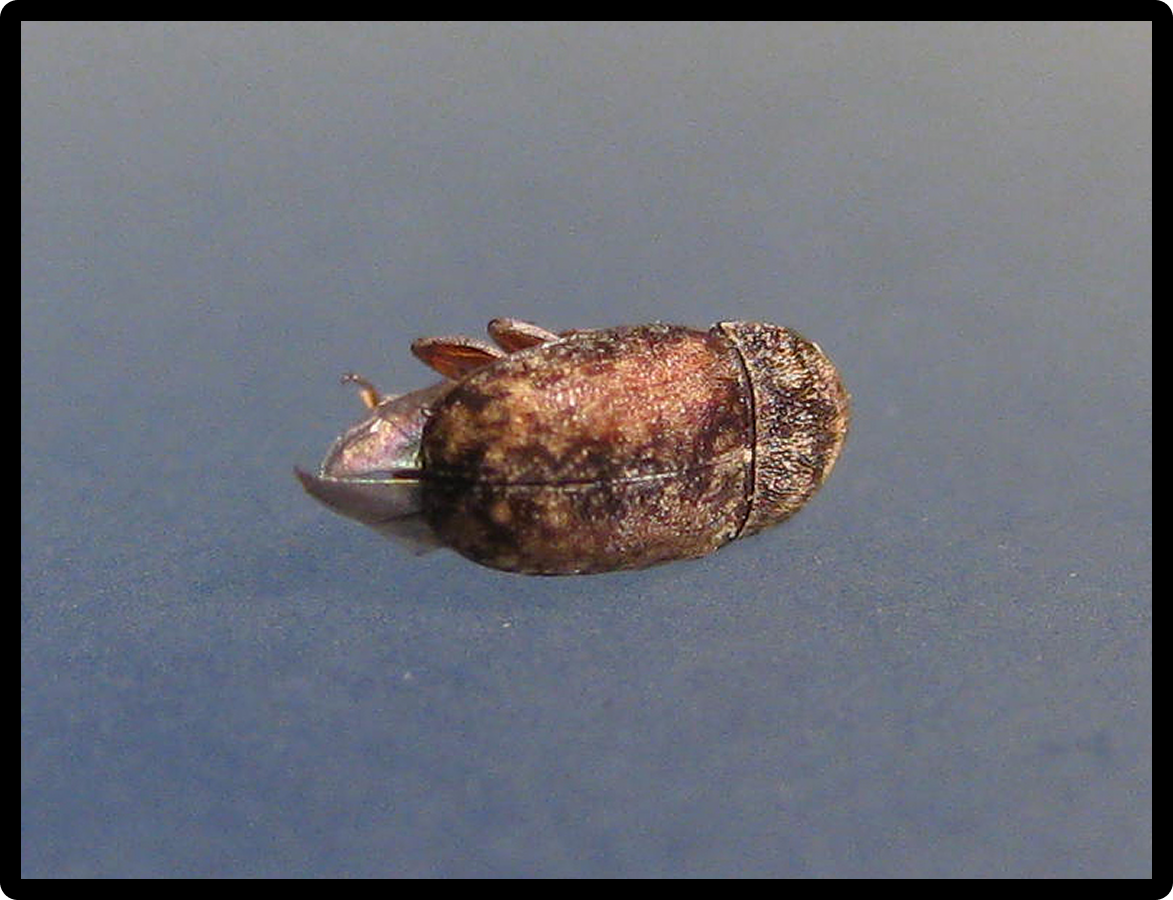
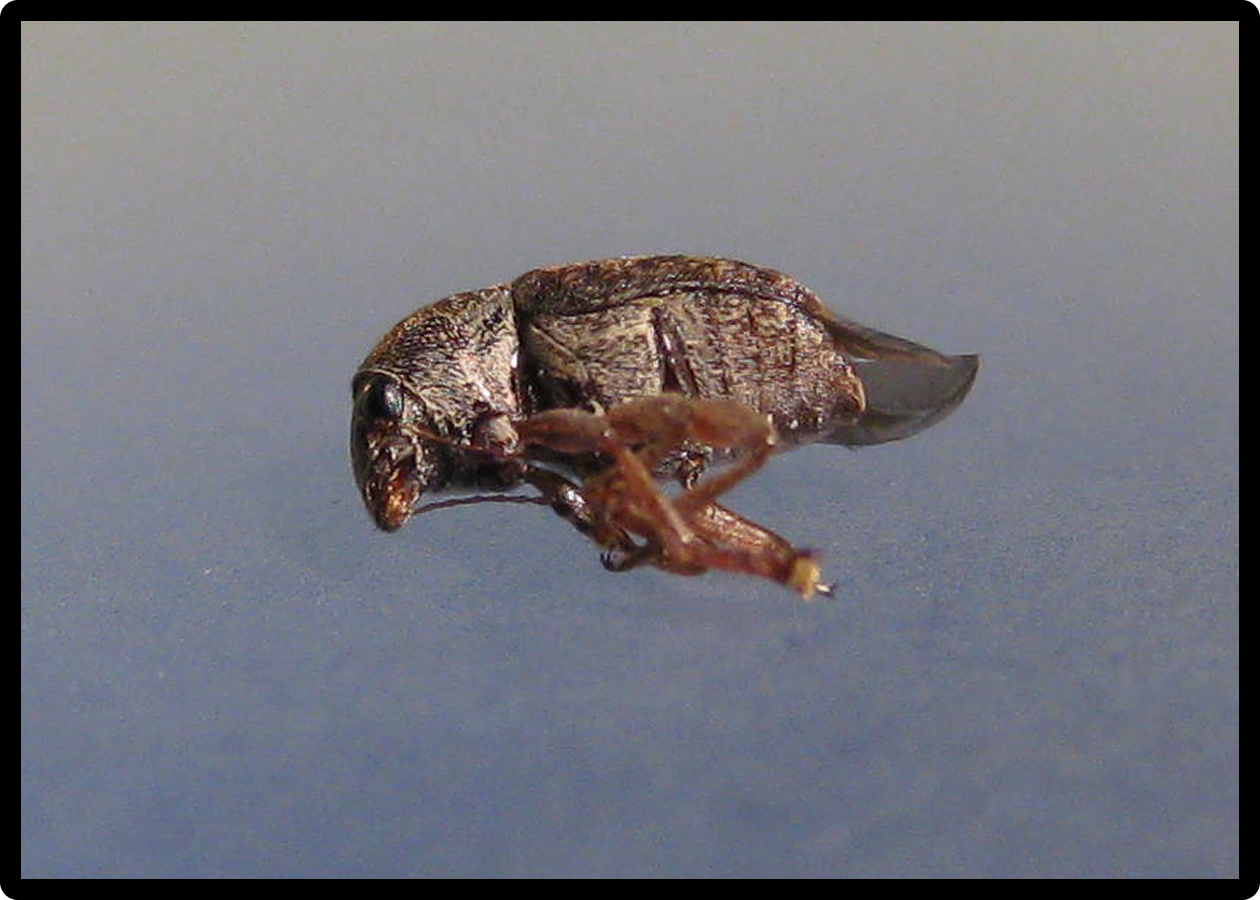
Unknown Seed Beetle
This seed beetle (bruchidae) is about 3 mm long.
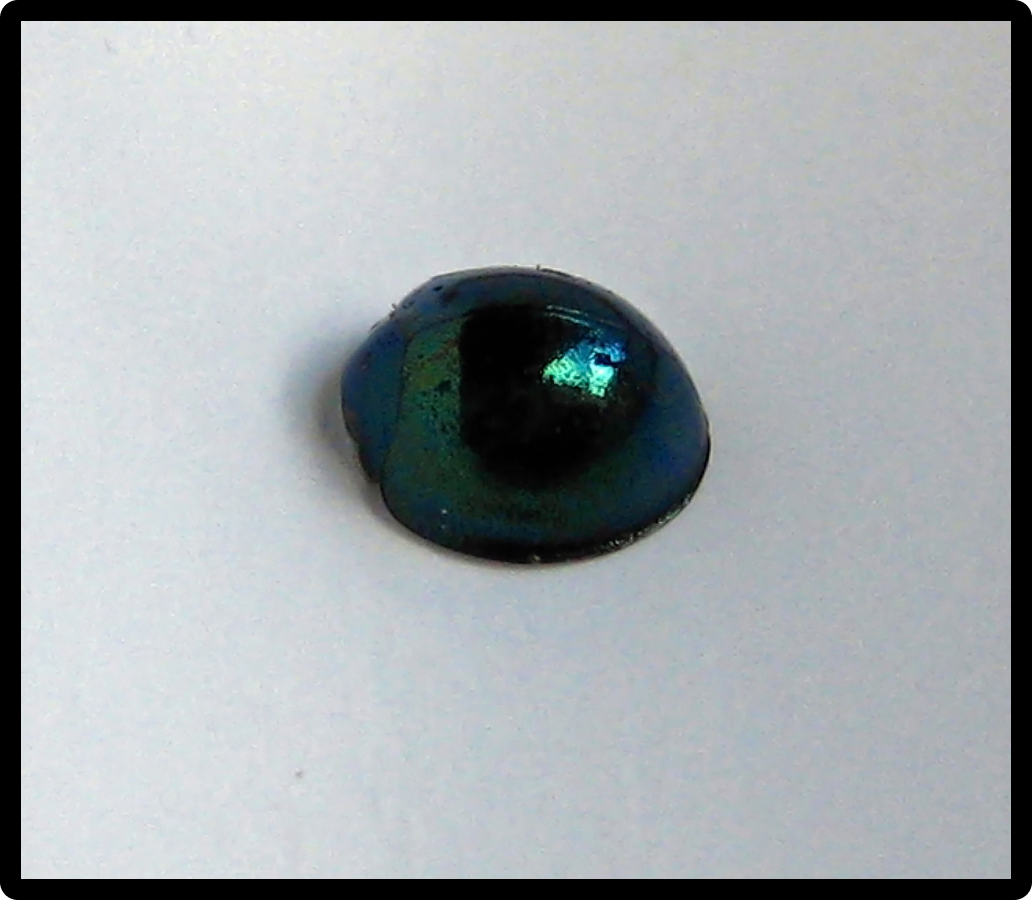
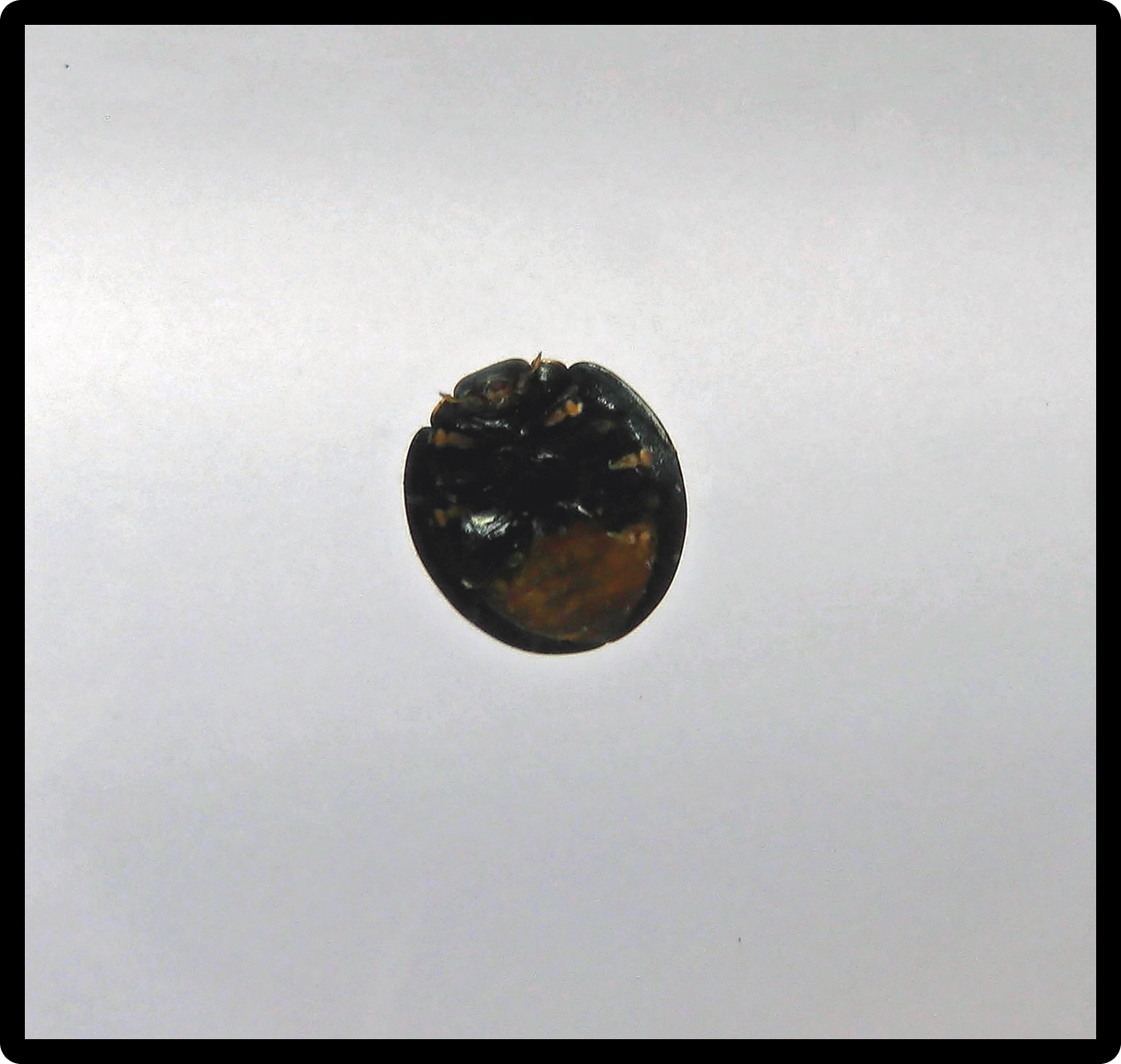
Native to Eastern Australia. Introduced to Western Australia, California, Hawaii and New Zealand as a biological control agent.
Steel-blue Ladybird Beetle
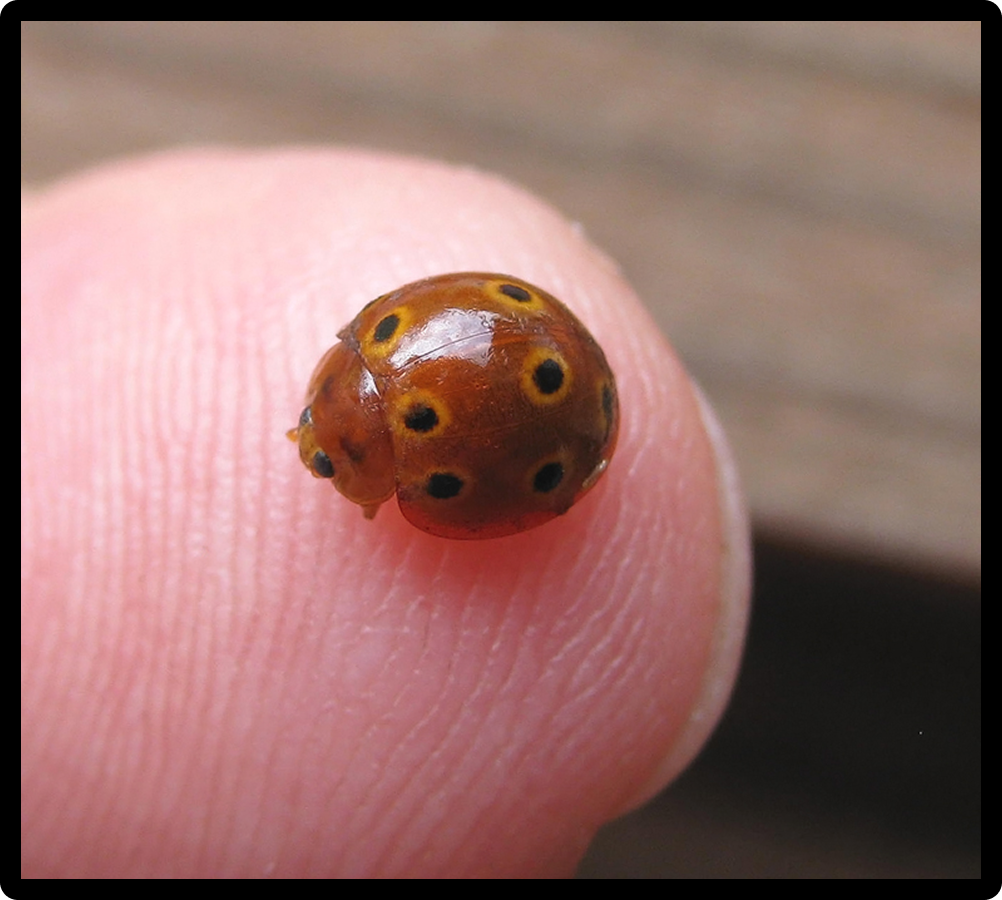
This ladybug beetle is one of the few that feed on plants rather than as a predator of insects. It is a minor pest of squash family plants.
Squash Lady Beetle
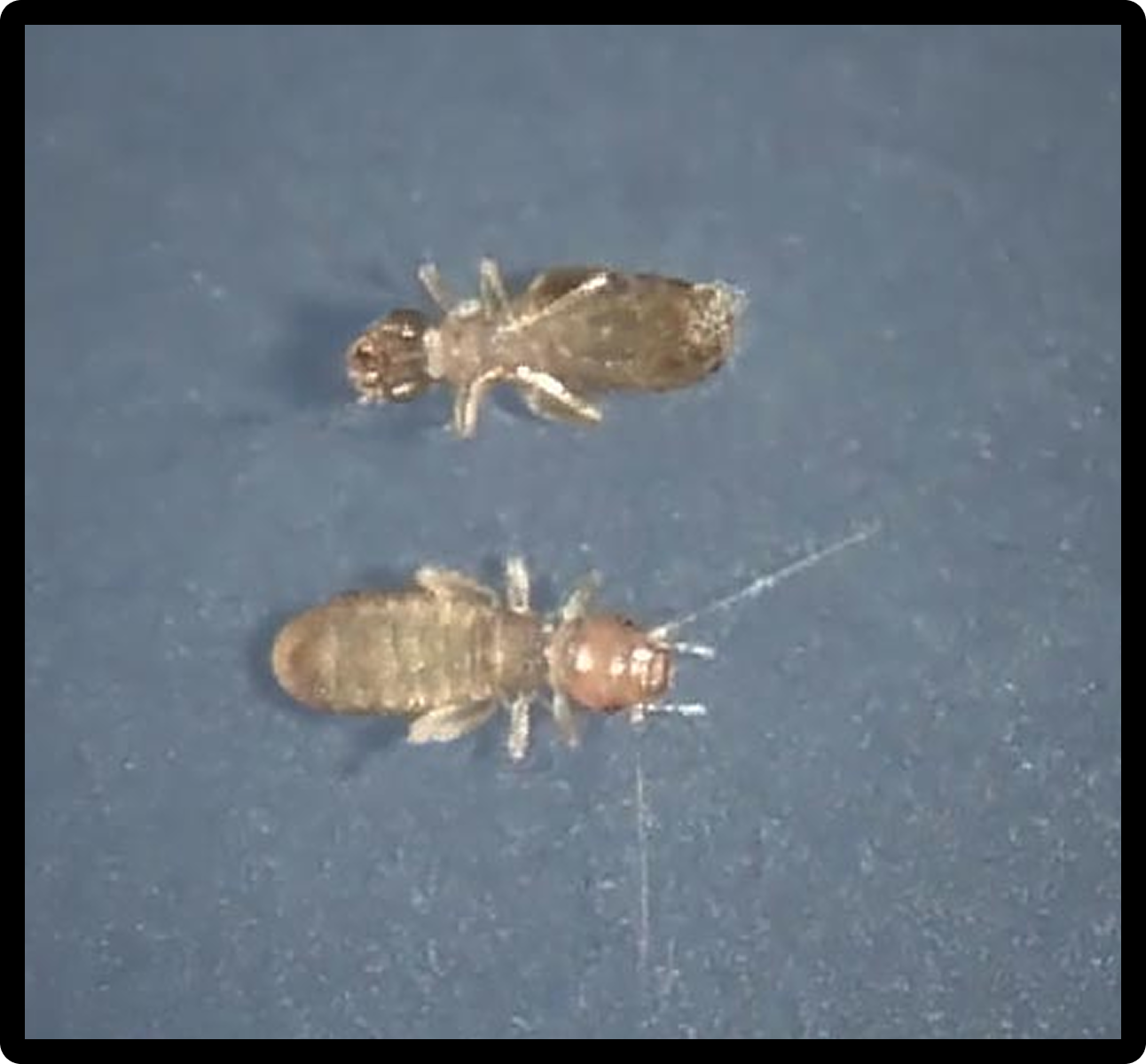
Flour Weevil
Found in a bag of flour. Length about 1 mm.